November 6: On This Day in World History … briefly
The Ufton Nervet rail crash was a collision between a train and car on a level crossing near Ufton Nervet, Berkshire, England, in 2004. Seven people, including the drivers of the train and the car, were killed.

2004: Seven die as express train collides with a stationary car in England
On 6 November 6, 2004 at 18:12 GMT, the 17:35 service from London Paddington to Plymouth, an InterCity 125 (HST) led by a Class 43 power car (43019) collided with a stationary car at an automatic level crossing close to the rural West Berkshire village of Ufton Nervet. The inquest concluded that the crash was caused by Brian Drysdale, a chef at Wokefield Park Hotel 3 miles (4.8 km) away, committing suicide by parking his car on the crossing. All eight coaches derailed and the rear of the 220-metre (720 ft) InterCity 125 train came to rest about 100 m (110 yd) beyond the crossing. Seven people were killed in the crash: the car’s driver, the driver of the train, and five of its passengers. About 200 people were on board at the time of the incident (official estimates are around 180–200). About half of these were injured, 12 of them seriously. Eleven people were cut free from the wreckage. The high structural integrity of the Mark 3 coaches prevented a much higher death toll, plus the fact that the more lightly loaded first-class coaches were at the leading end of the train.
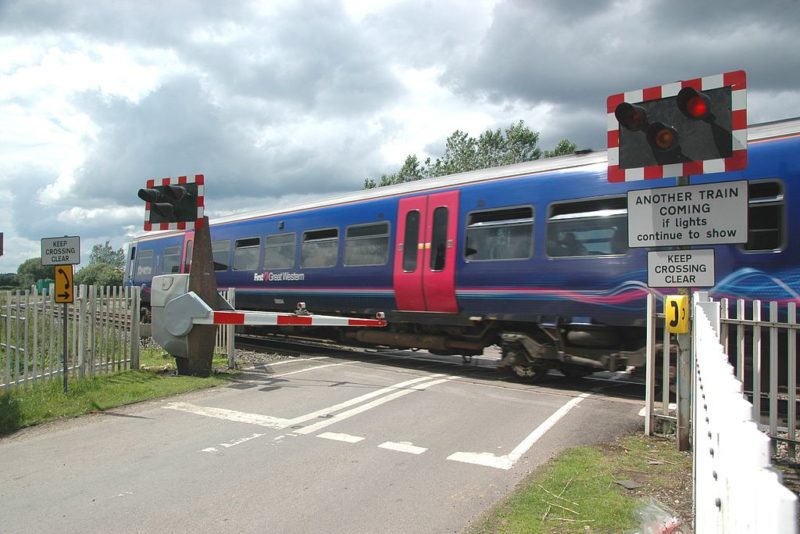
More than 20 ambulances from five counties and 14 fire engines attended the crash. Injured passengers were first helped at the Winning Hand pub, 300 m north. After the collision survivors in some carriages used emergency hammers to break the train windows to escape. The accident occurred at night, and so passengers used emergency glow sticks and their mobile phones to provide some light. 61 injured passengers were taken variously to the Royal Berkshire Hospital in Reading and the North Hampshire Hospital in Basingstoke. Other passengers were treated at the scene and the Winning Hand pub for minor injuries. The crash, investigation and necessary repairs blocked the direct railway between London and the southwest until the morning of 16 November 2004. The line reopened under temporary speed restrictions to allow the bedding in of ballast. In the meantime long-distance trains operated via Swindon and Westbury and local services were replaced by rail and bus shuttles. Leading power car 43019 was written off.
Most notable historic snippets or facts extracted from the book ‘On This Day’ first published in 1992 by Octopus Publishing Group Ltd, London, as well as additional supplementary information extracted from Wikipedia.
HAVE YOUR SAY
Like the South Coast Herald’s Facebook page, follow us on Twitter and Instagram
To receive our FREE email newsletter, click HERE