December 31: On This Day in World History … briefly
‘For auld lang syne’, as it appears in the first line of the chorus, might be loosely translated as ‘for the sake of old times’.

New Year’s Eve … the history of celebrating
In the Gregorian calendar, New Year’s Eve (also known as Old Year’s Day or Saint Sylvester’s Day in many countries), the last day of the year, is on December 31. In many countries, New Year’s Eve is celebrated at evening social gatherings, where many people dance, eat, drink, and watch or light fireworks. Some Christians attend a watchnight service. The celebrations generally go on past midnight into New Year’s Day, January 1. Tonga and Kiritimati (Christmas Island), part of Kiribati, are examples of the first places to welcome the New Year while Baker Island in the United States of America is among the last.

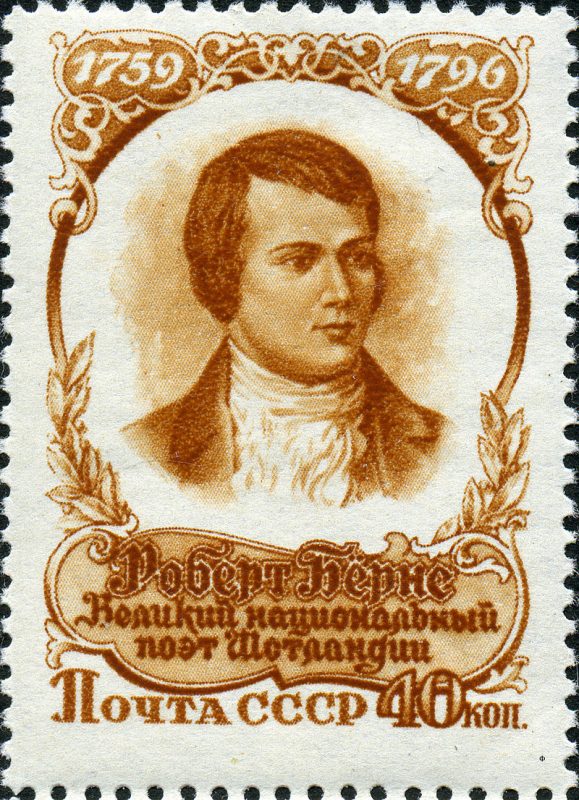
‘Auld Lang Syne’ is a Scots-language poem written by Robert Burns in 1788 and set to the tune of a traditional folk song. It is well-known in many countries, especially in the English-speaking world, its traditional use being to bid farewell to the old year at the stroke of midnight on New Year’s Eve. By extension, it is also sung at funerals, graduations, and as a farewell or ending to other occasions. The international Scouting movement in many countries uses it to close jamborees and other functions.

The poem’s Scots title may be translated into standard English as ‘old long since’ or, more idiomatically, ‘long long ago’, ‘days gone by’, or ‘old times’. The phrase ‘Auld Lang Syne’ is also used in similar poems by Robert Ayton, Allan Ramsay, and James Watson, as well as older folk songs predating Burns. Matthew Fitt uses the phrase ‘in the days of auld lang syne’ as the equivalent of ‘once upon a time’ in his retelling of fairy tales in the Scots language.
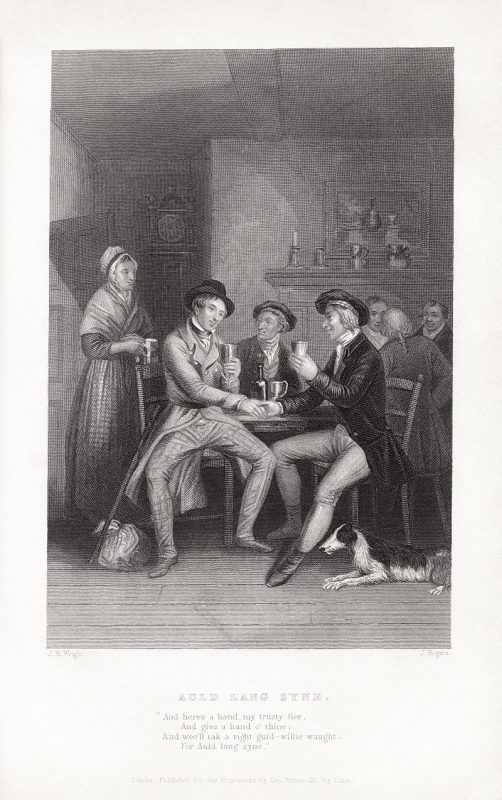
Old Lang Syne lyrics:-
Should old acquaintance be forgot,
and never brought to mind?
Should old acquaintance be forgot,
and old lang syne?
Chorus:
For auld lang syne, my dear,
for auld lang syne,
we’ll take a cup of kindness yet,
for auld lang syne.
II
And surely you’ll buy your pint cup!
and surely I’ll buy mine!
And we’ll take a cup o’ kindness yet,
for auld lang syne.
Chorus
III
We two have run about the slopes,
and picked the daisies fine;
But we’ve wandered many a weary foot,
since auld lang syne.
Chorus
IV
We two have paddled in the stream,
from morning sun till dine;
But seas between us broad have roared
since auld lang syne.
Chorus
V
And there’s a hand my trusty friend!
And give me a hand o’ thine!
And we’ll take a right good-will draught,
for auld lang syne.
Chorus

Most notable historic snippets or facts extracted from the book ‘On This Day’ first published in 1992 by Octopus Publishing Group Ltd, London, as well as additional supplementary information extracted from Wikipedia.
HAVE YOUR SAY
Like the South Coast Herald’s Facebook page, follow us on Twitter and Instagram
To receive our FREE email newsletter, click HERE