
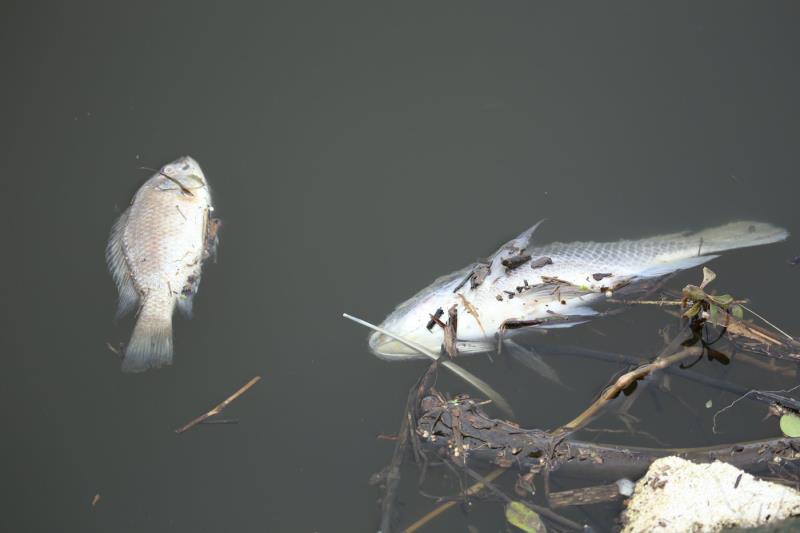
Toti Conservancy has slammed the latest results from tests taken after the March fish kill in the Toti River.
In the latest set of results received from Neo Leburu of Water Quality Management, no volatile organic or semi-volatile organic compounds were identified.
“Therefore this scan showed that no organic compounds such as BTEX, petrol and diesel range organics, PAHs, oils or phenols were detected in this sample,” said Leburu in an email to Toti Conservancy chairman, Laura Taylor.
“Considering that the samples were collected on 26 March and reports from the locals indicated that the fish started showing signs of stress a week before, it may be possible that the pollution had already gone through to the marine environment and what we saw was merely the after-effects and residue.”
Toti environmentalist, Jen Adams investigated and took photos of scores of dead fish in Toti Lagoon on Monday morning, 23 March and brought the incident to the attention of Toti Conservancy.
There were also reports of dead fish in the river close to Amanzimtoti Civic Centre, and fish were identified as acting unnaturally and gasping for oxygen before dying.
According to Leburu, the sample point near Amanzimtoti Civic Centre is now monitored on a monthly basis by the Pongola to Umzimkulu Proto Catchment Management Agency, under the department of water and sanitation, for upstream impacts.
He said the involvement of all stakeholders was required to assist to identify and report sources or culprits of pollution to relevant authorities.
“We must not forget that these estuaries are eutrophied and that in autumn (with) the shortened day length and lower flows, the dissolved oxygen drops at night, which could cause a fish kill,” advised Chris Fennemore, the manager of the pollution and environment branch of eThekwini Municipality.
This does not, however eliminate the possibility of additional pollution being the cause of the fish kill.
“Unfortunately it is not conclusive and therefore leaves us with no real clear picture of what happened, excepting Chris’s speculation,” said a disappointed Laura.