Elder’s Voice calls special voting process into question
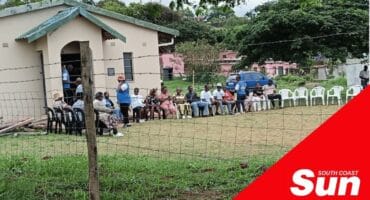
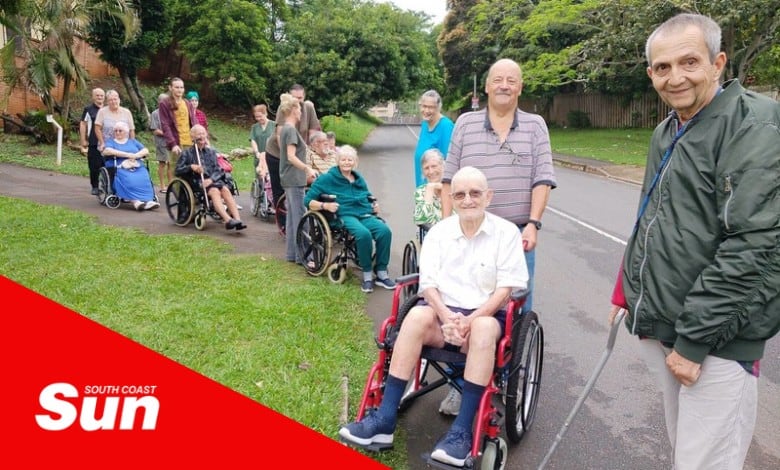
Elder's Voice residents in Amanzimtoti were wheeled out of their home to vote when they were denied the special vote.
THE Elder’s Voice KZN, a non-profit organisation (NPO) dedicated to fighting for the rights of the aged, has called into question the special voting process, particularly when it comes to elderly voters.
Jo-Ann Herbst, of Elders Voice KZN, said the NPO made arrangements for residents at its Pennington, Umbilo and Amanzimtoti homes to be registered for special votes.
Also read: Power outage disrupts voting in Isipingo, KwaMakhutha areas
“All three homes followed exactly the same process, with the Electoral Commission of South Africa (IEC) visiting our facilities. On Monday, the IEC visited Pennington and Umbilo, and our residents were able to cast their votes. However, when it came to Amanzimtoti, things took a very different turn,” said Herbst.
She explained that one of the Amanzimtoti residents was listed on the special voters’ roll, however, the remaining residents were unable to vote.
On November 3, Herbst went to the voting station and at the request of IEC officials, contacted Ward 97 councillor, André Beetge, who explained that registration for the special vote is a two-step process and that residents are supposed to register themselves for the special votes as well.
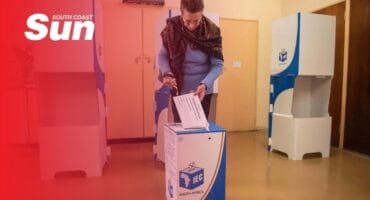
According to the IEC, by law, citizens can apply for a special vote if they cannot travel to their voting station due to being physically infirm, disabled or pregnant, or cannot vote at their voting station on election day.
“Why did the IEC visit our homes in the first place if residents still had to complete another registration process themselves? This is South Africa. A country where we are constantly reminded that every vote counts, that democracy is something we fought for, and that every citizen has a voice, yet here we are, with elderly residents who had been through the registration process at their own homes. It certainly doesn’t give one much confidence in the system, and equally, it leaves us questioning the level of assistance and accountability we can expect from our own ward councillor when problems arise,” said Herbst.
She explained that Elder’s Voice residents are elderly. Some are frail, some are wheelchair-bound, and some cannot simply jump into a car and make their way to a voting station.
Also read: Voting basics – Did you know….?
“They still understand their responsibility as citizens. They still believe their voices matter. They still believe they have a duty to vote. Out of principle, we put our residents into their wheelchairs and physically wheeled them from the home to the voting station because we refuse to tell an elderly person that their voice doesn’t matter. We have spent years advocating for the rights, dignity and recognition of older people. They may be elderly, they may be frail, and they may need assistance with everyday activities, but they have not lost their citizenship, their opinions or their right to participate in democracy,” said Herbst.
Councillor comments on special voting process
Beetge explained that approaching elections, the DA invested considerable effort in ensuring that prospective voters were registered at the correct voting station corresponding with their residential addresses, as required by the IEC.
“During this process, voters requiring special votes, whether through home visits or walk-in applications at voting stations, were identified and recorded. Once the IEC opened the special vote application process, the DA generated and worked from a consolidated list of these requests to facilitate submissions. In certain instances, voters also independently applied or approached other individuals or organisations for assistance, resulting in duplicate applications where they had already requested assistance from the DA,” said Beetge.
IEC verification and electronic submissions
Beetge added that once applications are submitted through the IEC portal, the IEC is responsible for processing and verifying the application and communicating the outcome, including the approved category (home visit or voting station visit), to the applicant via SMS.
“During our assistance sessions, applicants were consistently reminded to notify the DA if they had not received verification within 24 hours. This was particularly important because, based on previous experience, we understood that the verification process was not necessarily instantaneous. Over time, we have encountered recurring challenges with electronic submissions. These appear to be affected by cellular signal strength, network congestion or other technical issues that are not within our control or necessarily known to us. We have experienced instances where applications were successfully submitted and subsequently approved, while others seemingly failed to generate any verification notification,” he explained.
Similarly, there were instances where re-registration or changes to voting details were confirmed by SMS, only for the IEC website to continue reflecting the previous information.
Serious discrepancies in the final special-vote lists
“While anomalies have occurred in previous elections, particularly where applications were physically submitted, the extent and nature of the discrepancies experienced during this election appear to have been unprecedented. We encountered numerous instances across institutions, residential complexes and communities where several people had submitted applications on the same day, in some instances even assisted by the same individual, only to discover significant inconsistencies in the final lists,” said Beetge.
He listed such instances:
- A husband appearing on the approved list while his wife, who had applied at the same time, was absent.
- One spouse appearing on the walk-in list while the other appeared on the home-visit list.
- Applicants who had requested home visits appearing on the walk-in list.
- Applicants who had requested voting station visits appearing on the home-visit list.
“When we subsequently received an enquiry from Elders Voice, situated directly opposite the voting station, on Tuesday, November 3, it was unfortunately too late to remedy what appeared to be an administrative failure beyond our control. The IEC had already made it clear that it was similarly unable to deviate from the approved lists presented to its voting officials. Indeed, one of the presiding officers overseeing a particularly large number of special-vote applications indicated that the level of confusion and administrative anomalies experienced was unlike anything previously encountered,” said Beetge.
Assistance to affected voters
While expressing sympathy with those who were excluded from the special-vote process, as well as the institutions and establishments affected, Beetge explains that the DA sought to identify a practical alternative.
“Our undertaking was to facilitate transport and assistance for those who, for whatever reason, found themselves excluded from the approved special-vote lists, enabling them to access their designated voting stations. We further indicated that elderly and physically disabled voters requiring assistance would be afforded appropriate consideration and assistance at the voting station, rather than simply being expected to queue alongside able-bodied voters,” he said.
He called for the IEC to respond with a formal explanation regarding discrepancies experienced, together with an investigation into the electronic application process and the integrity of the final lists.
For more South Coast Sun news, follow us on Facebook, Twitter, and Instagram. You can also check out our videos on our YouTube channel or follow us on TikTok.
Subscribe to our free weekly newsletter and get news delivered straight to your inbox.

Do you have more information pertaining to this story? Feel free to let us know by commenting on our Facebook page or you can contact our newsroom on 031 903 2341 and speak to a journalist.