
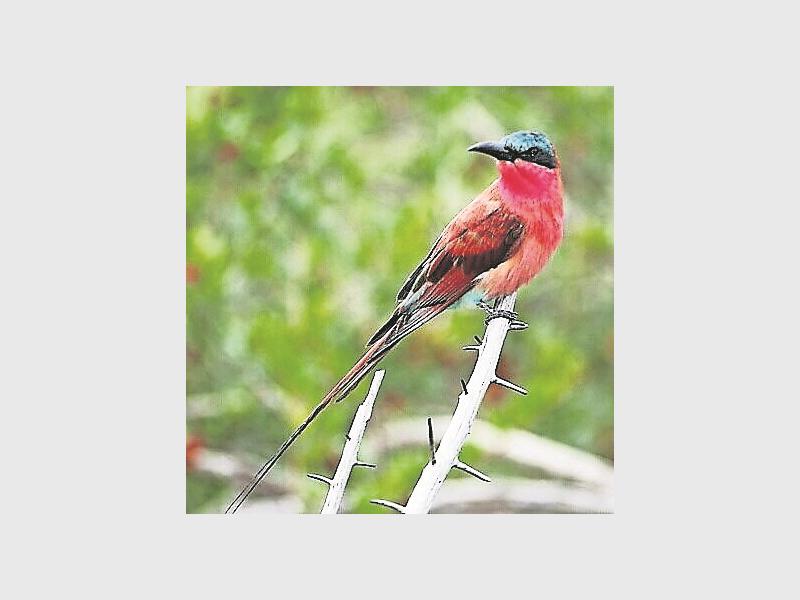
by BRUCE MUNRO
AN intra-African migrant, the carmine bee-eater breeds in Zimbabwe from August to November before dispersing into the North East of South Africa.
After March, they head north to equatorial Africa.
They like river valleys and floodplains with vertical banks, where they nest in colonial burrows of 1.5-metres to 2-metres long.
The carmines are highly gregarious at all times, occurring in flocks of up to hundreds of birds. They roost communally and scatter widely by day. Their food is large flying insects which they hawk from their perch.
They hunt well around grassfires and large animals, and fly high in circles and bathe by splash diving into water.
Carmines are active mainly in the morning and evening but are lethargic around noon.
They lay between two and five white eggs. They are nestlings for about 30 days.
The carmine’s Zulu name is iNkotha-enkulu and in Afrikaans, they’re called rooiborsbyvreter.