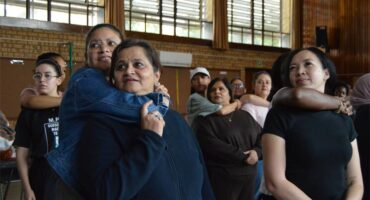

Garden club enlightened on owls and bats
The next garden club meeting will be on August 27 at Kliprivier Recreation Centre, Peggy Vera Road, Kibler Park. For more information contact Dennis Boddington on 083 642 1967.

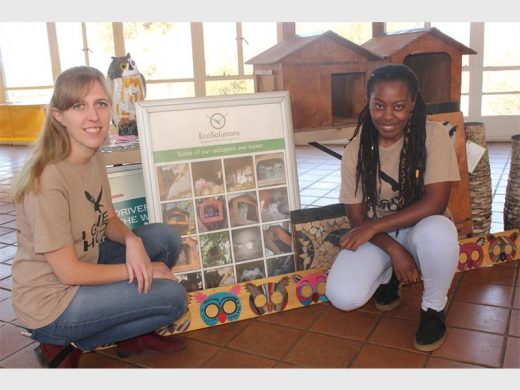
SARA Orchardson, from Eco Solutions Owl Box Project, came along to Johannesburg South Garden Club on July 30, along with her colleague, Delina Chipape, to chat about owls and bats.
Sara spoke about the commonest owls in South Africa, especially those that live in the Johannesburg South area.
“Barn owls, spotted eagle owls, marsh owls and white-faced owls can be seen in this area, and one of their favourite foods is rats.
“I know I always harp on about it, but please don’t use poison to kill them. Owls are excellent rodent eaters and if they eat a rat which has been poisoned they will most likely also be poisoned and die,” said Sara.
“Owls’ ears are not symmetrical and if you are lucky enough to see an owl at close range you’ll see he moves his head at an angle so he can hear. His hearing is fantastic and he’ll be able to hear his prey even though he may not be able to see it.
“On an owl’s wings he has comb-like feathers, rather like a fringe, so as he’s flying the wings break up the air and he can sneak up on his prey.
“Barn owls are very common worldwide because their prey is common worldwide.
“They breed in small dark places and cavities and will most commonly have between two to three owlets, although it has been known for a barn owl to have up to 15 owlets.
“Their breeding months are between March and May and they lay their eggs a day or two apart. Thirty-three days later their babies are born.
“The spotted eagle owls live on the ground, rocks or rocky ledges in residential areas. If you have an owl box you’ll have to put small stones in the bottom to replicate a rocky surface.”
A male barn owl or a male spotted eagle owl that has a nest of owlets hunts every night. When he brings the food “home” he feeds the owlets first, then himself, then the female. An owlet eats twice as much as its parents.
Owl boxes
Sara spoke about owl boxes and what a wonderful part they can play in providing a safe home for an owl and its family.
“Owl boxes are for sale through Eco Solutions and our employees will come out and install it for you in a tree or wherever they think will be the best position. Keep your owl box well maintained, even if an owl doesn’t move in. He won’t unless it’s clean. One of the problems with having an owl box is other birds also use them, such as the Indian myna, Egyptian geese and bees,” Sara added.
She spoke a little about bats that are a great asset as they eat lots of bugs, especially mosquitoes. Bats can live in very large groups, some other bats in smaller groups.
“If you have horses it’s a good idea to keep bat boxes on the side of the stables as they’ll control insects. Most times bats have one pup or sometimes twins.
“They don’t always hibernate during the winter months, only if they have enough body fat, otherwise they’ll migrate to warmer climates. We also sell bat boxes, these are longer and shallower than the owl box.”
Educating children
Sara said she often goes into townships to educate the children about owls.
“We teach them not to be afraid of owls and explain to them they eat rats. Many areas in townships are overrun with rats so owls play a huge part in keeping the rat population at bay.
“If we can educate the children from an early age, they can play a part in educating their parents too about how harmless an owl is,” Sara added.
“The more we educate children, the more they learn about conservation. This year we are having another Art Project which will be held at the Walter Sisulu Botanical Gardens Bird Fair on September 14 and 15.”
The members enjoyed Sara’s talk and Delina also spoke about the owl and bat boxes.
The next garden club meeting will be on August 27 at Kliprivier Recreation Centre, Peggy Vera Road, Kibler Park. For more information contact Dennis Boddington on 083 642 1967.