
The vaccine rollout
Phase one of the South African Covid-19 rollout started on February 17 with the initial vaccines being made available to healthcare workers on the front line.
Phase one of the South African Covid-19 rollout started on February 17 with the initial vaccines being made available to healthcare workers on the front line.
Three months later the vaccine rollout has been extended to also allow elderly residents to be vaccinated as part of the phase two rollout.
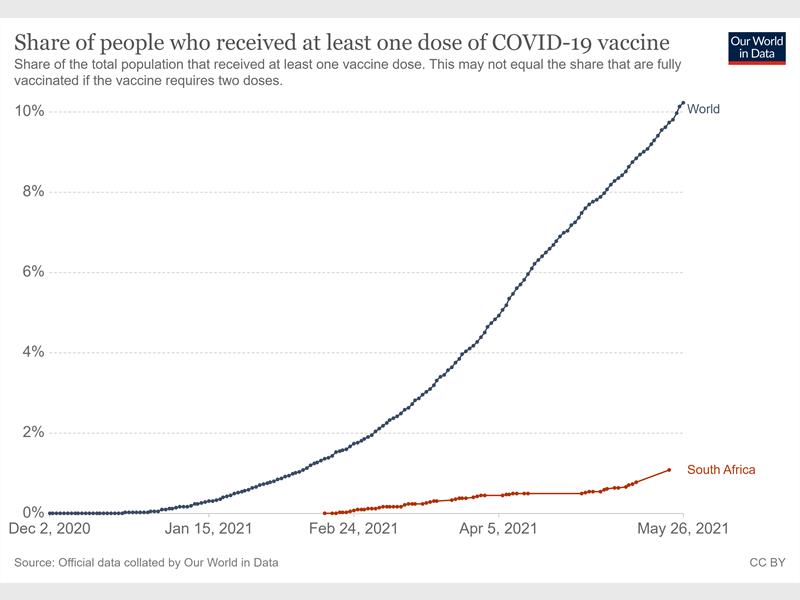
How does South Africa’s vaccine rollout stack up compared to the rest of the world?
The United Kingdom was the first country to start administering vaccines to their citizens. Their initial rollout of the vaccine began in December. Since their rollout they have delivered around 62 million doses.
China, United States and India have claimed higher numbers of vaccinations at 567 million, 289 million, 198 million and 64.6 million doses respectively.
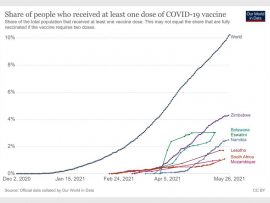
In South Africa a total of 701 000 doses of Covid-19 vaccine have been administered, with around 481 000 people considered fully vaccinated. This equates to around one per cent of the population.
For the Covid-19 vaccine to achieve an effective stage for population safety, a point of herd immunity needs to be reached.
Herd immunity refers to a state in which a population is immune to a disease, either through vaccination or through previous exposure to the virus.
While the exact amount of people required to be vaccinated to reach herd immunity is unknown, for measles herd immunity required around 95 per cent of the population to be vaccinated, while for polio it took 80 per cent.
This puts the South African vaccination rollout far short of the point at which herd immunity will be achieved.
*All information thanks to Our World in Data.
Fact Box:
South Africa compared to our neighbours
• South Africa: 701 000 – one per cent of population
• Botswana: 72 000 – three per cent of population
• Zimbabwe: 928 0000 – 4.3 per cent of population
• Mozambique: 393 000 – one per cent of population
• Namibia: 68 000 – 2.4 per cent of population
• Eswatini: 35 000 – three per cent of population
• Lesotho: 37 000 – 1.7 per cent of population
*Numbers are rounded to the nearest thousand