Accelerating social transformation with our people
On an on-going basis, we engage in programmatic interventions to improve the quality of life for the poor and vulnerable.
The Gauteng Department of Social Development (GDSD) provides appropriate social assistance to all those who are unable to support themselves and their dependents in terms of section 27 (1) (c) of the Constitution of the Republic of South Africa.
Accordingly, our programme of action is guided by the National Development Plan (NDP) and in particular outcome thirteen of the NDP, namely ‘an inclusive and responsive social protection system,’ and on Accelerated Social Transformation.
Our greatest challenge as the Gauteng Provincial Government is to eradicate hunger and poverty in our communities. This priority was captured very well by the Premier, Hon David Makhura in his State of the Province address when he said:
“Although the number of people living below the poverty line has decreased from 32% in 2004 to 16% in 2016, we still have a long way to go. Close to 20% of the population of our province don’t have enough food to live on every day. This is a serious problem that puts the life of many citizens at risk.”
We expect stakeholders to critique our war on poverty programme and offer a much more effective solution to hunger and poverty.
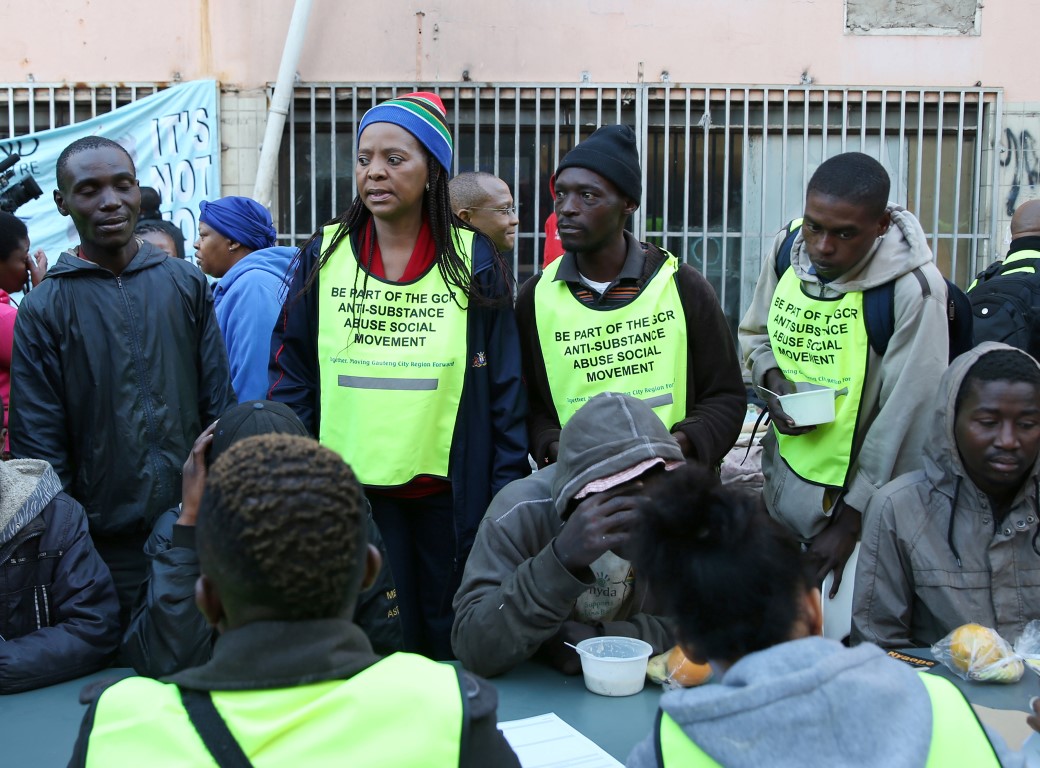
The other challenge is the growing abuse of the substance that is ravaging our communities’, especially young people.It is obvious government alone cannot win this war. It is for this reason that we are working together with our partners in the social movement against drugs. These sessions are aimed at ensuring that we strengthen the fight against drug and substance abuse.
It is obvious government alone cannot win this war. It is for this reason that we are working together with our partners in the social movement against drugs.These sessions are aimed at ensuring that we strengthen the fight against drug and substance abuse.
These sessions are aimed at ensuring that we strengthen the fight against drug and substance abuse.
In the same vain, we are faced with equally troubling challenges with regards to the provision of Early Childhood Development education. Many centres are illegal and children are either abused or even worse die at these centre.
We want to make sure that all ECD centres are legal and take good care of our children. We also have major responsibility for supporting people with disabilities. Our target is to achieve way above the 2% employment and empowerment target.
We would also like to make sure that more people with disabilities benefit in the economy of Gauteng through preferential procurement.
Older persons have become more vulnerable in communities and this has compelled the department to further intensify its prevention and awareness programmes on elder abuse and older persons’ safety and to promote the ‘Adopt a Gogo’ campaign with increased vigour in the 2017/18 financial year.
Gauteng Province is one of the provinces where traditional initiation is practiced. This culture is mainly practiced in the outskirts of urban and peri-urban areas. Whilst many boys enrolling in the traditional initiation schools come back healthy, some come back sick and others die in the process. As custodian of children in terms of section 12 of the Children’s Act 38 of 2005, we must also respond to this challenge.
These are the objectives of the Gauteng Medium Term Strategic Framework (2009-2014); the ten (10) pillar programme of Transformation, Modernization and Reindustrialization (TMR) of Gauteng; and the Accelerated Social Transformation Strategy.
The vision of the Accelerated Social Transformation Strategy is to have integrated and well-coordinated social transformation service delivery machinery. We can only achieve these standards if we listen to our people; hear their views and frustration.
We have invited the media here as a partner. We would like you to join us in listening and sharing the views with our people. We hope you shall, in turn, share our discussions with the rest of Gauteng.
Issued by the Gauteng Department of Social Development