
Queen Elizabeth II: A lifelong connection to South Africa and Africa
With the passing yesterday of Queen Elizabeth II, we remember the excitement of her visit to South Africa shortly after WWII and the significant links she had to Africa.
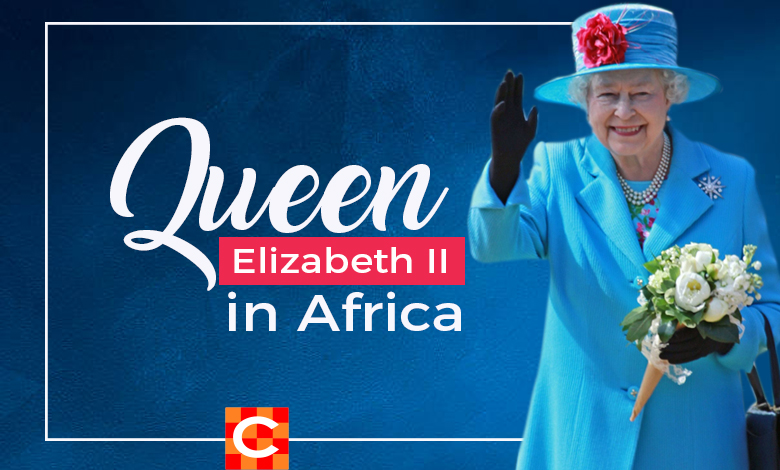
When Queen Elizabeth II walked out of Westminster Abbey in London on June 2, 1953, after her coronation as the British monarch, it was with the Imperial State Crown on her head – and taking pride of place in the crown was the Cullinan II, a renowned South African diamond. And for the next 70 years, the Sovereign Sceptre, adorned with the Cullinan I, would feature prominently in the Queen’s left hand during official royal duties.
The world’s largest diamond, the Cullinan (3 106.75 carats), was found in South Africa in 1905 and gifted to King Edward VII two years later, in 1907. It was cut into nine stones (Cullinan I to Cullinan IX) as well as 96 smaller round brilliant cut diamonds.
Queen Elizabeth’s connection to the country’s precious and one-of-a-kind diamonds was forged in 1947 when, as Princess Elizabeth Alexandra Mary, she celebrated her 21st birthday while on a trip to South Africa with her parents and her sister. She was presented with 21 unset diamonds by General Jan Smuts, totalling 71.31 carats, while Sir Ernest Oppenheimer also gave her a six-carat blue-white diamond. Throughout her reign, the Queen often referred to these sparkling stones as her ‘best diamonds’.
“As I speak to you today from Cape Town, I am six thousand miles from the country where I was born. But I am certainly not six thousand miles from home. Everywhere I have travelled in these lovely lands of South Africa… I have been taken to the heart of their people… Before I am much older, I hope I shall come to know many of them …”
In 1952, she returned to Africa with her husband, Prince Philip, not knowing that the continent would forever remind her of how her darkest day turned into a life of exemplary service.
On February 6, while in a treehouse in Kenya, the 25-year-old Elizabeth received the heartbreaking news of the death of her beloved father, King George VI. Now the queen, she immediately returned to the United Kingdom, changing into a black mourning outfit that was smuggled onto the plane shortly after it touched down in London. All she had in her suitcase were summer outfits.
In an anniversary statement in February this year, Queen Elizabeth said of that fateful day: “It is a day that, even after 70 years, I still remember as much for the death of my father, King George VI, as for the start of my reign.”
Queen Elizabeth II had a special connection with Kenya. She ascended to the throne of the UK in 1952 aged 25 years while on a visit to enjoy the beauty of Kenya's nature. During her reign, she visited Kenya many times and has hosted Kenyan leaders at the Buckingham Palace. pic.twitter.com/iocVD3EBIB
— Presidential Library, Museum and Exhibitions (@OPLMKe) September 8, 2022
During her time as the head of the British royal family, Queen Elizabeth II would return to South Africa twice. However, there was a long gap between her first and second visit because, in 1961, the country withdrew from the Commonwealth because of objections to its policy of racial segregation.
South Africa was readmitted in 1994 and the very next year, the Queen once again visited South Africa, this time on the invitation of the then president, Nelson Mandela. The two were to develop an enduring friendship.
The Queen and the Duke of Edinburgh came to South Africa again in 1999 when they attend the Commonwealth Heads of Government Meeting in Durban.
Seventy-five years ago, when she so eloquently spoke to the world from Cape Town, she said: “I declare before you all that my whole life, whether it be long or short, shall be devoted to your service and the service of our great imperial family to which we all belong.”
She lived her promise.
Read original story on springsadvertiser.co.za