
Social media 101: Online’s a scary place for children
If your child is exposed to electronic devices and online platforms, there are things they should be aware of.
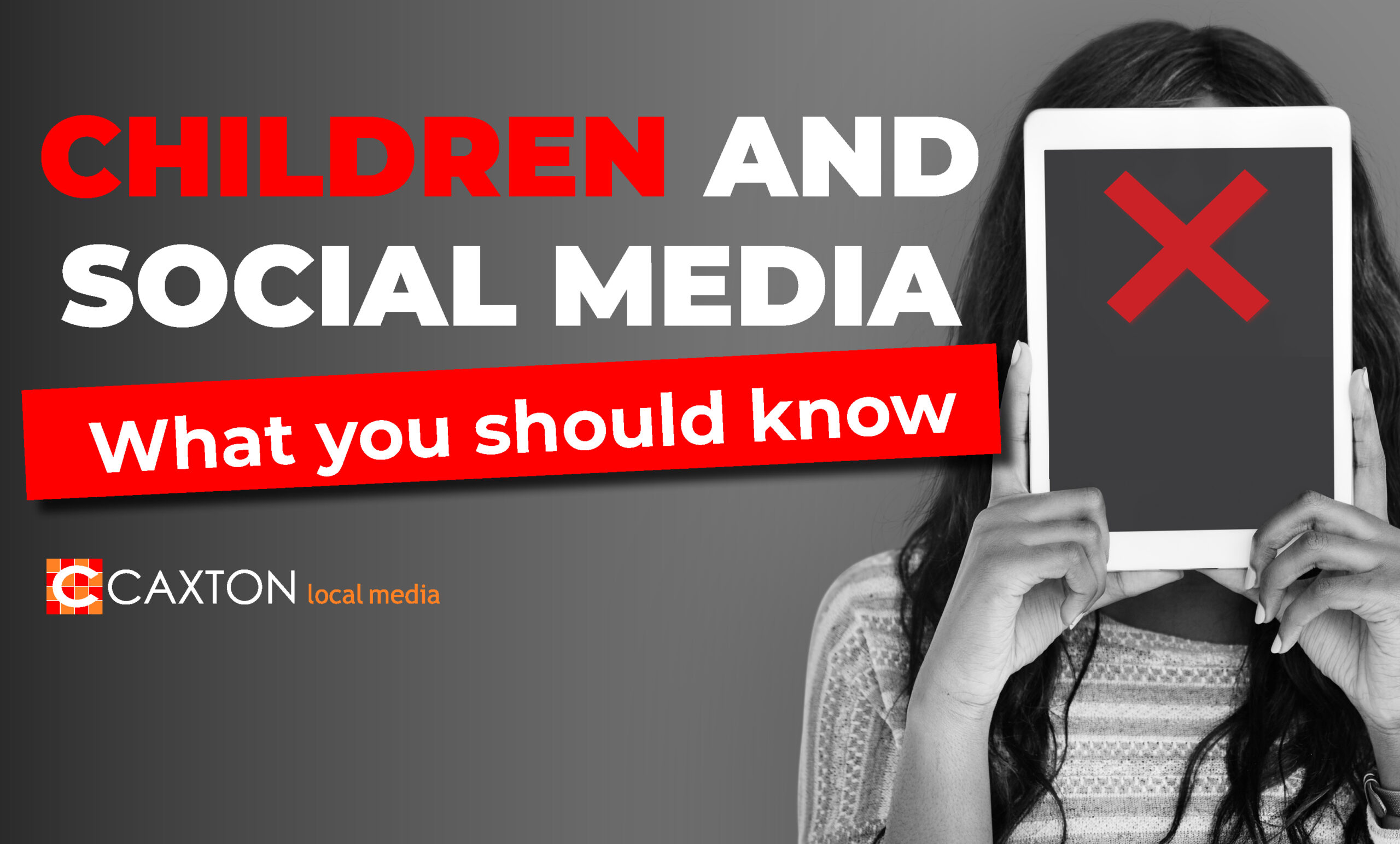
The online identification of a child should be avoided in most instances, states the Child Charter of the South African Human Rights Commission’s Social Media Charter.
The Constitution defines a ‘child’ as anyone under the age of 18 – and minors enjoy the same rights online as they do in the material world.
According to the commission, children’s right to privacy is essential for their agency, which is their capacity to make choices in their own interests; dignity; and safety online.
“It is therefore important to exercise additional caution when considering sharing pictures or information about children online. You should be particularly careful about sharing photos of children on social media, because the photos may remain available permanently and create a permanent public record of a child’s life and the child will not have consented to such public record.”
The charter says children may – as a result of their parents, caregivers and families – have a digital footprint even before they are ‘active digital citizens’.
One should ask the parents or guardians’ permission before sharing pictures of other people’s children.
“If you upload a picture of someone else’s child without their consent and they ask you to delete the picture, you must delete it. The face of the child should ideally never be shown so that they are not easily identifiable,” the charter states.
Identifying a child (by name or in another manner) is not allowed if:
- a child is involved in legal proceedings,
- a child has been a victim or survivor of abuse or exploitation,
- a child is a victim, survivor, or witness in a criminal case, or
- a child is in the care system.
Sharing is not always caring
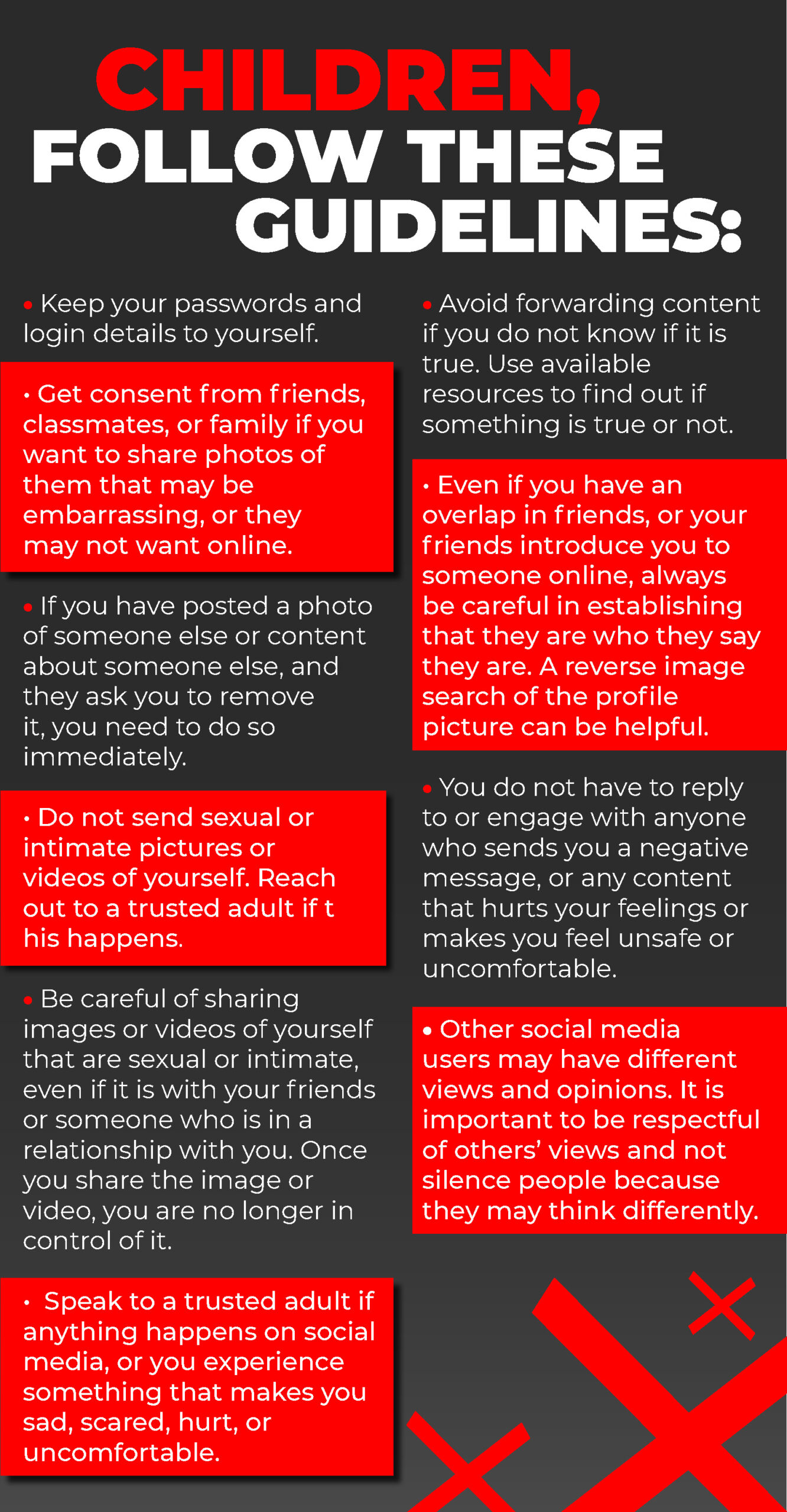
Understanding the social media platforms your children use is important and the terms and conditions of these platforms should be discussed with your child. Discuss the use of these platforms and screen time in a ‘safe space’ with your child, and explain to them how to distinguish between things that may be true and those that may be untrue.
The commission stresses: “You have a legal obligation to report instances of any online sexual offence against a child that you know about or reasonably believe or suspect to have been committed. If you fail to report such knowledge, reasonable belief or suspicion to a police official, then you are guilty of an offence.”
Stay safe online
If content can cause harm to a child – it should not be posted. Children’s safety online is extremely important, and content that ‘names or shames’ or violates a child’s right must not be shared online.
“Online child sexual abuse and exploitation is a significant and growing threat to children’s online safety and is illegal. It can have a destructive impact on children’s physical and mental health, with far-reaching consequences that can extend into adulthood,” the Child Charter warns.
What is online sexual exploitation? The use of online tools or online spaces to sexually abuse and/or exploit children is seen as online sexual exploitation. This can be done by emotionally and/or psychologically abusing a child to manipulate them into doing something sexual.
“This includes grooming, sending sexually explicit material, blackmailing a child to send private or sexual photos or videos, sexual extortion and coercion, and flashing over a webcam. It may be once or persistent and may include threats of harm or disclosing personal information.”
Exposing children to pornography or creating, accessing, or distributing child sexual abuse material is a criminal offence.
What to do if this happens
There are various legal options to consider, but the charter mentions that reporting these offences to the police is critical.
“You can also reach out to the Department of Social Development, Childline, and the Film and Publications Board. It is important to note that our laws require any person who has knowledge that a sexual offence has been committed against a child must report this to the police. Failing to report is an offence.”
View this post on Instagram
Rights and responsibilities
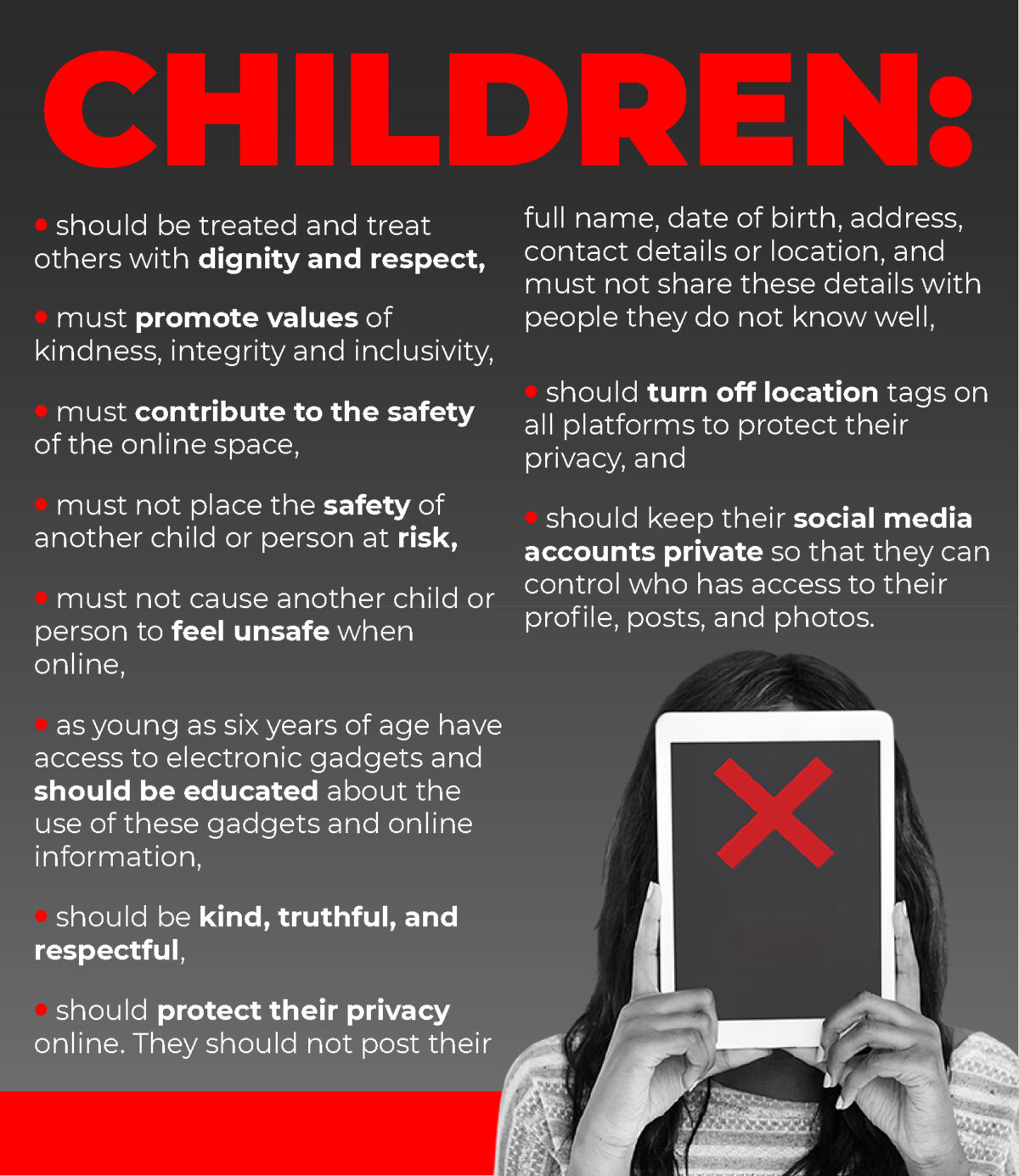
Children who make use of social media platforms have rights and responsibilities.
The commission notes that although the charter applies to children and their conduct on social media, two points should be noted:
- Age restrictions – Access to appropriate and relevant content that is in accordance with a child’s developmental capacities is necessary for children to responsibly use and enjoy online spaces. Therefore, respecting age restrictions and restrictions on certain content is important, particularly when content may be inappropriate or harmful.
- Some activities are forbidden – Some activities on social media may be criminal offences and a child above the age of 12 can be held criminally responsible. A child who is 12 or older, but under the age of 14, and who commits an offence is presumed to lack criminal capacity (cannot be held criminally responsible), unless the state proves that he or she has criminal capacity. A child is presumed to have full criminal capacity from the age of 14. Cyberbullying, harassment, circulating leaked exam papers, sharing private or sexual pictures of another child, exposing another child to sexually explicit material, creating deep fakes to cause harm, and sending threatening messages to another child are some examples of conduct that could amount to a criminal offence.
The general rule of thumb is when in doubt – don’t post.
Read original story on witbanknews.co.za