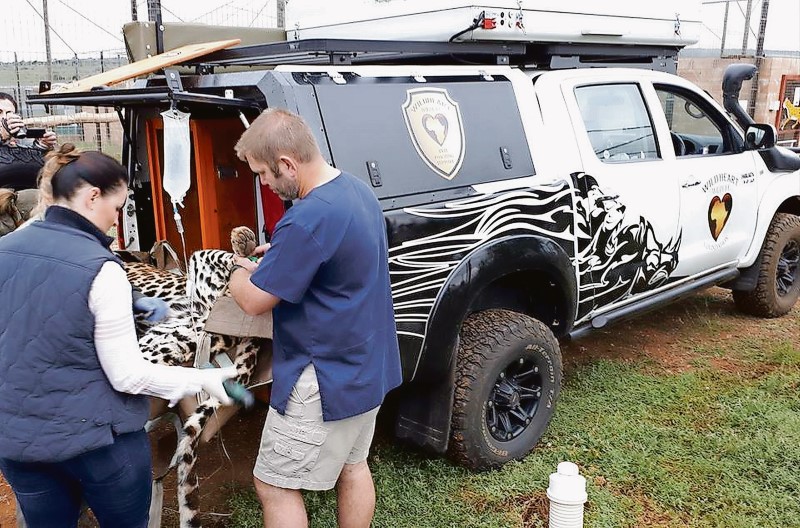
Dr Nolan Landman and Dr Jacqui Hooton from Witbank Veterinary Hospital were two of the six vets that were arranged by Mr Deon Cornelius the owner of Ubhetyan-O-Africa that travelled 2600km to help with the relocation of four leopards.
Project Phoenix has been in the pipe line for a couple of months which finally became a reality on Saturday, March 17 when the leopards were released into their new enclosures at Ubhetyan-O-Africa for rehabilitation before their final release back into the wild.
Everyone involved in this amazing project knew it was going to be hard work, lack of sleep and a lot of driving involved, but they were up for it as it was for the ultimate benefit of the animals at the end of the day giving them a better life immediately.
The crew that consisted of the vets from eMalahleni and Onderstepoort (Faculty of Veterinary Science- University of Pretoria) the head vet for the project was (Ms Katja Koeppel), the new cat guardian for the time being is Cornelius, a camera crew and project coordinators Wild Heart Wildlife Foundation (WHWF). Everyone on the team departed at approximately 03:00 on Thursday, March 15.
Travelling in convoy to Wild Cats World in Kirkwood just outside Port Elizabeth the crew eventually arrived at 19:00.
Then it was straight to bed for everyone as they knew they had a rough day ahead of them, with what seemed like no sleep everyone was up and about early on Friday morning, March 16.
The vets immediately got down to work and they started darting the leopards. When the first leopard was darted it started to rain, but there was no stopping them now.
As some vets were busy darting the leopards, the other team of vets started to work on the leopards, the leopards were placed on a drip, blood was drawn from them for Deoxyribonucleic Acid (DNA) screening and a general overall health assessment was done on them.
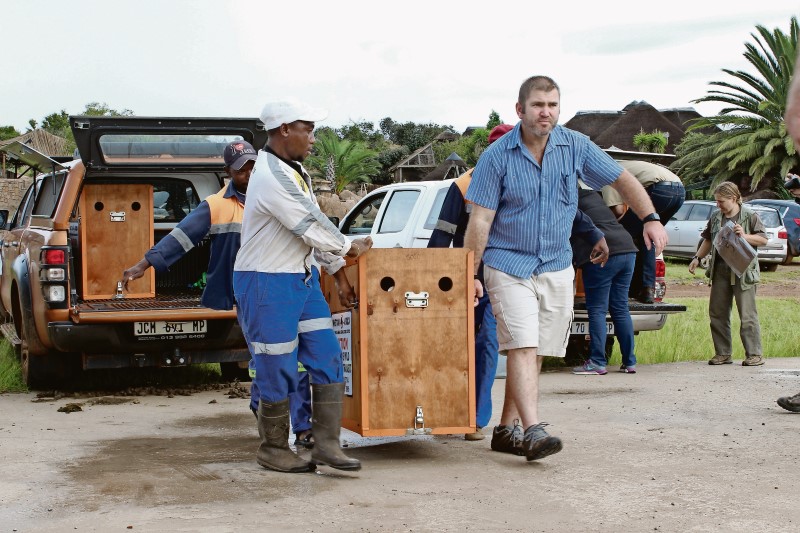
Once the leopards had received enough fluids they were placed into separate crates for the long trip back and then woken up and everything was ready to go.
The crew that worked hard together in the rain were all soaking wet, but they just had to stick it out all the way back to Mpumalanga.
ALSO READ:
Vets treat dehydrated black leopard
The three vehicles that were dedicated to drive the animals to their new home, made sure that the animals had a smooth ride back and it was not too traumatic.
“It was a very long trip back to Ubhetyan-O-Africa as it rained all the way back. When we eventually entered Mpumalanga there was heavy rain so we just had to concentrate so much more,” said Landman.
The vets were happy about the weather conditions on the day, as leopards tend to overheat while being treated and in transit, but the cool weather was good for the leopards.
On Saturday morning, March 17 at approximately 01:00 the crew arrived at Ubhetyan-O-Africa safely and the plan was to get a few hours of sleep before releasing the leopards into their new enclosures.
At 07:00 everyone was up and about, even though they were still extremely tired all red eyed and bushy tailed – they were ready for the final step of the initial project.
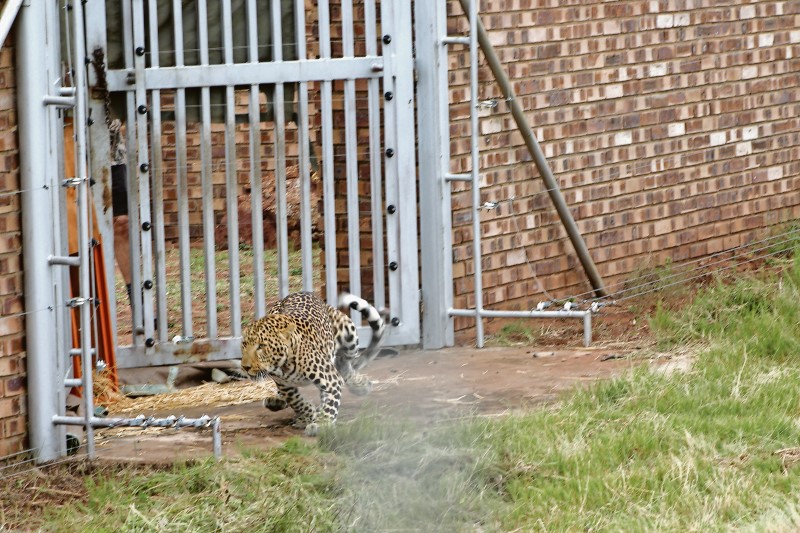
But first things first, weighing of the leopards had to be done; once all the leopards were weighed the animals went on a last ride to their new enclosures before they were released.
The leopards, Olive, Beau, Bahati and Solo were all released separately into the new enclosure, which is more than ten times the size of where they came from.
“I will be the person taking special care of these leopards, making sure that they will be excellent condition for their release into the wild. I organized everything to get them, a special thanks to all the vets but I made it possible for them to be apart of this project,” said Cornelius.
Cornelius only wants the best for his animals at Ubhetyan-O-Africa and by doing so he takes excellent care of them.
Later that morning after the leopards were released, Cornelius flew the drone over the enclosure to see if he could spot them to make sure that they were settling in.
But due to the thick vegetation in the enclosure and all the hiding spots he could not see them.
“I would like to thank the following people for all the help with this project, the vets from Onderstepoort (Faculty of Veterinary Science- University of Pretoria), Wild Heart Wildlife Foundation. Dr Nolan Landman and Dr Jacqui Hooton from Witbank Veterinary Clinic, my mother in law, Buco, J&L Linings, Wild Cat World, Sable Valley, Lutzkie Group of companies, Storm Lutzkie, Raymond Joubert and SW. Badenhorst Attorneys,” said Cornelius.