
Help keep hyacinth out of Witbank Dam
Red lights are flickering because hyacinth was found at Witbank Dam and in Witbank Yacht and Aquatic Club's (WYAC) marina.
Red lights are flickering because hyacinth was found at Witbank Dam and in Witbank Yacht and Aquatic Club’s (WYAC) marina.
Three small plants were found at Witbank Dam last year and enough to fit into a domestic bucket was found at WYAC’s marina not so long ago.
It might sound like insignificant, but water hyacinth can destroy the delicate ecosystem in a river or dam. One only has to think of Hartebeespoort Dam to realize the extent of such an infestation.
Environmental Planning and Climate Protection Department water hyacinth, Eichhornia crassipes, is an aquatic invasive alien plant. It spreads rapidly, being able to double its biomass in as little as a week.
ALSO READ
Waste water treatment plants are the culprits
It degrades the ecological systems of rivers and dams, chokes up watercourses causing flooding and affecting people’s ability to access and use water resources. It has been included in the IUCN’s report on “100 of the World’s Worst Invasive Alien Species”.
If left uncontrolled, water hyacinth can disrupt water abstraction facilities, destroy fishing grounds, disable water sports areas, block up irrigation channels and watercourses and wipe out aquatic biodiversity.
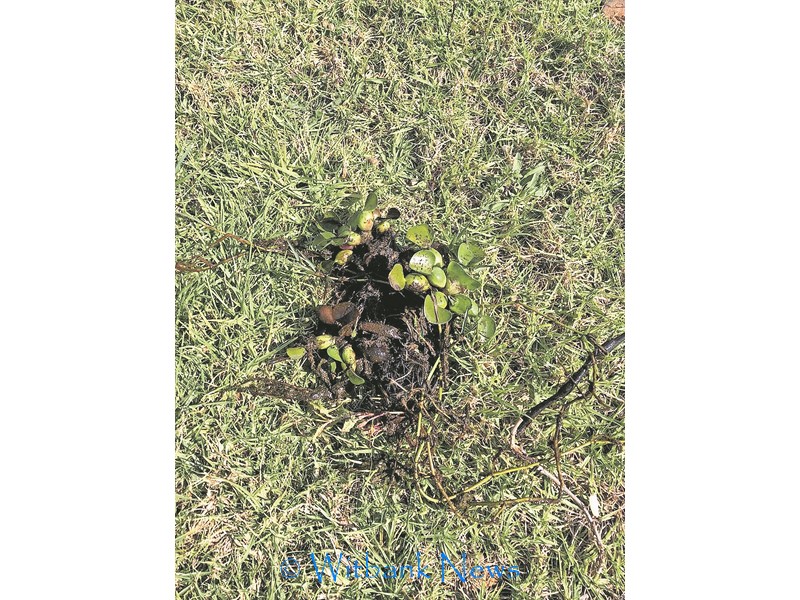
This hyacinth was found in local waters.
“Hyacinth has found its way into Witbank Dam via visiting water craft from other dams with hyacinth,” Dave Martinson, commodore of WYAC said.
He said the public must be instructed that all visiting water craft like fishing boats, sailing boats, power boats, jet skis and trailers must be hosed down prior to launching on Witbank Dam.
“A heavy fine should be imposed for visitors who fail to do this or a duty officer must be in place to implement this precaution,” he suggested.
If hyacinth are spotted, it must be immediately removed and put into a bag to be disposed in a rubbish bin well away from water.