My election ‘pilgrimage’ – #IMadeMyMark
It was our burden to weigh the scales and to pass judgement with absolute fairness
When I had to cast my vote in 1994, I was awake at 4am that morning. It felt like getting ready to embark on a religious pilgrimage.
In 1994, placing a cross and giving an endorsement for Nelson Mandela to be the first president of a new democratic South Africa was the most supreme part of that pilgrimage. It was a moment filled with emotion. The long row of people that snaked its way to the ballot box at the Trinity School in Lenasia began to form from as early as 5am.
Even though voting is only for adults, on that historic day in Lenasia, people took their little toddlers along with them to the polling stations. They wanted their children to witness the moment. They wanted their children to be blessed by the auspiciousness of that day. One by one people cast their votes. They walked out of the election booth overwhelmed that their children will enjoy the fruits of freedom.
Twenty five years later, some of those children will be casting their votes for the second time tomorrow.
Lenasia was a hotbed for political activism against apartheid. That day in 1994, Lenasia was filled with thanksgiving and prayer.
It wasn’t payers for ourselves but we prayed for those who paid with their lives so that we could all gather on that pilgrimage plain. We hugged political activists in our communities. In our warm embraces, we poured our gratitude to them. Nothing could express our appreciation to them for their unselfish and stoic commitment.
In their victorious smiles, the years of their personal pain and loss that was brought about by detention and police harassment simply eroded itself away.
For three days, we watched and we waited. When the result was announced on the third day it was like listening to that final sermon that marks the end of a pilgrimage. In that glorious moment, tears rolled down our cheeks.
Its saltiness ate away at any of the bitterness that we brought with us on that pilgrimage. Through our tears we all were renewed. We were born again. With the same fervent passion with which we hugged political activists in our community for keeping the flames of the struggle alive, we forgave those people who had sold us out during the years of our struggle.
We became brothers. We were now united by a common purpose. We were all in a single pilgrimage that was going to be not about ourselves but more about what we were going to endow to generations after us. Our cross on the ballot form was a sacred promise to those who will have to harvest the fruits that we were planting. For many of us, that political moment was deeply personal; and the personal was also very hugely political.
During the second general election I was appointed as the presiding officer at the Witbank City Hall. It was the largest electoral station in Witbank. My staff and I gathered at 4am to prepare the station and to await the throngs of people that wanted to continue the journey of building our democracy.
We ran our station with absolute discipline and fairness. Representatives of political parties who were assigned to witness the proceedings at the polling station may have been fierce political and ideological opponents but in the sanctity of the electoral station we created a space where they were able to find the courage to give respect and dignity to each other.
At 21:00 the doors of our polling station were closed. The last fifty or more voters who were in the cordoned off space were ushered in one by one to the ballot box. When the counting of ballots started we were like angels sitting around the table tallying the sins and rewards of mortal men.
It was our burden to weigh the scales and to pass judgement with absolute fairness.
At 2am the next morning, we sealed the boxes of counted votes and guardedly delivered it to the Electoral President heading the region. Outside at the Civic Centre, small groups of people milled around.
They were waiting to hear the results being announced. The air was filled with songs, strong coffee and cigarette smoke. I was exhausted. I wanted to hit the bed. I wanted to fall asleep. I wanted to dream good dreams. I can’t remember if I did dream anything that night but I do remember that I slept feeling confident that my team and I had preciously guarded the trust and the responsibility that was invested in us at the electoral station.
I cast my vote for the third general election in Makhanda (formerly Grahamstown). This time round I didn’t feel like a pilgrim. I felt like I was the delinquent school boy who had to report to the headmaster’s office. I didn’t like the headmaster’s face. It was Jacob Zuma. I hated it even more that it was printed on the ballot form.
In the privacy of the polling booth I behaved like the delinquent kid. I scrawled the words “f..k you, suckers!” across my ballot paper. I spoilt my vote!
My first vote in 1994 drained me of emotion. My third vote filled me with disillusionment and anger.
I could not get myself to vote for a false prophet. Like men who tear the scriptures because they are angry with god, I responded by spoiling my vote. From here began the journey of a pilgrim trying to take two steps walking away from his own faith but always cautiously taking one step back hoping that somehow the candle of hope will shine its light again. It never has! The abyss had only become darker. The prophets who once led us to a place of light had now become the demons themselves.
In the morning of the fourth general election the polling station was just down the road from where I stayed in Grahamstown. From my patio I was able to watch the pilgrims embark on their journey. Each one of them was walking to their altar with a sheer determination.
Their vote was their secret dialogue with the gods.
During the fourth general election I had no conversation to make with the gods. I felt like a pilgrim whose first spiritual journey was betrayed by the gods but I dragged my feet wearily to the polling station. When I arrived at the polling station it felt like the beginning of a new pilgrimage. We could choose to either let the devil smile at us or we could choose to roll our anger into a snotklap and to bowl it at the devil.
A vote against Zuma meant giving wings to those who could fight him and who would collectively be able to return our country from the clutches of the greedy whore. I wanted to be on the side of the snot-klappers!
It was a part of the sacred promise that I made on my very first voting pilgrimage that the right to vote is a responsibility not only for ourselves but that it is the promise that we make to future generations that we will strengthen the foundations on which they will someday have to walk. Instead, of building foundations those who were entrusted to lead us had filled our foundations with sinking sands.
Tomorrow South Africa will go to the polls again. This time round we have so many more false prophets on the ballot form. Elections has become like a charismatic church where the false prophets promise to let the dead rise. Almost all of them talk about taking us back to the spirit of Nelson Mandela but it is no longer his spirit that dances around the voting polls.
This time round around the polling stations are the spirits of men and women who died in service delivery protests, the mineworkers of Marikana, the patients of Life Esedimeni, the children who died falling into open toilet pits, the young man who committed suicide because he could not access an identity document to gain employment and the men from across our borders who once sheltered our exiles but came to be murdered in our country when all they wanted was a refuge in their time of need. These will be the spirits of people who will be floating around at our polling stations tomorrow.
They have become far too many to even remember and whose names have become impossibly too long to even call out.
It is they who will be calling on us tomorrow to vote with our conscience.
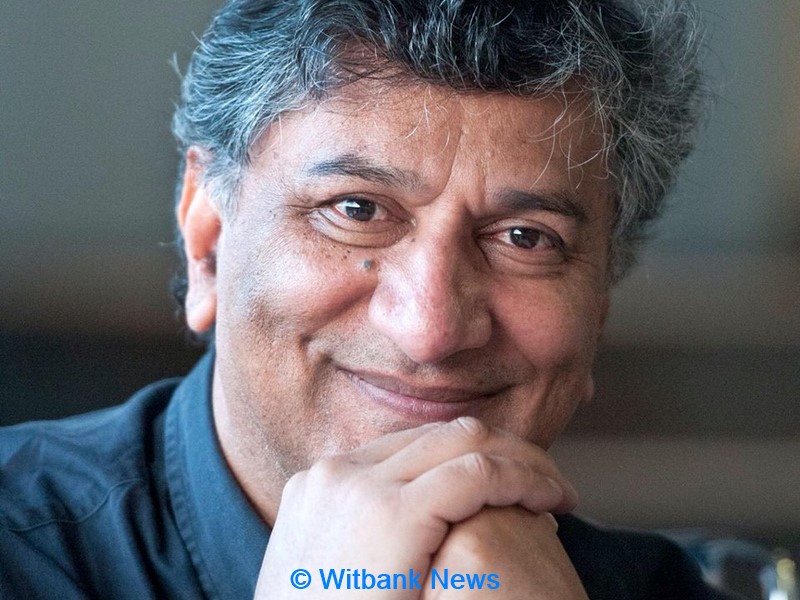
*Ismail was the Director of the Witbank Theatre in 1995. In 2003 he became Senior Cultural Specialist at the US Consulate in Johannesburg where he served as both an advisor and facilitator for the US Consulate on its varied cultural and academic exchange programming.
In 2016 he was appointed the CEO of the Market Theatre Foundation.
On 1 May 2008 he became Festival Director of the National Arts Festival, a post he held for eight years.
He was also part-time organizer for a number of festivals, including the 5th year Democracy Celebrations Festival for the Mpumalanga Provincial Department of Arts and Culture and the Millennium Celebrations Festival for the Emahlahleni Municipal District.