
Smoke and fire, but why?
An engine with a bad gasket is more likely to drip hazardous (and flammable) fluids and frayed wiring is more likely to spark and make contact with flammable materials.
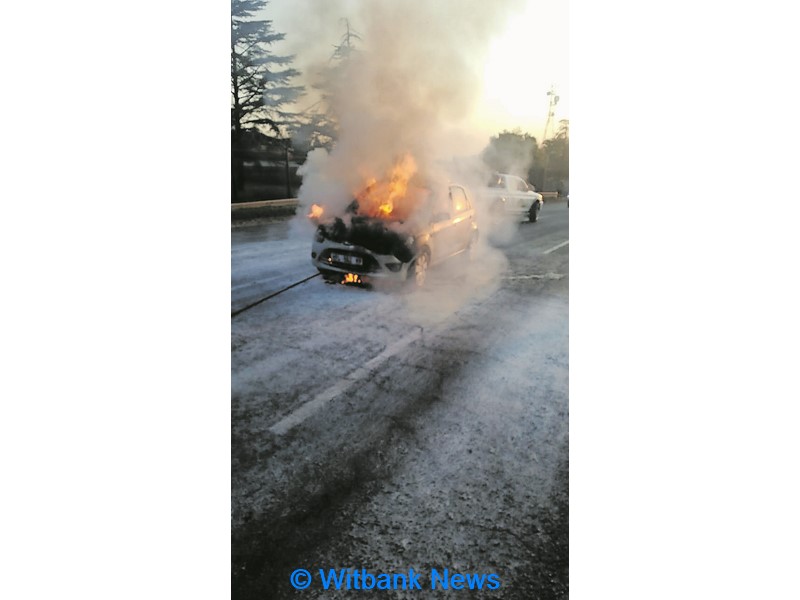
Car fires can be caused by fuel leakages, overheating, short circuits and accidents, among other factors, but Mr Dennis Ground from Emalahleni Local Fire Department says that the reason for this specific blaze remains unknown.
“We are still investigating how the fire started, but we can confirm that no one was injured by the blaze,” Ground said of the blaze that had erupted from a vehicle in Eskom Park on May 6.
The most common denominator when it comes to vehicle fires is neglected maintenance, according to the Chandler Law Group, because if you let broken parts, leaky seals, or faulty wiring go without repairs, it’ll make your car a lot more hospitable to the conditions that cause a fire.
An engine with a bad gasket is more likely to drip hazardous (and flammable) fluids and frayed wiring is more likely to spark and make contact with flammable materials.
This makes sense if you consider that a spark will ignite petrol at 7.2 degrees celsius, while at 257 degrees it will ignite all by itself (spontaneously).
If you ever smell petrol in or around your car, get it checked immediately as this may be a sign of a leaky fuel system, but it is not just fuel lines – engine oil, brake fluid, transmission fluid and power steering fluid are also flammable to one degree or another, so anything that contains fluid should be regularly checked.
Cars essentially run via a system of controlled explosions inside of the engine.
Engines get hot, which is why cars have cooling systems to stop them from getting catastrophically hot.
But, again, cooling systems can and do fail – regular maintenance and checks are your best friend here, but things can spontaneously go wrong.
Never ignore a warning light on the dash and if your car has a temperature gauge, always pull over and stop if it suddenly goes up.