
Minimum flowers, maximum creativity
Illustrations of arranged flowers have been found on Egyptian carved stone reliefs and painted wall decorations
Egyptians were decorating with flowers as early as 2 500 BCE.
They regularly placed cut flowers in vases, and highly stylized arrangements were used during burials, for processions, and simply as table decorations.
Illustrations of arranged flowers have been found on Egyptian carved stone reliefs and painted wall decorations.
The Greeks and the Romans also used flowers.
The ancient Greeks used flowers and herbs for adornment and decorations included in artwork.
They did not often use vases, focusing instead on garlands and wreaths.
They would place plant material, such as olive branches, in terracotta – for example.
The Chinese were making flower arrangements as far back as 207 BCE, in the Han era of ancient China.
Flowers were an integral component of religious teaching and medicine.
Practitioners of Buddhism, Taoism, and Confucianism placed cut flowers on their altars, a practice which dates back to 618 CE.
They created paintings, carvings, and embroidered items with depictions of flowers.
Buddhist teachings forbade the taking of a life, so religious practitioners worked sparingly when taking cuttings from plants.
Flower arranging arrived in Europe around 1000 CE, and was particularly popular in churches and monasteries where flowers and plants were used for food as well as for decoration.
As crusaders came back from the Middle East, they brought with them new and interesting plants.
As a result, European countries began experimenting with plants that were previously unknown to them.
eMalahleni might not be home to many ancient Egyptians, but we certainly house some floristry enthusiasts of our own.
Witbank Floral Art Club meets every second weekend at the Afrikaans Protestant Church in Rita Street, Del Judor.
These meetings commence at approximately 10:00 and currently consist of 12 permanent members.
New members are always welcome, and pay a fee of only R160 annually.
Snacks and refreshments are always offered, ensuring that members leave both physically and mentally enriched.
This is a friendly group, full of warm and welcoming people who would love to do some floral art with you.
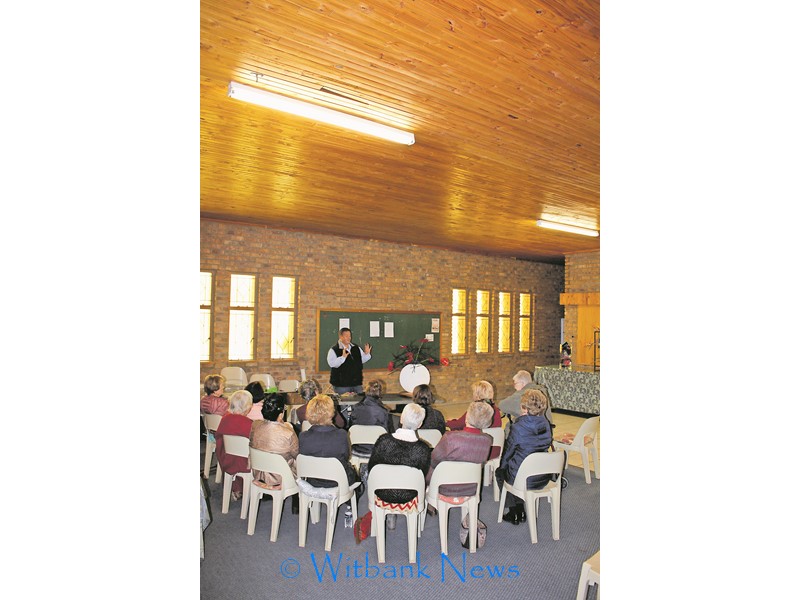
On June 13, Witbank Floral Art Club met at the Afrikaans Protestant Church once again to attend a presentation pertaining to floral arrangement held by Pierre Jacobs (a florist with more than 37 years’ experience).
Pierre is the president of the Gauteng Flora Union, and serves on numerous floral panels.
Pierre showed the members of Witbank Floral Art Club that you do not need an extravagant amount of flowers in order to create a beautiful design; you simply need a creative brain, an eager eye and a willingness to learn.
If you would like more information on joining this fantastic group of people, and learning a bit more about floral design, you can contact Lucille Lamb on 082 476 0239.