
Summit highlights demand vs supply
With climate change and the need for housing also onboard, the need to develop sustainable, equitable sources of clean water has never been more urgent
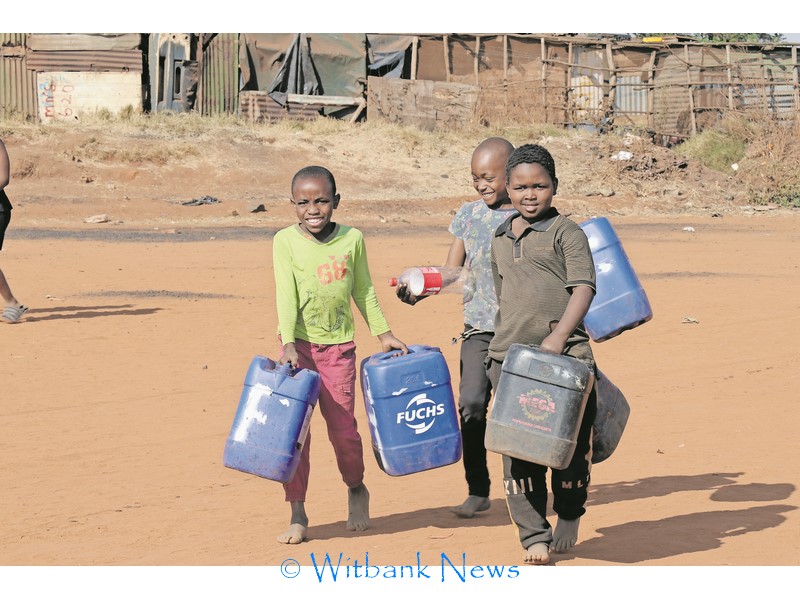
Water is the source of all life – and also one of the most threatened commodities.
Without consistent access to this limited and increasingly unpredictable resource communities suffer devastating consequences.
With climate change and the need for housing also onboard, the need to develop sustainable, equitable sources of clean water has never been more urgent.
Leading voices on the topic of water had input at the water summit that took place on September 4 and 5.
Executive Mayor of Emalahleni, Cllr Linah Malatjie said through this summit the municipality wishes to extend to the community that they will come out with solutions.
“We can only draw 75 ML per day at the Witbank Dam while the demand is at 124 ML per day. The municipality had developed a financial recovery plan which requires funding to increase the water use license from 75ML to 120ML and to beef up the capacity of the water treatment – and the reclamation plant with latest technology and innovations. Funding for bulk infrastructure for water and sanitation is needed as well as for maintenance as it has inevitably aged. Rapid development population growth plays a crucial role in the high demand for water supply. Deteriorating of raw water quality is also a challenge due to Acid Mine Drainage (AMD),” she said.
She said research and technological innovation to increase water mix is no longer an option but a socio-imperative to fight poverty, create much-needed jobs and support economic growth and development in general.
“Awareness and educational campaigns in respect of water conservation and security are vital and much needed. This scarce resource is wasted and misused by all users,” Cllr Malatjie said.
Municipal manager, Mr Sizwe Mayisela gave an overview of eMalahleni.
“Emalahleni Local Municipality was established in 1890. It became a municipality in 1914. Changed to Emalahleni Local Municipality through the amalgamation of three municipalities, namely Witbank, Kriel, Phola and Ogies,” he said.
From community survey statistics the population currently stands at 455 288.
“The population is projected to increase to 700 000 in 2030 due to job opportunities in the mining, Eskom and other growing sectors in the municipality.”
The municipality is a water services provider and water services authority in terms of the Water Services Act 108 of 1997.
This makes it responsible to supply water and the demand for water is growing daily.
Challenges in providing water result in consumers not having water sometimes for days on end.
Mr Shaun Schlachle asked what the short term plan is on current challenges like the maintenance of breaking pipelines.
“We need the augmentation schemes to fill up the reservoirs as the plant is unable to cope, the water goes to low lying areas first, as a result, they are not getting water. Conventional is most effective when the storage is enough but the tankers are used for emergencies on the shortage of water,” said Mr Mike Lelaka, director of technical services.
Mr Paul Makaba wanted to know whether the municipality has a strategic plan to replace asbestos cement (AC) pipes.
He also raised the question of whether the municipality has a maintenance plan and an action plan to address water losses.
“We have developed a section that will deal with planning. We currently do planned and unplanned maintenance. We have changed the recruitment process to attract the skilled people for the maintenance jobs and the AC pipes replacement has started at Highveld Park,” Lelaka said.
Another question was directed to the Department of Water and Sanitation (DWS), “Is there a plan or to take over the reclamation plants? Why is DWS taking so long to assist in helping the municipality and why is the department putting grant conditions, instead of complimenting?”
“We have an advance planning team, 2016 we started with the demand for action which is left undone by municipalities, especially in the upper Olifants. We disperse funds and we leave it to the municipality to decide on how to use is, but we should come closer in the planning stage. We will revise the processes on Regional Bulk Infrastructure Grant. And we also note that to turnover that process will start and stop due to hindrances, it’s not deliberate,” Mr Sello Kheva from DWS answered.