
Concerns over air quality
Clean Air Association reports the good and bad of the City's air quality status
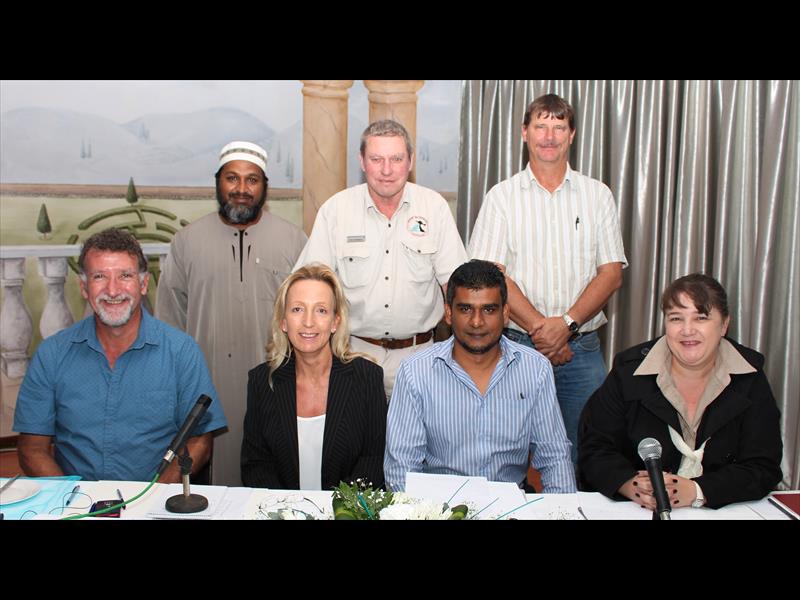
WHILE the past year saw a vast decrease in the number of complaints, the Richards Bay Clean Air Association says the City of uMhlathuze will have to be vigilant about air quality issues.
Speaking at the association’s 17th AGM, held at the Blue Marlin Guest House on Tuesday evening, RBCAA Managing Director, Hanif Mahommed reported worrying numbers captured on monitoring equipment.
‘Our air quality data would seem to indicate a steadily increasing trend in airborne SO2 (sulphur dioxide) and PM10 (particulates able to enter the lungs), most noticeably in Brackenham and the CBD.
‘This, together with the proposed IDZ and port expansions, dictate that the uMhlathuze municipality will have to apply rigorous air quality planning and management strategies,’ said Mahommed.
‘The RBCAA will have to remain vigilant and we will continue to pursue collaborative partnerships with the local and district municipalities, who are also tasked with monitoring air quality’
Outstanding Mondi effort
While the RBCAA was disappointed at founder member City of uMhlathuze’s decision to no longer participate in the association’s activities, new members Grindrod Terminals, Collateral Trading and Zululand Fire Protection Association had joined during the year.
More positive reports included the imminent relocating of a monitoring station to eSikhaleni and the outstanding effort of Mondi, which saw reported odour complaints decrease from 57% of the total in 2012 to just 18% in 2013.
They have spent a large amount of money on their odour abatement project and the RBCAA data verifies the success of their efforts.
Veldenvlei, CBD and Brackenham dominated the air quality complaints, of which clinical symptoms were associated with about a third of the complaints.
Thanks to funding from Foskor and BHP Billiton, the RBCAA is in the process of implementing a 12-month Hydrogen Fluoride (HF) monitoring program at nine selected sites.
A number of capital expenditure projects were implemented in 2013, during which Golder Associates Africa was appointed to manage the RBCAA’s network of 11 monitoring stations, which continue to operate efficiently.
‘The uniqueness of the RBCAA lies in the collective voluntary body of expertise, which no amount of money can buy,’ said Mahommed.
RBCAA Board and strategy
The eight-member Board of Directors elected for a one-year term of office will comprise representatives of: Corporate – BHP Billiton, Foskor, RBM, Tata Steel, Mondi Richards Bay; Non-corporate – Sandy Camminga (Founder Member), Zululand Fire Protection Association and Donovan Barton-Hobbs (Honorary Member).
Strategy objectives for 2014/2015 include:
*Assessment of St Lucia and Mtunzini Stations.
*Establish monitoring station in Esikhaweni.
*SANAS accreditation for SO2 and PM10.
*Assess Impacts of Bayside closure.
*Build relationships between RBCAA and authorities.
*Use of RBCAA Data to inform planning and developments.
*Assess value the RBCAA has brought to the Community.
*Expand corporate and non-corporate membership.
*Determine how RBCAA will meet objectives of continuous improvement in air quality.
The financial management of the Section 21 company was lauded by external auditors Hills Howard .
Being a not for profit organisation, surplus operating funds are carried over and used to offset the levy and membership fees for the following year.