
Tracking ‘Big Foot’ in Zululand reserve
scientists and professors from all over the world will converge on Hluhluwe's Zulu Nyala Game Reserve to discuss the latest findings on relict hominoids, or 'Big Foot'.
THE first conference of its kind, scientists and professors from all over the world will converge on Hluhluwe’s Zulu Nyala Game Reserve to discuss the latest findings on relict hominoids, or ‘Big Foot’.
We’ve all heard of the legend of ‘Big Foot’, or ‘Sasquatch’ as it’s called in North America, and ‘Yeti’ in Asia.
While Big Foot conjures up images of a massive primate-like being walking on two legs like a human, there are several sets of these mysterious primates, including the Hobbit, a one-metre tall being from Indonesia, and the Yeti, a tree-dwelling hominoid in the Himalayas.
In some parts of the world these creatures have achieved a cult-like status among enthusiasts.
Jeff Meldrum PhD is a Professor of Anatomy and Anthropology at Idaho State University specialising in footprints, and he says while the legendary aspects of Big Foot are well ensconced in many cultures around the world, the hard evidence of this creature’s existence is not widely appreciated.
The aim of the September conference at Zulu Nyala is to pull together and discuss scientific evidence from around the world to further Relict Hominoid studies.
‘Recent discoveries not only add to the ‘bushiness’ of the human family tree, but indicate that several of its branches have persisted into the very recent past, or perhaps into the very present,’ said Meldrum.
The question of whether humans are the last Hominins standing, or whether there are others, has garnered much attention and the conference aims to provide a venue for international scholars and investigators to share and discuss evidence of the existence of relict hominoids around the globe.
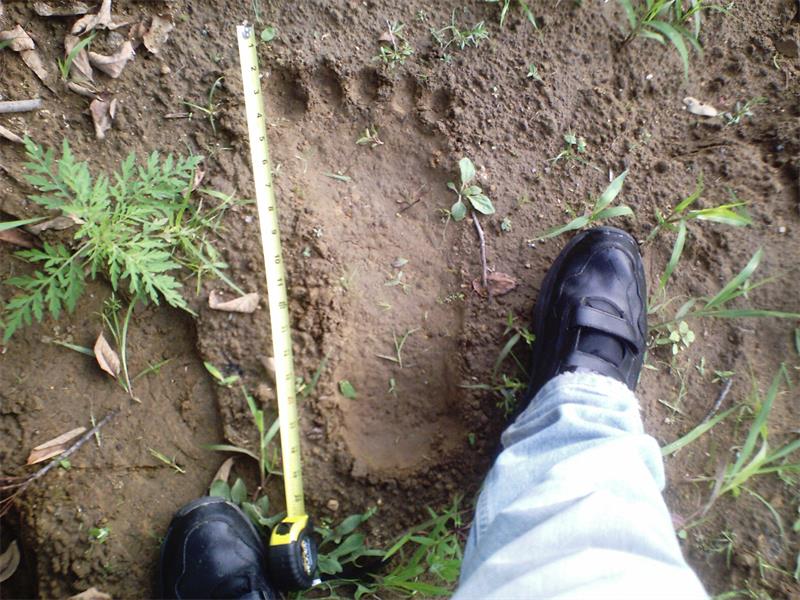
While there is no skeletal evidence of relict hominoids, hair samples, proven not to be from wildlife, have been found. Scat samples have also been found but, according to Meldrum, the most prolific and objective evidence of the existence of these creatures is their footprints.
Ian Redmond, a primatologist who studied under Dian Fossey, the original ‘gorilla woman’, is attending the conference, as well as Thukten Sherpa, the son of Sir Edmund Hillary’s sherpa who accompanied him on various laboratory observations of a Yeti’s skull.
Making up the South African paleo-anthropological contingent at the conference is Dr Ron Clarke from Wits University.
@TamlynJolly