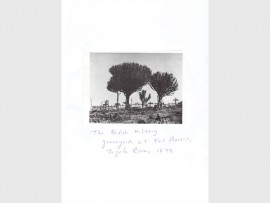
Graves of Zululand: THE GRAVE OF BUNNY MYNORS: ‘HUSH I AM GOING TO HEAVEN’ (1879)
Renowned local historian Dr JC van der Walt continues his fascinating series on Graves in the Zululand Region.
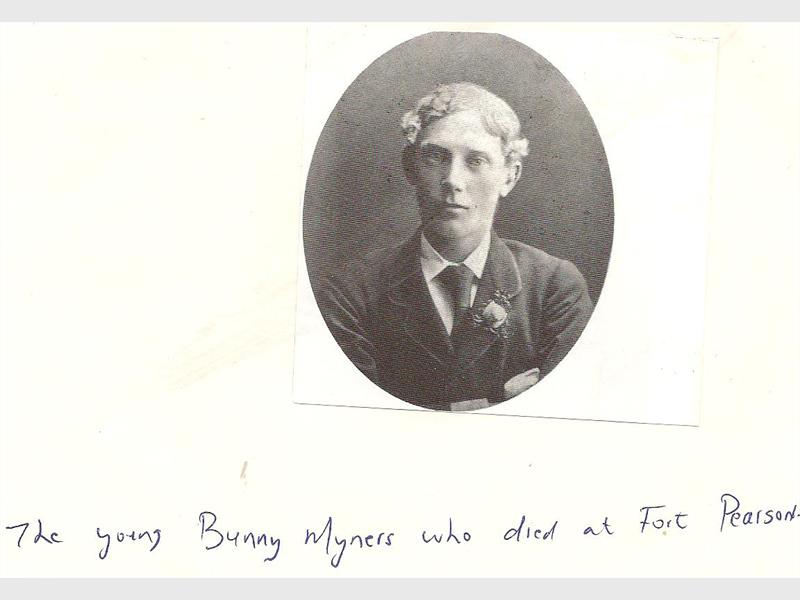
BUNNY Mynors was only 22 years old when he died of dysentery at Fort Pearson on the south bank of the Thukela River.
He died on 25 April 1879, less than one month after he reported for duty.
Bunny had been present at the Battle of Gingindlovu on 2 April 1879 and at the relief of the British garrison besieged for 72 days at eShowe by 4 000 Zulu warriors, fresh from their massive victory over the British invaders at Isandlwana.
He came to Eton College during January 1870 where he made a name for himself as a plucky rider, an excellent runner, winning the mile and the steeplechase in 1874 and winning the walking race in 1875.
He left in 1875 to join the Oxford Militia and at the beginning of 1878 he obtained his commission in the 60th Rifles.
During the year he was with the Battalion, he became a favourite with both officers and men – the life and soul of the Mess.
He had all the qualities of a good soldier, and had a loving and bright nature. His brief life as a soldier was both joyous and fearless.
He joined the British invaders in Natal, ‘Where I hope I shall have more fun’, as he wrote to his mother on board the steamship, ‘Dublin Castle’, on 20 February 1879.
A prayer and a smile
At Eton College a sermon was preached in memory of Bunny and three other Etonians who died during the Anglo-Zulu War.
In a letter from Colonel Edward Hopton a friend of the family he informed Bunny’s father, R Baskerville Esq. as follows:
‘I have to tell you about your poor son Arthur that I know well will break his poor mother’s and your hearts. He died this evening in the hospital, on the Natal side of the River, close to Fort Pearson, of dysentery.
‘When I saw him I did not think he would recover. His servant was very attentive to him. We gave him what medical comforts could be got such as beef tea and champagne. I read and prayed by his stretcher side. He repeated some of the prayers after me.
‘The disease of some days seemed to have taken hold of him. He passed nothing but pure blood. I said, ‘Arthur, I shall write tonight and tell your mother how ill you are’. He said, ‘Yes, please Colonel, write to Mamma’.’
Lieutenant Edward Hutton also wrote to Bunny’s father:
‘His servant Starman, got up and was about to smooth his pillow for him, when the boy, with a smile that I will never forget, turned and whispered,
‘Hush, don’t touch me. I am going to heaven’, and so fell asleep.’
Today, 136 years after the brutal and unwanted Anglo-Zulu War, wind blows through the trees at the melancholy British War graves near Fort Pearson.
Sadly, there are no graveyards for the thousands of Zulu men, women and children who died in battle or who burned to death when the British torched thousands of homesteads when they invaded the independent Zulu Kingdom.