RESEARCHERS have found a deep sea wonderland at the bottom of the ocean that will need all hands on deck to protect it from anchor damage and oil exploration.
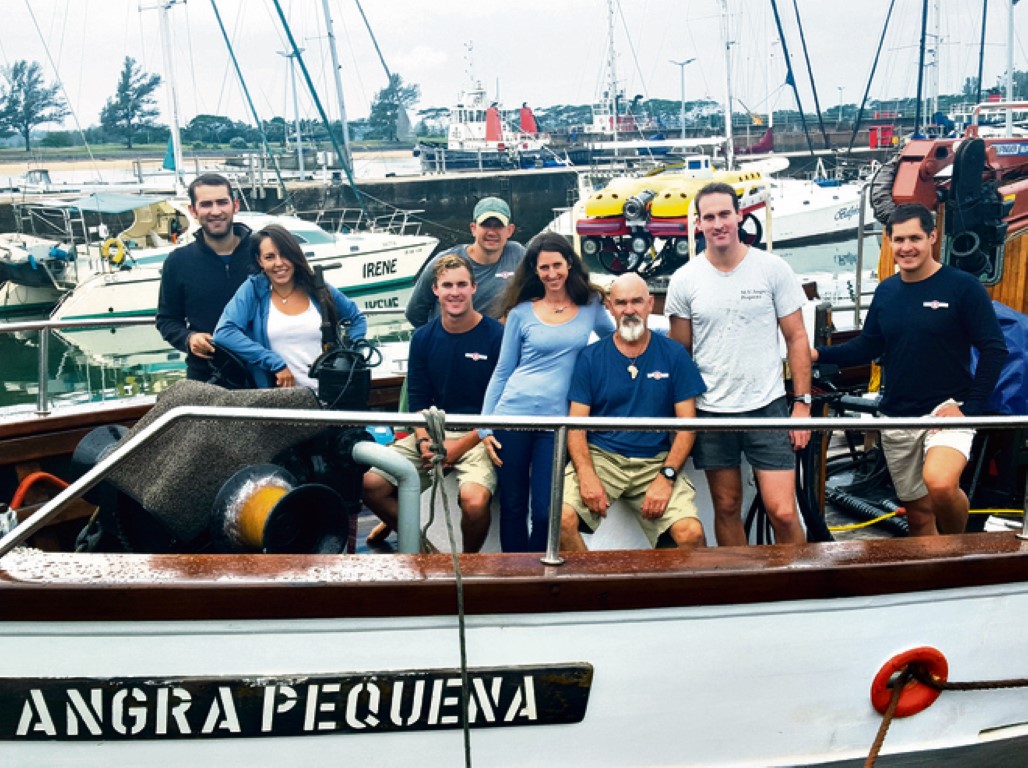
Four magnificent reefs between Richards Bay and the Tugela River Mouth were discovered last week by the Angra Pequena crew using a remotely operated vehicle, during their quest to establish Marine Protected Areas (MPAs) in the region.
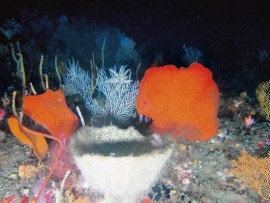
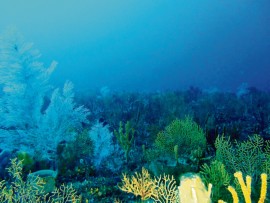
The rare seabed habitats were dubbed by the team of scientists as: the Carpenter Reef (40kms from Tugela) for its sea fans, black corals and sponges; the Sundowner Reef (32kms from Tugela) for its red and yellow sea fans; the Autumn Amphitheatre (16kms from Richards Bay) for its orange leaf sponges; and the Dungeons (16kms from Tugela) for its caves and whip corals.
‘None of these have ever before been seen by human eyes,’ said Marine Programme Manager for the South African National Biodiversity Institute (SANBI), Dr Kerry Sink.
‘It is the first time anyone has done visual surveys of the proposed Tugela Restricted Zone – the heart of the protected marine area.
‘We were surprised and excited to find gardens of sea fans, five species of butterfly fish, luminous sponges and coral colonies in what we expected to be a muddier environment.’
One of Sink’s serious concerns is the Autumn Amphitheatre situated on the edge of the ships’ anchorage zone outside the Port of Richards Bay.
‘This deep reef has beautiful orange sponges that wave in the swell.
‘We do not want to see any more anchorage here.’
The team, which includes representatives from SeaQuest, SANBI, the University of KZN, Ezemevelo KZN Wildlife, the Oceanographic Research Institute and South African Institute for Aquatic Biodiversity, will continue to survey the uThukela Banks to identify other threatened habitats, reefs and submarine canyons or over-exploited spawning and nursing areas crucial for threatened species.
Their goal is to increase protected marine zones along the SA coastline from 0.4% to 5%.
‘We recognise the oil and gas industry as a key area for growth for the SA economy, but the most sensitive banks must be protected.
‘Our turtles and whales spend time here.’
She added MPAs are important to protect the last remnants of threatened ecosystems and manage biologically important areas.
‘They will play a significant role in protecting systems and species, support fisheries sustainability, conserve genetic diversity and promote tourism.’
This expedition is a jointly funded by the African Coelacanth Ecosystem Programme, Grindrod, The Blue Fund, and Wildlands.