
Chinese cars are thriving nationally
The sales of these Chinese brands seem to be ever-increasing...
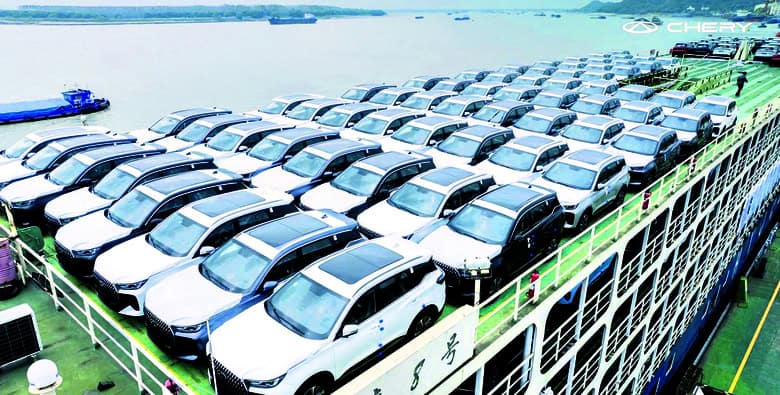
Chinese vehicles have been flying off showroom floors in South Africa.
These brands had a market share of 2% in 2019. At that time, the Automotive Business Council (Naamsa) reported five different Chinese makes in the light-vehicle market accounting for 12% of the total brands in that market that year.
As of July this year, that share had increased to 9% and nine different makes – 21% of the count of light-vehicle brands sold in the country.
As an example, in 2014 Haval sold a mere 428 vehicles in comparison to the 14 265 sold in 2023, with that number already having been surpassed this year.
In addition, Chery cars were introduced to the South African market in 2022 and their sales have already more than doubled since. Both of these brands made it in to the top 10 new car sales in South Africa in the crossover SUV market.
Notably, their success is not limited to South Africa. Chery recently reached the milestone of exporting 1-million Chery Tiggo 7’s all around the world, highlighting the brand’s commitment to international markets.
If you follow motoring news you probably were aware of these successes already, but even if you do not, you will surely have noticed the increased Haval, GWM and Chery cars driving around, to name a few.
It can be argued that it is great that a lot of these brands offer luxury car alternatives at a fraction of the price for South Africans.
While their competitive pricing is a large selling point, what else makes these brands so desirable? Well, they tend to offer the same bells and whistles or at least enough to satisfy their target market, including technology that their far more expensive competitors offer.
The ‘premium’ features that normally cost significantly more for other brands often come as standard, or for only a slightly elevated fee, with these Chinese brands.
Understandably, other brands are feeling the heat of this competition. A lot of these manufacture cars and parts locally and the influx of Chinese imports puts strain on these operations and their employees.
Newer and less established Chinese brands entering the market may also struggle to compete due to the current intense market saturation, and a slowly recovering local economy.
The sales of these Chinese brands seem to be ever-increasing and it will be interesting to see what the final statistics are and how much they officially grew this year.
Don’t have the ZO app? Download it to your Android or Apple device here:


HAVE YOUR SAY
Like our Facebook page and follow us on Twitter.
For news straight to your phone invite us:
WhatsApp – 060 784 2695
Instagram – zululand_observer