
St Lucia estuary dredging offers hope to flood-hit farmers
Dredging at St Lucia estuary, set to begin on 1 November, welcomed by Sokhulu and Dukuduku farmers battling persistent back-flooding.
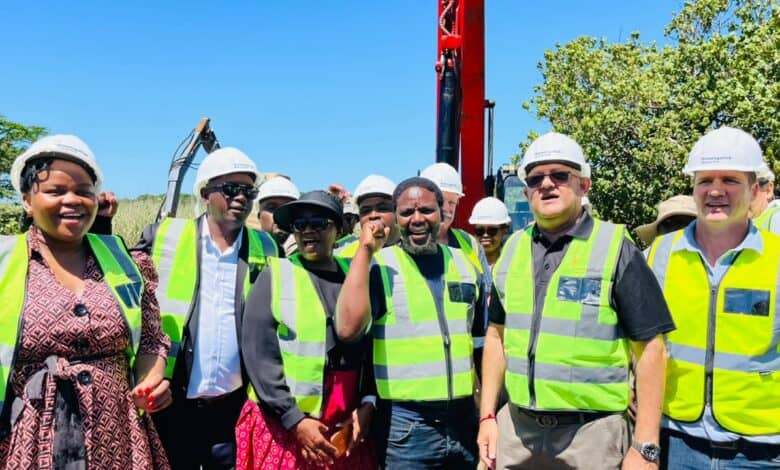
RELIEF from persistent flooding of their land is in sight for Sokhulu and Dukuduku farmers after the recent appointment of a contractor to dredge St Lucia estuary.
Forestry, Fisheries and the Environment Deputy Minister Narend Singh officially announced the contractor tasked with removing sludge and reeds that have affected the natural functioning of the estuary in recent years.
ALSO READ: Sunday storm warning issued for KZN
The announcement follows ongoing scientific studies into the natural breaching of the estuary, led by iSimangaliso Wetland Park ecologist Dr Riaan Cedras, to improve understanding of the system.
The project forms part of the Estuary Monitoring Programme, which will assist researchers in assessing biodiversity, monitoring environmental changes and tracking progress during the dredging process.
Back-flooding of community farmland has been a longstanding concern, with affected farmers accusing iSimangaliso of intentionally closing the Mfolozi River mouth, which they believe has contributed to the flooding.
Speaking to the affected farmers, Singh said the project aimed to restore the estuary’s sustainability and improve the natural movement of water between the river and the sea.
Dredging time frame
“From 1 November, they will start working on the estuary, removing vegetation and ensuring a free flow of the river into the sea, and vice versa,” said Singh.
Dukuduku farmer Zacharia Ndlovu (71) said farmers would welcome the intervention if it addressed the area they believe was previously blocked.
“We will be happy if the opening of the estuary is done exactly where it was ‘closed’ with concrete, corrugated iron sheets and logs,” said Ndlovu.
ALSO READ: Spring brings special birding sightings to Lake St Lucia
Another affected farmer, Johan Madondo (70), said the flooding has left them struggling to sustain themselves.
“The situation is hard. We are struggling with poverty, and we ask that whatever is being promised here actually happens. This is the only farming land we make a living from and earn money to send our children to school,” said Madondo.
Representing Sokhulu farmers, uMfolozi Municipality Ward 1 Councillor Mpumalanga Khumalo-Cele welcomed the announcement of the contractor.
“I have been inundated with complaints from Sokhulu farmers about the back-flooding affecting their production as a result of this situation,” said Khumalo-Cele.
Dr Cedras said specialised research equipment deployed to monitor changes at the estuary mouth played a pivotal role in informing the decision to proceed with dredging.
“From the estuary mouth in particular, we’ve got drones and instruments that will help us better understand how the mouth moves, when it changes, when it opens and when it closes. We’ll be able to see what conditions led to the mouth opening and eventually closing,” he said.
He added that the research facility launched by iSimangaliso would also support the project on the Msunduzi River, helping the local community monitor how much water flows off their farms after the dredging work.
Don’t have the ZO app? Download it to your Android or Apple device here:


HAVE YOUR SAY
Like our Facebook page and follow us on Twitter.
For news straight to your phone invite us:
WhatsApp – 060 784 2695
Instagram – zululand_observer
TikTok – @zululand_observer