

THE date, 27 March 2021, marks one year since South Africa entered lockdown under the National State of Disaster, throwing our lives into utter turmoil, and launching us into levels and regulations that created widespread confusion and debate.
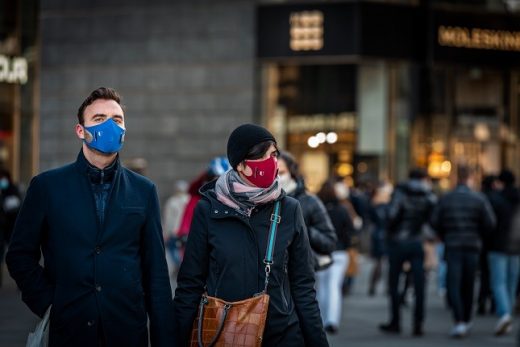
No matter who or where you are, Covid-19 has impacted your life somehow, and changed the way things are done in many ways.
ALSO READ: BLOGGING THE VIEW: 6 facts you should know about Human Rights Day
Here’s a look at 7 ways that Covid-19 has changed our world.
1. New vocabulary
Terminology we hadn’t heard of prior to March 2020 suddenly became part of our daily lexicon. Words and phrases like ‘lockdown’, ‘social distance’, ‘coronavirus’, ‘pandemic’, ‘asymptomatic’, ‘flattening the curve’, ‘self-isolating’, ‘PPE’ and ‘herd immunity’ are now commonplace, and likely to remain so for years to come.
2. Does it match my mask?
Who would’ve thought that fashion would pivot so swiftly that the must-have ‘accessory’ of 2020 was a face mask? There was initial speculation as to whether masks were effective in preventing the spread, with the World Health Organisation dissuading mask wearing to prevent a shortage of medical-grade masks. However, it soon became evident that masks – even home-made ones – slow the spread and so wearing them became mandatory in South Africa.
3. No business as usual
Business operations ground to a halt during the hard lockdown phase, but as the economy began to open up, businesses had to adjust operations to minimise the threat to employees. South Africa, which was long caught up in the traditional 9-to-5 model, suddenly incorporated technology to allow for remote working and flexible hours. For many, this has been a welcome revelation that productivity can continue without the need for expensive rentals and time lost travelling. Businesses impacted by the pandemic have also shifted gears, adopting new methods and products to remain relevant.
4. Social media takes responsibility
For too long now, social media has become a platform rife with misinformation and fearmongering, yet the repercussions were minimal. From allegations of election interference to outright calls for violence, the abuse of social media platforms has proven incredibly dangerous. This was highlighted when Covid-19 hit, with the South African government implementing fines and jail time for people spreading misinformation. In the US, Twitter and Facebook went so far as to ban Donald Trump to prevent further damage to the democracy. It seems action is finally being taken.
5. Lowest carbon emissions
Before Covid-19, the global climate crisis was topping the list of threats to humanity. The threat never disappeared, but the lockdown measures and positive environmental impact have shown nations how action can be taken to mitigate the climate crisis. Carbon emissions dropped to record lows – the largest cut since World War II. There has been rejuvenation of natural areas and wildlife returning to places not seen in years. Covid-19 and the halt of human activity could be the boost needed to address the climate crisis.
6. Vaccine production
It used to take years – decades – to produce any vaccine. This is largely because of a lack of financial support and the extended period between trials. Covid-19 required the rapid creation of a vaccine as a silver bullet to stop the viral spread, with vaccine manufacturers announcing a coronavirus vaccine in under 12 months. In December 2020, the US had two Covid-19 vaccines – Pfizer and Moderna – which use mRNA to stimulate an immune response – the first mRNA vaccine authorised for human use.
7. More health awareness With Covid-19 posing more of a risk for those with pre-existing conditions, many people suddenly became aware of the need to look after their health. There has been a shift to healthier living, with more people exercising and becoming aware of the value of eating healthily. Mental health also came into the spotlight, as Covid-19 created undue stress and anxiety while also highlighting the need to address existing mental health conditions. The pandemic has wreaked havoc on the world, but it has also acted as a necessary push for humanity to start taking action and responsibility. Hopefully, the positive changes will last as we navigate this new normal.
HAVE YOUR SAY Like our Facebook page and follow us on Twitter.
For news straight to your phone invite us:
WhatsApp – 060 784 2695
Instagram – zululand_observer