Fixed electricity charge suspension fails to ease financial strain
Springs residents say suspending the new electricity fee offers little relief, with current costs already straining budgets. Many fear the charge will return, calling electricity a “luxury” they can barely afford.
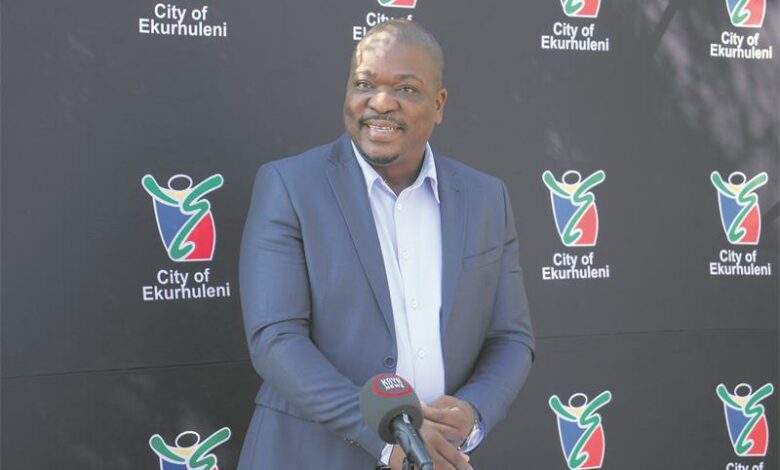
Residents say they remain under financial strain despite the CoE’s decision to suspend a controversial fixed electricity charge.
Following protests in Tembisa, Mayor Nkosindiphile Xhakaza announced the suspension of the R126 fixed tariff fee (including VAT) that came into effect on July 1.
But some residents believe the suspension offers little relief. Resident Pontsho Ramatsoma said, “It feels like a tactic to calm the community. Once we’ve forgotten, they might bring it back. If they wanted to help, they would scrap the increases completely.”
Ramatsoma said his monthly electricity bill has more than doubled from R500 to over R1 000, forcing him to cut expenses and change his usage habits. He also criticised the city’s communication efforts. He also touched on the CoE’s (CoE) communication rollout before the tariff increases came into effect.
“There are elderly people who are not on social media or don’t have the comprehension skills to understand the language used to communicate the tariff increases. The city should prioritise sending their employees to engage with the community in a manner that allows them to enquire if they need clarity,” he said.
Another resident, Dimakatso Motsoenening, added that the cost of electricity had made it difficult to get by daily.
“Life is unaffordable. We’re already struggling to put butter on expensive bread. Add these increases, and we might as well starve. What we need is relief, not increases. Electricity has become a luxury,” she said.
This issue has not only affected the working class but also the unemployed. Unemployed resident James Lombard wrote to the Springs Advertiser, explaining that his R350 monthly electricity budget now buys 75kWh instead of 131kWh, an effective hike of 75%.
“If I still wanted 131kWh, it would cost me around R612. How can they justify this?”
Responding to enquiries, CoE spokesperson Zweli Dlamini said the sharp increases for low-use households were primarily due to a new fixed R109.78 monthly charge for Tariff A2 prepaid users. Tariff A1 has no fixed charge and is aimed at indigent households.
“Tariff A1 does not have fixed charges and is suitable for indigent consumers. This charge applies regardless of how little electricity is used, thus pushing up the effective price per unit cost for small consumers. This structure was introduced to ensure fair recovery of infrastructure maintenance costs, which are independent of use levels,” Dlamini said.
He addressed Lombard’s concerns over the unit prices by explaining that an increase of 11.32% was implemented for prepaid users (tariffs A1 and A2) with an additional fixed charge of R109.78 for Tariff A2 customers. Therefore, 131kWh will now cost R240.90 for Tariff A1 and R515.8 for Tariff A2 customers.
Dlamini added there are measures in place to protect the vulnerable households, such as the provision of Free Basic Electricity 50kWh to customers on Tariff A1 (registered indigent households), the Indigent Policy, which provides relief on municipal services including electricity, for which households must be registered, and lastly, the phased implementation of fixed charges that was used to ease the transition.
The city acknowledged the concerns raised about the recent tariff adjustments.
“Formal notices were published through official channels, including the city’s website, newspapers and council presentations. Going forward, the city is committed to improving the clarity of tariff announcements, using relatable examples that reflect real household scenarios, enhancing engagement through ward councillor briefings, public meetings, digital platforms and issuing simplified tariff guides, showing the total monthly cost under different consumption levels,” Dlamini concluded.