Embrace the twists and turns of your learning journey: Becoming a sociologist
We aim to shine light on different career paths every week, to educate and allow young people to discover new interests.
Choosing the right career is a crucial decision with far-reaching consequences. It shapes your future, making it essential to make an informed choice.
The African Reporter engages with businesspeople, professionals, and other key figures, focusing on a different career each week.
Our goal is to provide valuable guidance to younger readers navigating their careers. Through this, we aim to provide valuable guidance to our younger readers navigating their career choices.
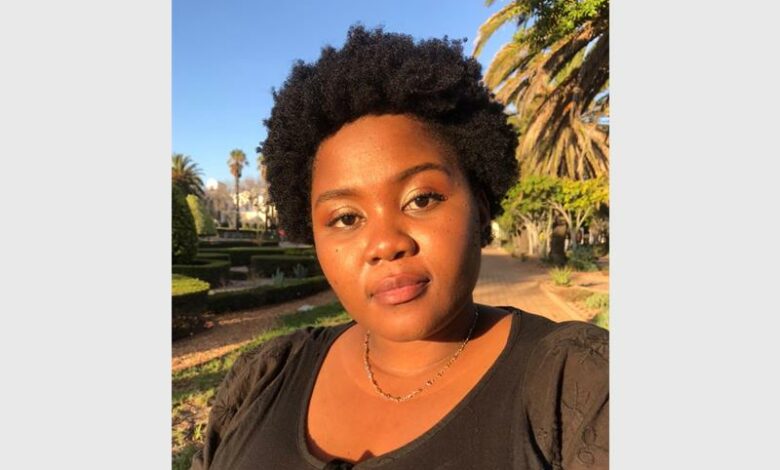
This week we give a platform to the sociologist career. Nokwanda Sihlali has been an industrial sociologist for the past 12 years.
“In that time, I have worked across research, advocacy, and community spaces, always guided by a feminist commitment to justice.
“I was motivated by my own lived experiences as a Black African woman navigating spaces where power and patriarchy often silence us.
“I wanted to understand why inequality persists, and more importantly, how people, especially women in marginalised communities, resist and create alternatives,” she explained.
“Sociology gave me language and tools to connect my personal experiences with broader systems of oppression, and it continues to be a space where I can challenge dominant narratives and uplift the knowledge of women who are too often overlooked.”
She advised young people who want to follow in her footsteps to pursue their dreams, saying: “I would tell young people that Sociology is not just about theory; it is about courage, imagination, and responsibility.
“Our stories, our histories, and our knowledge matter. Bring your whole self into the discipline: your background, your questions, your frustrations, and your dreams. Don’t be afraid to challenge Eurocentric ideals in Sociology and to put African feminist perspectives at the centre of your work.
“And remember, this is not just a career; it is a way of contributing to collective dignity and justice,” she added.
What is a Master of Arts (MA) in Sociology?
A Master of Arts (MA) in Sociology is a postgraduate degree that allows students to study human society, social structures, and social change at an advanced level. It focuses on theories, research methods, and applied sociology. It usually builds on a bachelor’s degree in sociology or related fields.
What is sociology?
Sociology is the scientific study of society: how people interact, how institutions shape lives, and how culture, power, and inequality affect communities. It asks big questions about social order, conflict, justice, and transformation.
What does a sociologist do?
A sociologist researches social issues, collects and analyses data, and helps explain why societies function the way they do. They may work in academia, research institutes, NGOs, government, or business, applying knowledge to real-world challenges.
What are the roles and responsibilities of a sociologist?
• Conducting social research (surveys, interviews, fieldwork)
• Analysing social problems (poverty, inequality, gender issues, crime)
• Advising policymakers, NGOs, and businesses
• Teaching and mentoring students
• Engaging communities and contributing to social change
ALSO READ: Cervical cancer: Nurse urges women to screen and vaccinate
Where can I study an MA in Sociology? How long does it take?
In South Africa: universities such as University of Cape Town (UCT), University of the Witwatersrand (Wits), Stellenbosch, University of KwaZulu-Natal (UKZN), University of Pretoria, and Rhodes all offer MA degrees in Sociology.
Duration: usually one to two years full-time, or two to three years part-time.
Which high school subjects do I need?
Most universities do not require specific subjects for sociology, but the following are useful:
• History
• Geography
• Life Orientation
• Languages (especially English, for reading and writing skills)
• Mathematics (helps with research methods and statistics)
How does sociology differ from other social sciences in addressing African realities?
Unlike economics or political science, which often focus narrowly on markets or governance, sociology examines the whole fabric of society: everyday life, traditions, inequality, kinship, migration, and power relations.
African sociologists highlight issues such as colonial legacies, land struggles, gender inequality, and community resilience, offering grounded perspectives rooted in African contexts rather than imported theories.
Are there different types of sociologists differing in specialty?
Yes. Examples include:
• Rural/urban sociologists (focus on cities, villages, migration)
• Gender and family sociologists
• Political sociologists (power, democracy, governance)
• Development sociologists (poverty, inequality, social change)
• Environmental sociologists (climate change, land, sustainability)
• Medical/health sociologists
ALSO READ: Ncholo channels unity, heritage, youth empowerment through art
For readers who may not know, how would you explain the importance of sociology in today’s African societies?
Sociology helps Africans understand why inequality, land conflicts, gender-based violence, corruption, and youth unemployment persist; and how communities resist and build alternatives. It equips people to challenge injustice and imagine new futures that reflect African realities rather than imposed models.
What are the advantages and disadvantages that come with the job?
Advantages: Contributing to social change and justice; wide career opportunities; deep understanding of society; opportunities for research and writing.
Disadvantages: Pay is often modest compared to corporate fields; work can be emotionally heavy when dealing with poverty, violence, or injustice; research requires patience and persistence.
Can you share a real-life example where your sociological knowledge made a difference in your work or community?
For example, in South Africa, sociological research on land rights has shown how traditional leadership structures sometimes undermine women’s access to land. By documenting community voices and analysing laws, sociologists have influenced court cases and policy debates, strengthening rural communities’ claims to land and justice.
Where do sociologists find employment?
• Universities and research institutes
• NGOs and advocacy organisations
• Government (policy, development, statistics, planning)
• International organisations (UN, AU, development agencies)
• Private sector (market research, HR, corporate social responsibility)
• Media and communications (journalism, analysis)