Advice to owners on car repairs
Experts have shared that while car repairs are quick, the delay can be due to the parts taking time to arrive which beyond the control of the workshop.
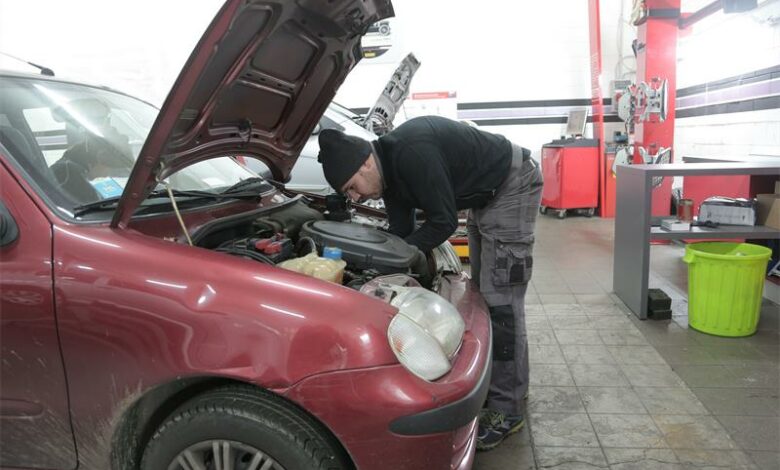
Recent shortages of replacement parts have unfortunately lengthened the time some accident-damaged vehicles spend in repair shops, leaving many motorists asking an important question: what happens when your courtesy vehicle runs out before your own car is ready?
According to the South African Motor Body Repairers’ Association (SAMBRA), a proud association of the Retail Motor Industry Organisation (RMI), while repairers work hard to return vehicles as quickly as possible, delays in the supply of essential replacement parts are sometimes beyond the workshop’s control.
The good news is that motorists may have options, provided they understand how the repair process works and know who to speak to.
Why can’t the repairer hand the vehicle back?
National director of SAMBRA, Juan Hanekom, says a vehicle cannot legally or ethically be returned to its owner if critical safety or structural components are still outstanding.
He added that even if 99% of the repair is complete, the vehicle must be restored to manufacturer specifications before it is released.
He explains that replacement parts such as ADAS sensors, airbags, wiring harnesses, structural panels or electronic modules may occasionally need to be sourced internationally, particularly for newer or lower-volume models.
Many insurance policies include the use of a rental vehicle following an accident, typically for a specified period while repairs are being completed.
ALSO READ: Refiloe Mphutlane empowers women and drives community change
Hanekom explains that once a vehicle has been assessed and the insurer has approved the required repairs, the replacement parts are ordered before work begins.
During the repair process, it is not uncommon for technicians to uncover additional accident damage once panels are removed.
In these cases, supplementary approval is obtained from the insurer and, provided the additional parts are available, repairs can continue with minimal delay.
“Where repairs take slightly longer than originally anticipated, insurers will often consider extending vehicle hire benefits, provided the delay is reasonable and forms part of the normal repair process.
“The situation changes where an essential genuine replacement part is on manufacturer back order and may take several weeks to arrive.
“The repair cannot be completed until that part is available because the vehicle must be restored to manufacturer specifications.
“In these cases, the delay is outside the control of both the repairer and the insurer, and the vehicle manufacturer may have customer support measures available to assist affected motorists,” says Hanekom.
Hanekom advises consumers to contact both their insurer and their repairer as soon as they become aware that parts availability may affect the repair timeline.
“Every case is assessed on its own merits, so motorists need to engage with their insurer early rather than waiting until the hire period has expired.”
One of the most important roles of an accredited SAMBRA repairer is keeping customers informed throughout the repair process.
ALSO READ: Hands-on training and animal rescue as SPCA inspectors visit Tsakani sites
If a delay occurs, consumers should expect regular updates on:
- which part is outstanding;
- why it has been delayed;
- the estimated arrival date;
- what discussions are taking place with the insurer, manufacturer or supplier; and
- any impact on vehicle collection.
The repairer isn’t always the cause of the delay.
Hanekom says accredited repairers are often caught in the middle of a complex process involving insurers, manufacturers, parts distributors and logistics providers.
“While repairers are responsible for carrying out quality repairs efficiently, they cannot complete or release a vehicle until all approved safety and structural components have been fitted.
“No repairer wants a vehicle occupying workshop space longer than necessary. Our members only get paid when repairs are completed, and vehicles are safely returned to customers, so everyone shares the same objective.”
Questions consumers should ask
If your repair is taking longer than expected, ask:
- Is the delay due to outstanding parts?
- Which part is still required?
- Has the insurer been informed?
- Is the part on manufacturer back order?
- Are there any mobility assistance options available?
- When is the next update expected?
“The best outcomes happen when the repairer, insurer, manufacturer and customer communicate openly. A good accredited repairer can generally manage the process.
“Each has a role to play in the repair process, and understanding those roles helps reduce frustration while ensuring motorists receive their vehicles back only when they are safe, complete and fully compliant with manufacturer specifications,” concludes Hanekom.