WATCH: Johannesburg Water Driefontein Waterwaste Treatment Works
By law, Johannesburg Water may not discard untreated waste water into the rivers, because there are still people who rely on river water.
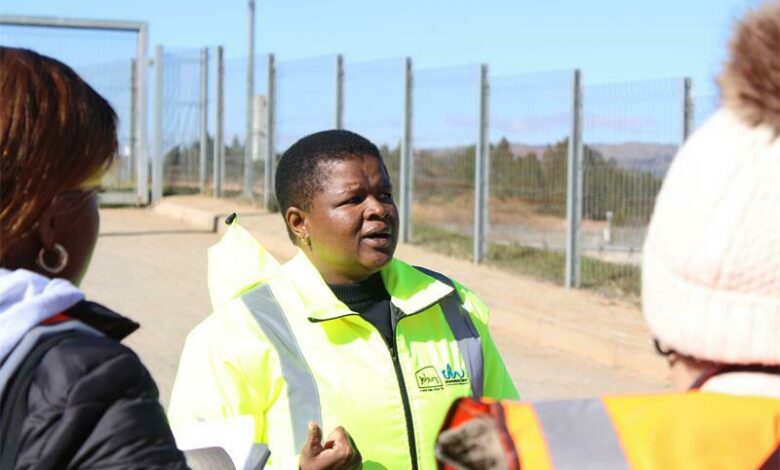
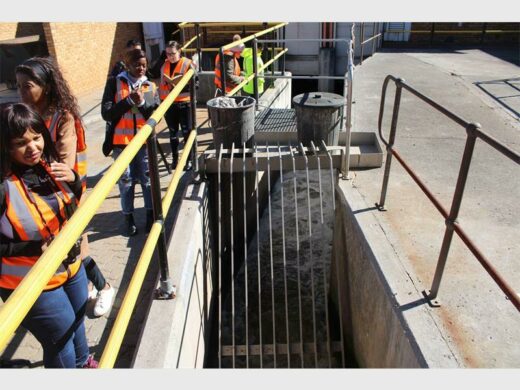
Against the backdrop of the recent cholera outbreak, Johannesburg Water on June 13 gave a first-hand experience into the day-to-day workings of the wastewater treatment plant in Driefontein.
One of the mandates of Johannesburg Water is to provide water and sanitation services to the residents of the City of Johannesburg.
The entity provides water and sanitation services to areas across Johannesburg, stretching from as far as Orange Farm in the south to Midrand in the north, Roodepoort in the west, and Alexandra in the east.
Raw wastewater has to be treated to protect water resources and public health and safety because it is toxic. This is also done to enhance the physical, chemical, and microbiological quality of water.
The entity owns and operates six wastewater treatment works, with Driefontein being one of them. The six plants collect and treat an average of 1 005Ml wastewater per day.
Others are:
• Ennerdale – Orange Farm, Poorjie and parts of Ennerdale.
• Bushkoppie – southern suburbs of Johannesburg, Soweto East and industries to the south of Johannesburg.
• Northern Alexandra – Sandton, Randburg, the northern area of Johannesburg, Bedfordview and a portion of Edenvale and Germiston.
• Goudkoppie – the city centre and south-eastern areas of Johannesburg.
• Olifantsvlei – western sewer areas of Soweto, southern and south-eastern Johannesburg and Lenasia.
The Driefontein Waterwaste Treatment Works (WWTW) services the northern suburbs of Roodepoort, Muldersdrift, Mogale and Rietfontein. It is in the Crocodile River catchment. The upper part of the Crocodile River catchment drains to the Hartbeespoort Dam. The works discharge the treated effluent into the Crocodile River.
Its manager, Jacqueline Ngwenya, said the nominal treatment capacity of Driefontein has recently been upgraded from 30 to 55Ml/day. With this upgrade, completed in 2016, they designed the inlet works and the balancing tank of the WWTW for the planned ultimate nominal treatment of 80 Ml/day.
“Driefontein is currently receiving and treating on average 41Ml/day (operating at 75% of its design capacity). The average effluent compliance is 97% against the Department of Water and Sanitation water use license standards/requirements for the works,” she said.
The Mainstream Treatment Process incorporates the following features:
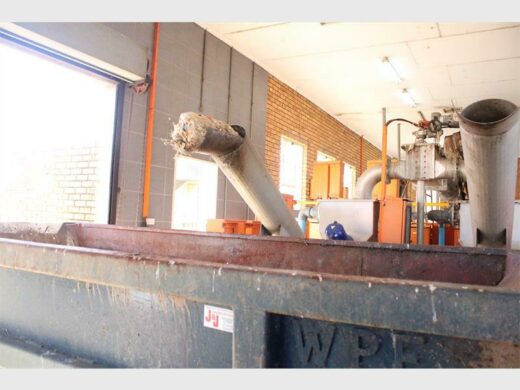
• Preliminary treatment, including screening and grit removal: the influent/incoming sewage is first screened via a static manual bar screen, followed by a mechanical screen. The screenings are discharged to a conveyor and washer and deposited into a screening bin.
The wastewater is split into two parallel grit removal tanks, which provide sufficient retention time and a suitable hydrodynamic environment to separate inorganic grit and detritus particles.
• Flow/load balancing: the wastewater flow and quality fluctuate during the day and the balancing tank provides sufficient retention time to balance the diurnal pattern of wastewater flow and load.
• Primary clarification: the pre-treated and balanced flow is split between two parallel primary clarifiers to separate the readily settleable solids from wastewater. The primary sludge from here is pumped via primary sludge pumps to the sludge fermenters.
• Biological nutrient removal (BNR) activated sludge process: the works consist of two bioreactors, unit one and two.
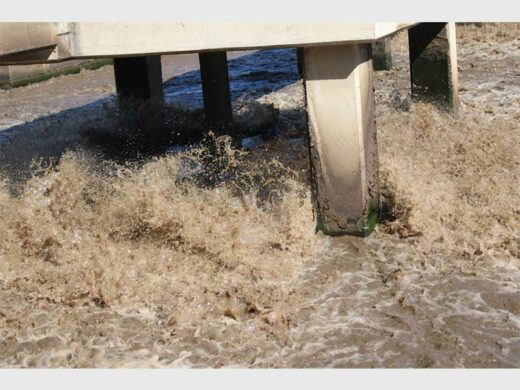
Unit one is a 30Ml/day reactor with a 5-stage Johannesburg-type BNR configuration. The process in unit one consists of successive pre-anoxic, anaerobic, primary anoxic, aerobic and re-aeration zones.
Unit two is a 25Ml/day reactor with a 4-stage Johannesburg BNR-activated sludge process configuration. The process consists of the pre-anoxic, anaerobic, anoxic and aerobic zones.
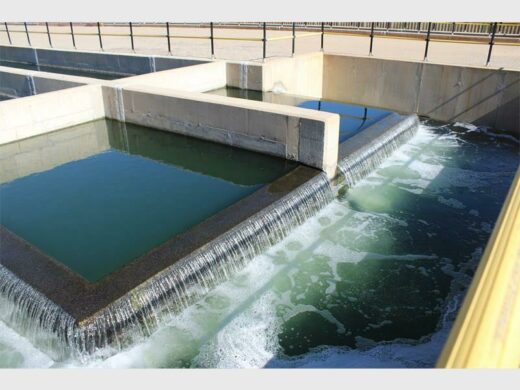
• Secondary clarification: the secondary clarifiers separate the mixed suspended solids from the clear treated effluent. The secondary effluent flows to the downstream disinfection process.
• Disinfection and effluent discharge: the secondary effluent is disinfected using calcium hydrochloride. The secondary effluent receives sufficient retention time in the disinfection channels to provide disinfection.
• Sludge treatment: the waste-activated sludge (WAS) from the secondary clarifiers is pumped to the WAS thickeners, thickened and then pumped to the digesters.
The thickened WAS is stabilised in the heated anaerobic digester. The digesters are equipped with hydraulic mixing systems where the temperature is maintained at a mesophilic temperature of 35 to 37º Celsius. The biogas generated is captured and stored in the gas holder and used as energy for heating the anaerobic digesters.
The digested sludge is dewatered, using a belt filter press and polyelectrolyte to condition the sludge before dewatering.
The dewatered sludge cake is transported with a conveyor to the sludge drying beds, where the sludge is solar-dried, composted and taken off-site to agricultural land.