18 years of courage: Rilandi’s journey and the urgent need for a specialised wheelchair
Rilandi was not expected to live past three. At 18, she still fights daily and needs a specialised wheelchair.
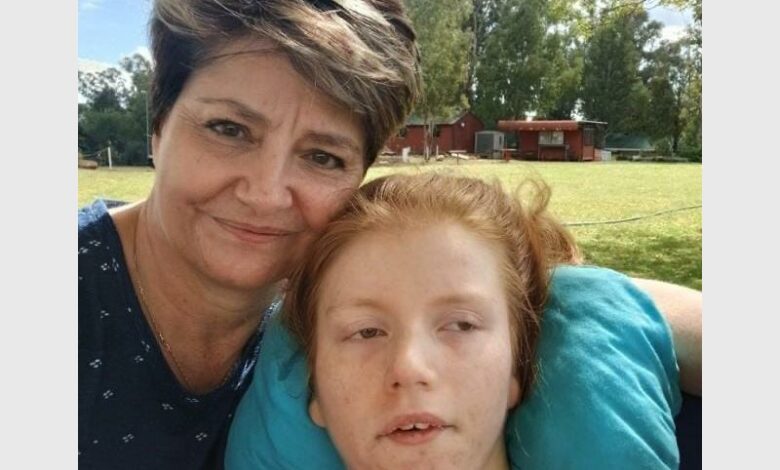
When doctors first met Rilandi as a newborn, their prognosis was devastating.
She was born with West Syndrome, a rare and severe epilepsy disorder, and lissencephaly, also known as smooth brain, a condition in which the brain has fewer folds than normal. She also suffered infantile spasms.
Medical experts told her family she would not live beyond the age of three.
This January, against all odds and predictions, Rilandi celebrated her eighteenth birthday.
Her family, who has been by her side through every medical battle, says simply, “God has been good to us. Every day with her is a blessing.”
A battle for survival
In 2016, Rilandi faced one of her most critical health crises when she went into super refractory status epilepticus, a condition that is generally fatal.
Her mother, Kathleen Brits, said Rilandi was in and out of medically induced and natural comas for three weeks, placed on and taken off ventilators several times, and treated with a cooling suit multiple times.
Against all odds, Rilandi made a full recovery.
“Doctors told us to call the pastor and bring in family to say goodbye,” her mother recalls.
“But the next day, the doctors called us – amazed. Her oxygen saturation was improving. They told us it was not them, as they had no more answers, no more tricks. They could not explain it.”
Complications and setbacks
Before the Covid-19 pandemic, Rilandi received horse riding therapy, hydrotherapy, and neurophysiotherapy. Her health began to decline when lockdown restrictions stopped these treatments.
Recurring lung infections revealed another serious problem. Due to her brain condition, she was not swallowing properly, causing food and liquid to enter her lungs instead of her stomach. This led to dangerous pulmonary aspiration and significant weight loss.
Doctors inserted a Mickey button feeding tube and performed a Nissen fundoplication surgery to prevent reflux from further damaging her lungs.
They also removed her tonsils and adenoids. Since then, her respiratory health has improved, and she no longer requires daily nebulisation.
Living with scoliosis and mobility challenges
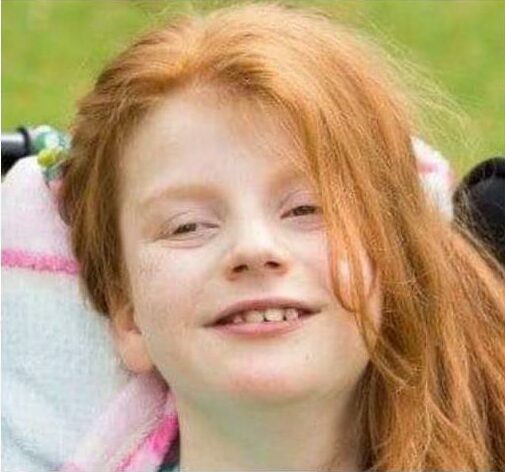
Rilandi has severe scoliosis, which is already affecting her lung capacity, bladder, large intestine, and heart due to her skewed posture.
“Doctors are not going to operate on her hip at this time because it is not pressing against any nerves and is not causing her pain.
“The curve in her spine is already affecting her bladder, large intestine, and stomach, which makes it difficult for her to pass urine and stool,” explained her mother.
After a lengthy battle with the medical aid, the family secured approval for a back brace, which will help prevent her spine from worsening and putting more pressure on her organs.
The brace will not correct the existing curve but will improve her posture at night.
The urgent need for a specialised wheelchair
Rilandi has outgrown her current wheelchair.
At 1.49m tall, she needs a custom chair designed for a spastic quadriplegic.
The medical aid will only cover the back brace, leaving the family to fund the specialised wheelchair at a cost of R118 473.
The wheelchair will provide neck support with a U-shaped cushion because Rilandi cannot hold her head.
It will keep her from leaning to the side, which could worsen her scoliosis, and prevent her from sliding out during her daily seizures, which occur three to five times.
The chair is also foldable and can fit into a standard car, allowing Rilandi to enjoy trips to the zoo and time in nature, which she loves.
“This is not a luxury item. It is something she needs to stay safe and comfortable every day,” her mother says.
A day in Rilandi’s life
Rilandi’s day begins at 06:00 with her first meal, a protein mixture.
Her full-time caregiver, Albertina, gives her medication at 08:00, followed by breakfast at 09:00.
“Meals are carefully prepared and measured according to a dietician’s plan to keep her strong and healthy,” Kathleen said.
She spends short periods watching television, preferring fairy tales and stories with fairies rather than children’s cartoons.
She enjoys sitting outside in her wheelchair, although she has a short concentration span and often closes her eyes when her surroundings are too busy, a self-taught way to avoid sensory overload that can trigger seizures.
At 15:00, she rests until about 17:00. Evenings are dedicated to family time and feeding before bed.
Her mother sings to her every night, a routine Rilandi loves so much that she raises her hands to be picked up when it is time.
Some nights she sleeps peacefully, while on others she may have multiple seizures.
Communicating without words
Although non-verbal, Rilandi communicates in her own way.
She will turn her face into the pillow and say “uh-uh” if she dislikes something, and will ignore people who are not genuinely engaging with her.
Those who take the time to look into her eyes and interact sincerely are rewarded with her sounds and expressions.
Her mother describes her as a pleasure and easier than any other child she has raised.
“She is just amazing.”
How to help
The family is appealing to the community to help raise the remaining funds for Rilandi’s wheelchair.
Donations of any size will bring them closer to giving her the safety, comfort, and dignity she deserves.
Donations can be made via the BackaBuddy campaign.
For more information, call Kathleen at 071 608 4067.