Matric results tell a bigger story, one of social support and state collaboration
68.5% of the country’s matric candidates in 2025 were social grant beneficiaries.
The announcement of the 2025 Gauteng matric results in January, part of South Africa’s record-high 89.06% National Senior Certificate (NSC) pass rate, should prompt reflection not just on classroom teaching, but on what happens outside the school gates that enables learners to learn, persist, and prevail.
Too often, public discourse reduces matric performance to teachers and exams alone. Yet a closer look reveals that social development interventions are foundational to educational achievement, especially in a province like Gauteng, where deep inequalities persist and where a large share of learners contend with socioeconomic hardships daily.
Data released by the national Department of Social Development, based on insights from the South African Social Security Agency (SASSA), shows that 68.5% of the country’s matric candidates in 2025 were social grant beneficiaries. Crucially, 71% of these learners earned passes that enable further education and training, a clear indication that social safety nets contribute to educational success.
While this figure is national, Gauteng is a microcosm of this trend. The province’s relatively strong performance among social grant recipients echoes national patterns showing that active grant beneficiaries outperform those whose grants lapse before the exam year. This highlights the value of sustained social support throughout the schooling cycle.
By assuring families of predictable income support through Child Support Grants, Foster Care Grants, and related mechanisms, the Department of Social Development helps ease food insecurity, reduce school absenteeism, and enable learners to focus on their studies rather than day-to-day survival.
The impact of Social Development cannot be separated from collaboration with other departments, particularly Education and Health.
Integrated programmes between the Gauteng Department of Social Development (GDSD) and the Gauteng Department of Education (GDE) address non-academic barriers to learning, including securing birth certificates and identity documents for vulnerable youth, and referrals for healthcare and psychosocial support.
This indicates that such joint efforts have been credited with uplifting educational outcomes in past cycles.
Moreover, planning documents from the Department of Education reflect an increasingly intentional partnership with social development to bring social workers into schools and to provide psychosocial support within the school environment, acknowledging that mental health and social stability are prerequisites for academic success.
The role of Social Development goes beyond grant payments. Through partnerships with Non-profits and the private sector, the GDSD amplifies learning support through:
• Skills, mentorship and bursary support for top matriculants;
• Youth development and employability programmes that bridge school and work, and
• Dignity, nutrition and school readiness initiatives that reduce barriers to regular attendance and engagement.
These services help ensure that matric success is not an endpoint but a springboard into further education, training, and meaningful livelihoods.
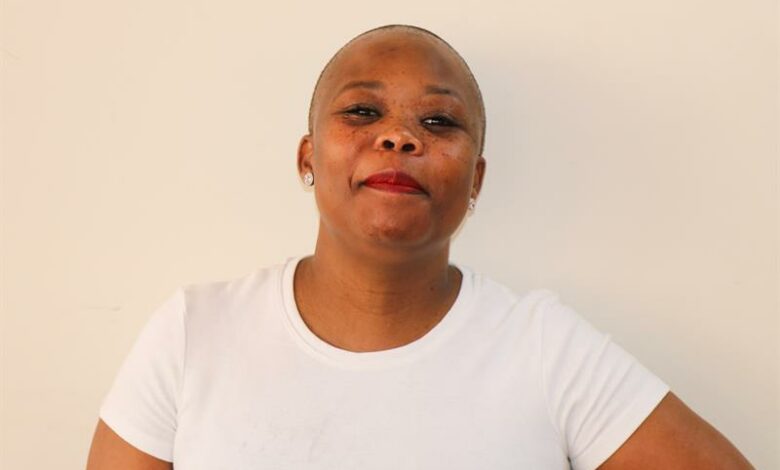
A story of a 23-year-old, Elisa Magama from Duduza in Ekurhuleni, who is set to become a chartered accountant (CA) and work for a top auditing firm in South Africa, continues to tell the story of hope and that these programmes do bear fruit.
Magama is a former foster child who became an orphan after the death of her parents at a tender age. She was placed in the foster care system, growing up in the care of her elder sister, who became her foster parent.
The Department has been tracking her road to success, from passing matric with three distinctions, to life in varsity until she finally became independent. Her journey is that of resilience and hope, made possible through the GDSD under the Children’s Act 38 of 2005.
In 2023, Magama graduated with a Bachelor of Accounting degree from the University of Johannesburg. She did her postgraduate degree in 2024 and is currently an associate chartered accountant, doing her articles through a rigorous, multi-year process.
This is one of the many stories demonstrating that Gauteng’s matric results are not one of short-term fixes, but of sustained investment in the ecosystem around the learner. Social grants, welfare services, family-strengthening programmes, and inter-departmental interventions all contribute to a stable platform from which learners can pursue academic achievement. The Department continues to produce the likes of Elisa on year in and year out.
Education analysts have long warned that without addressing the social conditions that shape young lives, academic interventions alone will fall short. The available data support this: when learners are supported socially and economically throughout their school careers, the likelihood of success in critical milestones, such as matric, increases.
As policymakers, learners, civil society and communities at large celebrate Gauteng’s matric achievements, the narrative must move beyond percentages and accolades to acknowledge the social fabric that supports those results.
The Gauteng Department of Social Development and its partners have demonstrated, even in the past, that education and social development are two sides of the same coin and that meaningful progress in one demands intentional action in the other.