Alberton boy gets second chance at life after rare kidney transplant from father
A Randhart family is celebrating a life-changing kidney transplant after their son Neil Feuth received a kidney from his father, Deon Feuth, in a rare ABO-incompatible procedure.
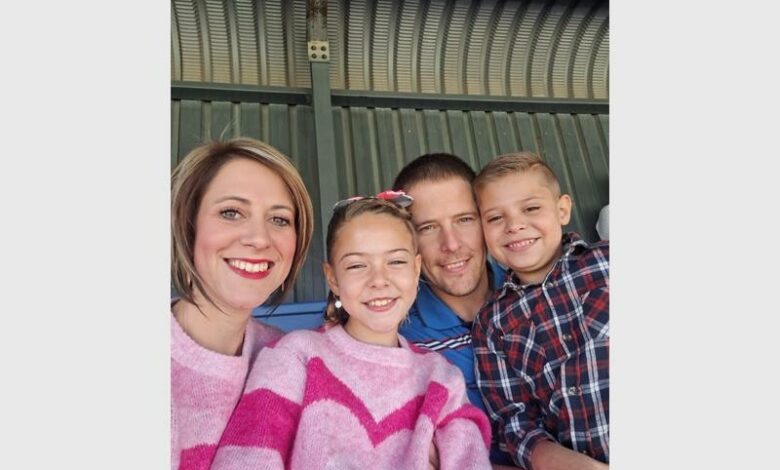
For the first time in his life, Neil Feuth’s parents watched as their son passed urine naturally into a bottle.
It was a small moment, but for the Randhart family, it was overwhelming.
After years of hospital stays, infections, procedures and uncertainty, Neil had finally received the kidney transplant they had been fighting for.
“You start crying because it’s the first time in your life that you get urine in a bottle,” said his mother, Chantelle Feuth.
The moment represented far more than a successful medical procedure. For Neil’s parents, it was a sign that their son’s life was finally changing.
Neil is recovering from a rare ABO-incompatible kidney transplant, with his father, Deon Feuth, becoming his living donor.
The transplant was performed in June at the Wits Donald Gordon Medical Centre in Johannesburg.
A 10-year journey to a transplant
Neil’s kidney problems began before he was born.
When Chantelle was 26 weeks pregnant, doctors discovered something was wrong and referred her to a foetal maternal specialist.
“We went to see the doctor and they said, ‘This is a disaster.’ And immediately, what went through my mind is, ‘ What now?” she recalled.
Doctors could not initially determine exactly what was affecting the baby’s kidneys.
When Neil was born, he was diagnosed with hydronephrosis, a condition in which urine builds up in the kidney because of an obstruction in the urinary tract.
The blockage meant urine could not properly leave his bladder and instead flowed back towards his kidneys, causing severe damage.
His parents were told there was a 50% chance of him surviving.
“We knew from birth that there were kidney problems and we never knew when this kidney transplant would happen,” Chantelle said.
They knew, however, that they had to keep their son alive and help him grow strong enough for the transplant.
A childhood shaped by hospitals
The years that followed were difficult.
Neil was frequently in and out of hospital and suffered numerous kidney infections.
His illness also affected his older sister, who is two years older than him.
While Chantelle spent nights at hospital with Neil, she continued working during the day, with a nanny caring for him.
At one point, his sister became so accustomed to her mother being away that she questioned whether she even had a brother.
“She got to a stage where she said she doesn’t even think she has a brother,” Chantelle said.
Neil was eventually brought to the neonatal ICU so his sister could see him.
“She grew up in corridors of the hospital,” Chantelle said.
But there was another battle taking place – getting Neil to the required weight for a transplant.
Doctors needed him to reach 10kg, but he remained stuck at around 7kg.
“He didn’t eat at all,” Chantelle said.
Neil vomited frequently, struggled to eat and had blood tests sometimes two or three times a day.
The family eventually had to resort to force-feeding him.
“It ruined a little bit of the relationship between Neil and me because forcing someone to eat and ingest the food is in his vomits,” Chantelle said.
Eventually, a feeding tube had to be inserted, which he still has.
Neil’s left kidney was also lost before he was six months old.
Doctors performed several procedures to try to preserve his remaining kidney, including a vesicostomy and ureterostomy.
When his father became his hope
The family knew Neil needed a transplant, but finding a suitable donor proved difficult.
They initially had a friend who seemed like a potential match.
After months of trying, however, that option failed.
By October 2025, the family realised they could not afford to keep waiting.
It was then that doctors discussed an ABO-incompatible transplant.
The procedure enables a patient to receive an organ from a donor whose blood group would normally be considered incompatible.
Deon began the process of becoming his son’s donor.
The family said the procedure was among only a small number of successful ABO-incompatible paediatric kidney transplants performed in South Africa.
The medical team prepared Neil’s body to accept the kidney by removing antibodies from his blood that could otherwise attack the donated organ.
For the family, it represented a new possibility after months of uncertainty.
‘The gift of life’
For Chantelle, knowing that her husband was willing to donate his kidney to their son was deeply emotional.
“That is one of the biggest gifts that my husband can give to our son,” she said. “I call it the gift of life, the gift of a second opportunity, the gift of a future.”
But Deon faced his own fears. As the family’s breadwinner, he worried about the financial consequences if something went wrong during the operation.
His greatest fear was failing to save his son.
“That’s maybe the biggest thing – failing, not being able to help your son if it fails and passes away,” he said.
There was also the uncertainty of undergoing major surgery himself.
Deon joked that he had underestimated the recovery.
“I thought if you take out a kidney, what can be if it’s gone? There’s nothing that can be sold. I need a cut that needs to heal,” he said.
The transplant, however, was successful.
When Deon woke up, his first concern was his son. “How’s my son doing?” he asked.
Doctors told him the transplant had been successful and the kidney was working.
“It was an overwhelming feeling to hear that both are still alive,” Chantelle said.
A different child
More than six weeks later, Neil’s parents say they can see a dramatic difference.
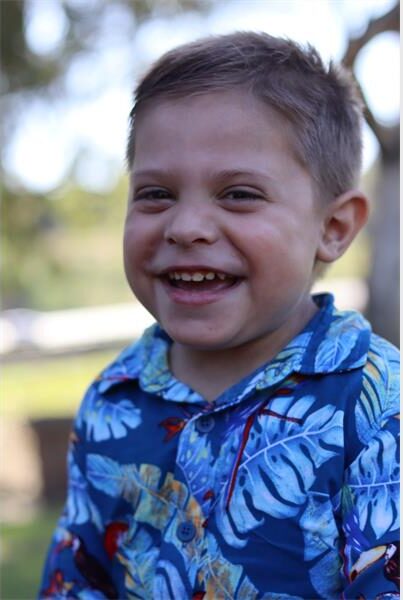
His appetite has changed.
“He eats everything he wants to eat,” Deon said.
His energy levels have increased; he interacts more and he no longer sleeps as much.
“He is definitely healthier. He’s feeling healthier. We could see it,” Deon said.
Before the transplant, Neil struggled with bladder control and could not comfortably spend time outdoors, particularly in warm weather.
His parents can now begin potty training him.
“He can actually live a full, more energetic life,” Deon said.
The puffiness and swelling he previously experienced have also disappeared.
His parents say his emotional state has changed too. He talks more, interacts more and has more energy.
For a child whose life had been dominated by illness, the difference is significant.
The road to recovery
The transplant has not meant the end of medical care.
Immediately after the operation, Neil needed check-ups twice a week.
These gradually became less frequent – first once a week, then once every two weeks, and now approximately every three weeks.
Doctors continue to perform blood tests and monitor his medication to ensure his body does not reject the new kidney.
Neil was initially placed on high doses of anti-rejection medication, antibiotics and cortisone, which are now being gradually reduced.
Deon is also recovering from donating his kidney.
Six weeks after the operation, he said he was largely back to normal, although running and jogging can still cause some discomfort.
“It wasn’t easy. It was uncomfortable, but worth it,” he said.
From strangers to advocates for organ donation
Before Neil became ill, organ donation was not something his parents knew much about.
Deon said his son’s illness changed that.
“I wasn’t really aware of it until we heard my son was so sick,” he said.
The experience has since encouraged him to become more involved in raising awareness of blood and organ donation.
Deon also urged prospective organ donors to speak openly with their families.
“If they want to become organ donors, it’s very important that they register, but not only just register at the Organ Donor Foundation, but they need to also tell their loved ones around them what their wish is,” he said.
The family has also become familiar with Transplant Education for Living Legacies (TELL), an organisation working to increase awareness around transplantation and living donation.
TELL managing director Stella de Kock said August is National Organ and Tissue Donation Awareness Month.
The organisation has highlighted the contrast between rapid advances in transplant technology and South Africa’s continuing shortage of donors.
According to TELL, South Africa has fewer than 1.4 deceased organ donors per million people, while thousands of South Africans, including children, remain on transplant waiting lists.
TELL says one donor can save up to seven lives and improve up to 70 more.
The organisation has also highlighted the long waiting period faced by some patients, with blood group O patients potentially waiting 12 to 15 years for a kidney.
For the Randhart family, those statistics are not simply numbers.
They represent families waiting for the same second chance Neil has received.
‘You must never lose hope’
For Chantelle, the family’s experience has left her with a message for others waiting for a transplant.
“There are moments in your life where you think your entire world can change in one single moment. And that is during a kidney transplant.
“We were worried. We were sad. We were nervous. We were terrified that we might lose our little boy,” she said.
She urged families to keep fighting and celebrate every small improvement.
“Keep on praying. Celebrate every small improvement that you see. You must never lose hope,” she said.
For Chantelle, the kidney her husband donated represents much more than an organ.
“A kidney is not just simply an organ. It represents a big sacrifice for us. They must stay courageous, have hope, know that there’s going to be sacrifices, but there is a second chance for life.”
Deon hopes his son’s second chance will allow him to experience a more ordinary life.
“He doesn’t have to excel in anything. He needs to fit into society and have a reasonable, normal life. He’s got an opportunity for a second life,” he said.
What is the ABO-incompatible procedure?
Blood is divided into four main groups: A, B, AB and O. Normally, a kidney donor and recipient need compatible blood groups because the recipient’s antibodies can attack an incompatible donor kidney.
In an ABO-incompatible kidney transplant, specialised treatment is used to reduce these antibodies before transplantation, allowing a patient to receive a kidney from a living donor whose blood group would normally be incompatible.
This can give patients without a compatible living donor another opportunity to receive a life-saving kidney.
Sources: National Library of Medicine; South African Medical Journal