Latest on coronavirus
The department is very sensitive to the anxieties of our South African citizens and their families.
The World Health Organisation (WHO) has declared the coronavirus a public health emergency on the evening of January 30.
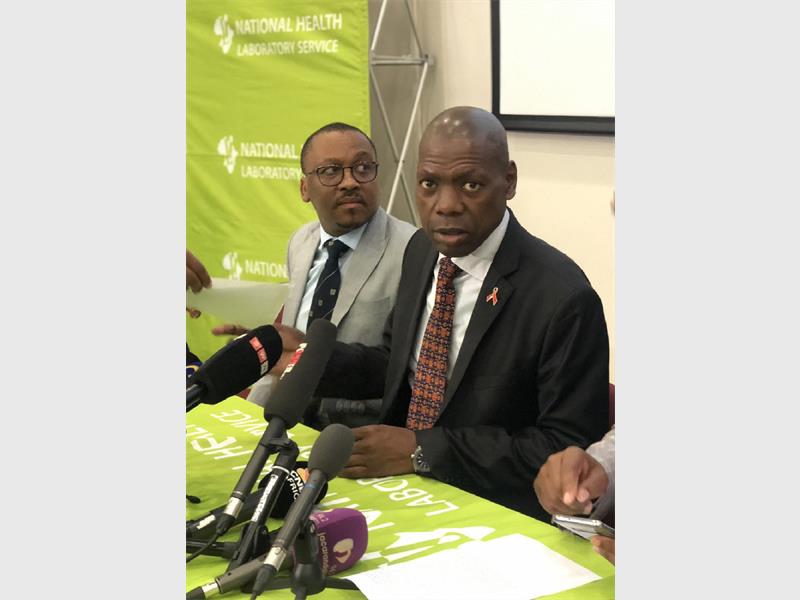
Ahead of the WHO’s announcement, Heath Minister Dr Zweli Mkhize had convened an inter-ministerial meeting in anticipation of an announcement of a public health emergency concern by the world health body.
The ministries of tourism, home affairs and international relations, Modderfontein Road-based National Institute of Communicable Diseases (NICD), the police and state security entity, were represented at the meeting convened by Mkhize.
“Emergency operating centres (EOC) were activated, and are currently operational. Dedicated staff is working exclusively on coronavirus, monitoring and responding to all reports that they will proactively detect and follow up.
“The EOCs are in constant communication with all relevant stakeholders and provinces,”said Mkhize.
It is expected that the the multi-sectoral National Outbreak Response Team (MNORT) will reconvene to revise the Standard Operating Procedures in response to the WHO’s announcement.
Dedicated centres for coronavirus in Gauteng are Charlotte Maxeke Hospital, Steve Biko Hospital and Tembisa Hospital.
“We are aware of two South Africans who are under a 14-day quarantine in Tianjin as they had moved from Wuhan to Tianjin,” said Mkhize.
The health minister reiterated that there was no report of any South African citizen who might have contracted the infection.
The Department of International Relations and Cooperation (DIRCO) has established a 24-hour hotline for all SA citizens living in Wuhan City to contact the SA embassy in China.
“We have also requested all departments and provinces to provide a database of South African students and staff in China.”
The world health organisation is also working with networks of researchers and other experts to coordinate global work on surveillance, epidemiology, modelling, diagnostics, clinical care and treatment, and other ways to identify, manage and limit onward transmission of the disease.
“Work has commenced to develop a vaccine as soon as possible. In the past 24 hours, 14 samples have been submitted by the NICD and the National Health Laboratories to us for investigation of coronavirus, and have all tested negative,” said Mkhize on January 31.
Regarding movement and trade, the Department of Health will remain to be guided by the World Health Organisation, which has maintained in its recommendations that there should be no restrictions on travel and trade.
“The announcement of the Public Health Emergency should bring comfort and reassurance that the coronavirus is receiving the most urgent attention by the international community, and that everything is being done to protect global citizens. It should not set up a fresh wave of panic.
“We remain committed to the protection of South Africans, both here and abroad, and we will continue to closely collaborate with the Chinese authorities, the WHO, our neighbours and the wider global community, to ensure the containment of the coronavirus,” said Mkhize.
The following simple precautions, which are based on WHO recommendations, can help to reduce exposure to the transmission of the virus:
• Wash your hands frequently with warm water and soap, towel-drying them properly. An alcohol-based hand rub can also be used.
• Avoid close contact with others who have coughs, chest infections or fevers.
• Avoid touching your face, mouth and eyes with your hands.
• Avoid direct, unprotected contact with farm or wild animals, particularly when visiting live markets in affected areas. Preferably avoid such markets.
• Avoid eating raw or undercooked animal products, and exercise care when handling raw meat, milk or animal organs to prevent potential cross-contamination with uncooked foods.
• Although facemasks do not provide complete protection from the infection from an airborne disease such as this, they may provide at least some additional defence against infection.
• Cover your mouth and nose with a tissue, or a flexed elbow, when coughing or sneezing.