Deputy manager joins SANCA Wedge Gardens to boost family recovery
“As much as there is addiction in the family, everyone has been traumatised; pointing fingers will not help."

A career that began in the skies has come full circle, serving people on the ground.
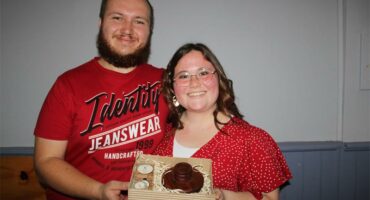
Dudu Morgan began her new role as deputy manager of SANCA Wedge Gardens, a treatment centre for men with substance use disorders in Johannesburg, at the beginning of February.
Dudu joins Wedge Gardens with a diverse professional background spanning aviation, education and leadership development.
Although she holds a degree in social work, Dudu did not initially enter the field; instead, she pursued a career as a flight attendant and safety procedures instructor.
Over time, however, she recognised that her interests lay in education and community development.
After having a second child, Dudu relocated to Mpumalanga, where she had grown up in Kabokweni, and joined Kamagugu Inclusive School as a social worker and IT teacher in a special needs environment.
She had already completed an honours degree in education, specialising in the development of online learning systems, while teaching at Parktown High School for Girls, and graduated in 2017.
Between 2022 and 2025, Dudu served in various leadership roles at the school, including as life skills co-ordinator and chairperson of several committees, while also overseeing school events and skills development initiatives.
In 2023, Dudu enrolled in an MBA programme at Regenesys Business School and is currently finalising her research.
“Leaders need emotional intelligence; you cannot be impactful if you have not addressed your own issues,” Dudu said.
“I realised I wanted to move into a leadership space where I could impact people positively.”
Her connection to Rand Aid began in 2024 when Kamagugu Inclusive School received a donation of tablets from an international donor organisation.
As the school’s IT teacher, Dudu was asked to attend the handover event, where she met a Rand Aid representative.
Months later, Rand Aid contacted her after learning that Dudu was interested in relocating to Johannesburg, where her spouse was already based.
“When I was invited to interview, I researched Rand Aid extensively,” Dudu said. “What stood out for me was that the organisation has been around for more than 100 years.
“It has deep-seated roots, and the longevity of staff members speaks to the culture.”
Although she had not previously worked directly in rehabilitation, Dudu said her experience in a special needs environment exposed her to the challenges faced by vulnerable families.
She often referred learners and their families to support organisations such as SANCA and NICRO – gaining insight into how addiction affects both individuals and their support systems.
Dudu believes one of the biggest challenges facing people struggling with substance use today is loneliness and disconnection.
“With so much social media, we no longer see each other; we live in our online spaces, and that is where loneliness comes in,” she said.
“People need to be heard and seen.”
She noted that many of the issues leading to substance use begin in childhood, where emotional needs may be unmet or trauma left unaddressed.
“They become lonely and often meet the wrong people, trying to fill a void, yearning to be loved, seen and heard.”
Dudu’s approach to recovery centres is holistic, not only for clients but also for their families.
“If the individual gets better, the family will be better, and the community will be better,” she said, noting that many of the centre’s younger clients are future fathers, uncles and community leaders.
Dudu emphasised that addiction impacts entire family systems and that therapy is often essential for relatives who have experienced trauma as a result.
“As much as there is addiction in the family, everyone has been traumatised, pointing fingers will not help.
“Each person involved has to work on their own healing.”
Outside of work, Dudu enjoys yoga, running and listening to motivational content to maintain her physical, emotional and spiritual well-being.
She lives in Randpark Ridge with her family and is the mother of two children an adult son and a five-year-old daughter.
Dudu encourages families not to lose hope when supporting loved ones struggling with substance use.
“Relapse may happen, and trust may be broken, but families must keep listening and remain open to therapy,” she said.
“If SANCA Wedge Gardens commits, if the client commits, and the family commits, there is hope.
“This is not the end for you; believe in your potential.”