Residents cry foul over Rynfield development
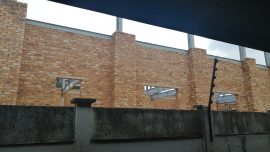
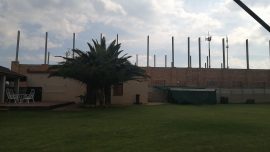
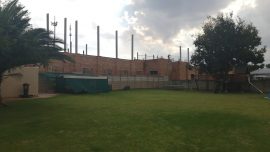
With this development has come dust, noise, construction vehicles, traffic congestion and, one resident claimed, continuous problems with sewage.
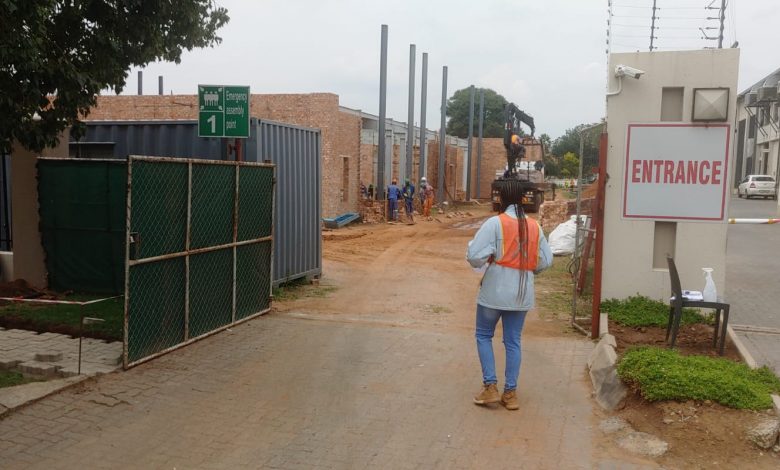
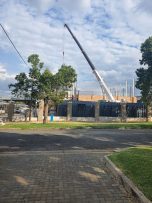
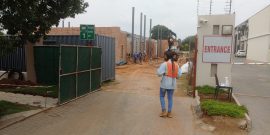
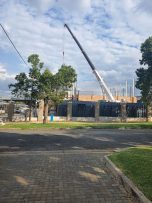
The continued expansion of Affinity Health, situated in O’Reilly Merry and between Dingler and Miles Sharp streets in Rynfield, has spurred residents in the vicinity to take all measures necessary to halt the development, which they deem illegal “as the company has no building plans” and that they were never notified of the development.
Members of “Rynfield Residents Stand Together (Dingler and Miles Sharp streets)” are furthermore claiming malfeasance by metro officials for being complacent in the burgeoning encroachment of the company’s operations on their once-quiet suburb.
Four properties in Dingler Street have been rezoned, demolished and developed recently, and residents say these owners were bullied into selling.
The residents also attended a tribunal regarding the rezoning of these properties to commercial rights on June 25.
The metro approved the applications five days later.
It then took residents three months to get the correct procedure from the metro to appeal the decision. They could finally lodge an appeal in September, only to hear three months later that the appeals committee was disbanded and a new one had to be inaugurated.
They are still waiting for feedback from the Ekurhuleni Municipal Appeals Authority.
Building inspector
Comment from the metro stated Affinity Health did indeed commence construction without the approval of building plans.
A resident of Miles Sharp Street, Chantel Pillay, lodged complaints against the continued construction. The Building Control Division investigated and issued the developer with a notice to cease construction.
“Affinity Health ceased the construction of additional offices as ordered; however, it is alleged the developer has resumed with the construction works again in defiance of the notice, which was issued by the Building Control Division,” said metro spokesperson Zweli Dlamini in a statement to the City Times on March 9.
“The chief building inspector from that division has confirmed that their office is busy with a report to the Corporate and Legal Department for litigation.”
Pillay’s property was also included in the initial rezoning application by Affinity’s consultant planning practitioner (not employed by the metro), and the application had to be corrected and resubmitted.
“My erf was fraudulently included and the council hid their maladministration. I have proof of this. I am willing and able to ensure I use every platform to name and shame municipal officials and Affinity, including town planning, for their underhanded initiatives,” Pillay said.
“Yes, there is an appeal hearing, but the building has not halted as a result of this. The construction is unlawful, there is no other way to put it, as is the intentional delay in the anticipated appeal hearing by the Ekurhuleni metro officials.
“The Benoni Building Department has confirmed that there are no building plans and I have on several occasions visited this department with query upon query. The building inspector has on several instances issued notices, all of which were ignored by Affinity. That’s the reason the construction is where it is now. I guess the proof is in the building. Again, there is proof of all of this.”
Peace and quiet
While the “illegal” development is at the heart of the residents’ discontent with the health insurer, the encroachment on their “peace and quiet” plays a major role in the group advocating up to the highest levels in council to stop Affinity Health from “ruining” their neighbourhood.
The four properties in Dingler Street bought by the company over the past two years have long since been demolished and the stands are now part of the development, which includes an expansive parking area.
With this development has come dust, noise, construction vehicles, traffic congestion and, one resident claimed, continuous problems with sewage.
Where their children could once ride their bikes in Dingler Street, increased traffic has put paid to their safety, and residents even find it difficult to get out of their own driveways due to being parked in by people coming to collect Affinity Health employees.
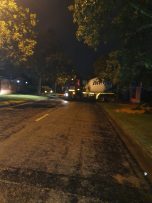
“The traffic is chaotic in peak hours. We are not used to this in our quiet street,” said Dingler Street resident John Turner. “We have even had cement trucks pitching up at 8pm to get into their property. It is totally unacceptable.”
He said the development commenced before the rezoning of the stands was approved by the council.
“Further to the approval of the rezoning of these properties, the rezoning was also announced in an ‘extraordinary Government Gazette’ (number 128 dated July 29, 2020). Can anyone explain why the rezoning was announced in an extraordinary Government Gazette? Was this an attempt to legitimise the pre-emptive demolition of the houses on those erven so they could get on with building the carpark, or was it to circumvent the rights of the residents of Dingler and Miles Sharp?” Turner asked.
Affinity responds
According to Mary Andalaft, Affinity Health property consultant (and official media spokesperson for this article), the business started from humble beginnings with three employees with phones and laptops some eight years ago, in the same building they are now expanding.
The company purportedly now employs about 2 000 staff, hence the continued development residents has seen over the past two to three years.
“The company grew by 10 per cent month on month and Affinity eventually bought the building. It has been an enormous success story and we need more office space and parking,” said Andalaft.
She does not deny construction has continued.
“The delays caused by the objections are costing the company a lot of money – plans are delayed, materials ordered are damaged before use and workers have to be laid off. If it were not for all the objections, the development could have been finished by now.”
Andalaft pointed out the company has done everything it could to compensate residents in the area affected in any way by the development, and offered proof of this.
She also spoke to property owners in Dingler about selling, on behalf of Affinity.
When asked about claims that some of the residents in these homes were “bullied” into selling and told their security would be in jeopardy if they didn’t sell as the construction would go ahead regardless, Andalaft said these claims were not made by her.
It has also been claimed the homeowners were offered over-inflated prices for their homes.
“All the owners were happy to sell and have moved to better properties,” she said.
Andalaft showed the City Times proof that two of the homes were bought for R2.2-million, one for R2.6-m (because it had a granny flat the owner was earning an income from) and one, in 2018, for R1.9-m.
“The stand bought in 2018 actually belonged to the person who owned the building before Affinity bought it,” she explained.
According to Andalaft, Affinity Health will not be buying any more stands in Dingler or Miles Sharp.
“Nobody can predict the future though but as far as I am aware this is it – the company will not be buying further property for expansion,” she said.
She confirmed, however, they are erecting a medical screening facility on the stand previously number 1 Miles Sharp Street as part of the current construction.
“The property is already earmarked for business but we are following the formal process of rezoning.
“This screening facility will offer affordable health services at affordable prices to Affinity members. It is not a clinic, as claimed by residents. It is a screening facility where people can have their blood pressure and other checks done, for example.”
Notification
Leon Bezuidenhout, consultant planning practitioner for Affinity, said the rezoning application was done legally, which included steps to ensure public participation, such as notifications on the street frontage of each affected property, advertising it in newspapers and Gauteng Provincial Gazette and sending registered letters containing the application notification to homeowners (a tracking number, he said, exists for each of these notifications issued by the post office).
“Firstly, the allegation that the residents were not informed is purely not true,” said Bezuidenhout.
“Secondly, residents who did not agree indeed objected and appeared before the tribunal, where they had the full opportunity to state the reasons for not supporting the development.
“The public participation required that any objections be lodged within 28 days, in writing, to the area manager and no further objections were received during this time.
“The process is/was very transparent and correct protocol has been followed. The rezoning was purely to achieve the zoning for the office component of the development on certain erven and parking on the rest.”
According to Bezuidenhout, the Regional Spatial Development Framework for Region C (into which Rynfield falls) supports the development of offices in the area Affinity Health occupies.
“All the engineering services departments have rendered comments in support of the development. Architects have compiled the building plans of high aesthetic value for the office building to be constructed as a second footprint to the existing office component, and the existing and second building are covered by promulgated zoning.”
Traffic
Bezuidenhout said the developers had to perform a traffic-impact assessment, as required by the Ekurhuleni metro.
According to Andalaft, one of the conditions of the approval of the rezoning was that traffic lights are installed on the corners of O’Reilly Merry/Dingler and O’Reilly Merry/Miles Sharp and that both these roads are widened to ease the flow of traffic. She said Affinity Health is going to pay for this to be done.
Further to residents questioning why a security company vehicle is parked on the grass verge outside Affinity Health behind a “crash barrier”, Andalaft said it was to provide extra security visibility, which benefits the residents, and to protect a generator, which is installed on that corner.
She said permission to erect this was applied for.
Bigger picture
It is Bezuidenhout’s view that the “energy” along O’Reilly Merry Street landed itself in this type of development.
“Surely, the current scenario stimulated the investment potential along the activity corridors formed by O’Reilly Merry. The current business and re-development activities in Miles Sharp Street confirm this.”
Andalaft is of the view residents need to see the bigger picture but admitted she too would have been disappointed if this type of development went up in the vicinity of a property she had invested her life into.
“If I envisioned growing old in my home and then changes beyond my control happened in my neighbourhood, I would also be disappointed. But life moves on. Change happens in the name of growth and development. We must not live in the past, we must live in the now.
“The residents have a right to be disappointed but they need to see the millions that have been invested into uplifting the economy, creating jobs and providing training and development for staff.”
Andalaft claimed Affinity only employs local staff.
“This development is positive and good for the area and we hope that when the dust settles the residents will agree with us,” she said, adding Affinity Health sponsors a Benoni NGO, the 100% Foundation, as its main CSI project.
She concluded that no construction vehicles or activity should be taking place after hours and it can be reported and will be dealt with.
“We respect the residents wanting peace and harmony in their suburb.”
“There are presently 30 appeal items outstanding,” said metro spokesperson Zweli Dlamini.