OPINION: Recognition affirms the legacy of one of the world’s oldest living language
“Investing in the promotion of mother tongues, we are investing in our future.”
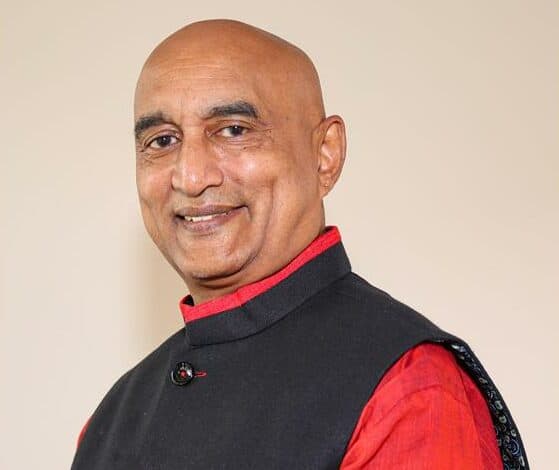
Former Liverpool Secondary and William Hills Secondary teacher Dr Rajendran Govender, who recently stepped into the national role as a commissioner for the Promotion of the Rights of Cultural, Religious and Linguistic Communities, says the United Nations Educational, Scientific and Cultural Organisation (UNESCO)’s recognition of Tamil in 2008 is of profound significance.
In an open letter, Govender outlined the rich history of the language, spoken by more than 80 million people worldwide.
He wrote: Tamil is widely regarded as the world’s oldest living language, with a continuous literary tradition dating back to at least 500 BCE. In 2004, it was officially recognised by the government of India as the first classical language of India, acknowledging its deep historical and cultural roots.
UNESCO’s endorsement was significant not only for Tamil-speaking communities across the globe but for all who value cultural diversity, intellectual heritage and the enduring power of language.
With a literary tradition dating back more than 2 500 years, Tamil is a language that has not merely survived; it has flourished, evolving continuously without losing its classical soul.
The ancient Sangam literature features themes of love, war, ethics, and nature, showcasing a civilisation that was deeply reflective, socially organised and intellectually rich.
Texts like the Thirukkural, composed by the poet-saint Thiruvalluvar, remain timeless in their ethical and philosophical resonance, influencing thinkers across generations and cultures.
What makes Tamil’s journey truly exceptional is that it is not just an ancient language but a living one. It is spoken and sung, written and read, celebrated and passed on from generation to generation in homes, temples, schools and cultural spaces across India, Sri Lanka, Malaysia, Mauritius, Singapore, SA, and beyond.
In every corner of the globe, the language remains a vital force of identity, continuity and pride.
Tamil was first spoken within SA borders in the mid-1800s with the arrival of indentured labourers. Despite the hardships of colonialism and apartheid, the language endured.
Today, it continues to be taught, performed, and honoured through events like the Tamil Eisteddfod, festivals and educational initiatives, a testament to the community’s unbreakable spirit.
UNESCO’s recognition is more than symbolic; it is a powerful reminder that languages are not merely tools for communication but rather vessels of history, culture, worldview and soul.
In a global era when linguistic uniformity threatens many mother tongues, Tamil stands as a model of resilience and renaissance.
This recognition should also serve as an urgent call to governments, educators and society to prioritise the preservation and promotion of all indigenous and heritage languages.
In a country where 12 official languages and many more heritage tongues are recognised, Tamil should serve as an example to inspire us to deepen our commitment to multilingual education, cultural inclusion and language rights.
Celebrating Tamil is not about elevating one culture above another but recognising the shared human endeavour to express, record, and pass on knowledge and values.
When we honour the Tamil legacy, we honour the global mosaic of linguistic and cultural diversity.
In celebration of the Tamil New Year Visuvavasu (5 127), which symbolises universal prosperity, let us carry forward a renewed recognition with purpose.
Let us invest in the future of our languages, strengthen intergenerational transmission and build societies that embrace the full spectrum of their cultural wealth.
ALSO READ: Get involved with Benoni Tamil School Board’s community groups
ALSO READ: Former Actonville resident rises to national prominence