
John Wesley Community Centre devastated by food parcel funding cut
According to Puma Mbambo, the R370 food parcels supported not only the recipients but also their families.
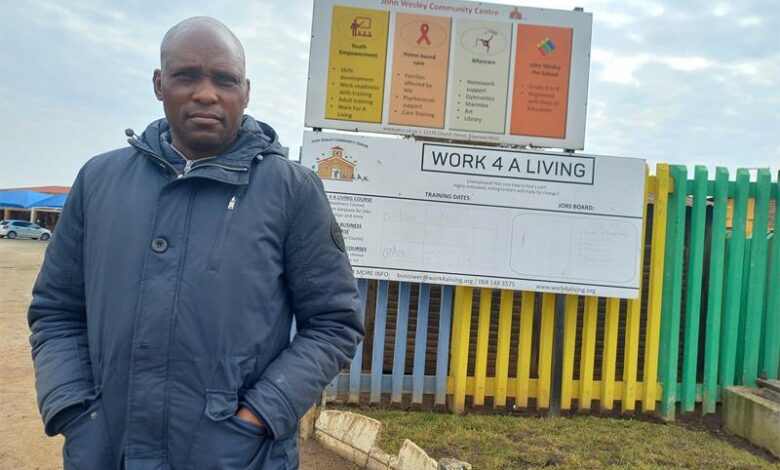
Hundreds of HIV-positive residents supported by the John Wesley Community Centre (JWCC) in Etwatwa have been left in limbo after the Gauteng Department of Social Development (DSD) slashed funding for food parcels previously provided through the Home and Community-Based Care (HCBC) programme.
JWCC is among numerous non-profit organisations in the province reeling from the department’s decision to discontinue funding food parcels through the HCBC, citing internal budget cuts and a shift to a food bank system.
Puma Mbambo, JWCC manager, said the news came as a shock when they went to sign service-level agreements in May.
“The news traumatised and devastated us. We didn’t know what to say to our beneficiaries,” said Mbambo.
He explained that they visit their beneficiaries monthly and register them for three months, during which they receive psychosocial support. A core component of this is the food parcel, which enables them to take their medication with food.
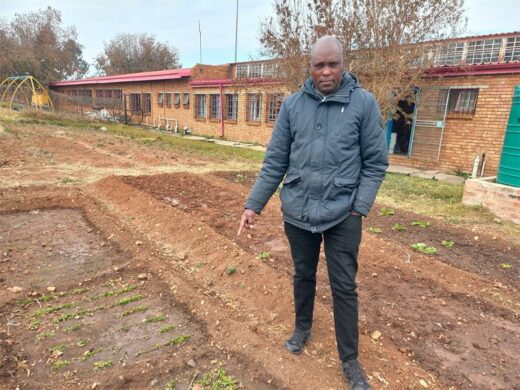
According to Mbambo, the R370 food parcels typically include essentials such as mealie meal, 10kg of sugar, 2L cooking oil, tea bags, salt, canned food, soup, and porridge. These not only supported the recipients, but also their families.
“These parcels didn’t last the whole month, but they helped. Beneficiaries would gather at the centre on collection days, engage in discussions, receive motivation and support, and return home with smiles on their faces.”
JWCC also offered education support groups and skills development programmes, often extending care for up to six months depending on individual needs.
Mbambo lamented that the shift to food banks has created further barriers to access.
“The department required us to resubmit beneficiary lists under strict new criteria. The list of requirements is steep and, once filtered, very few beneficiaries remained. That was heartbreaking. We were doing God’s work on behalf of government by building communities. This was not just about food; it was about hope and dignity,” he said.
With funding now gone, JWCC is appealing to local businesses and residents for support.
“We are asking for financial help to continue the food parcels. We would also appreciate donations of seeds. We have a garden and can supply seeds to beneficiaries to grow their own food.”
Anyone willing to assist can contact the JWCC Finance Department on 010 140 0210, Puma Mbambo on 073 357 9681 or Tshepo Simelane on 072 507 9472.
Department of Social Development responds
Responding to questions sent by the Benoni City Times, the Department of Social Development said their decision is permanent.
“The department is in the process of securing locations for this (the food parcel distribution), and the locations will be shared once confirmed. The department will communicate directly with residents to inform them whether they qualify.”
When asked whether, on distribution days, beneficiaries will be expected to collect the food themselves or if provisions will be made for delivery, the department’s Head of Communication, Motsamai Motlhaolwa, said: “Distributions are coordinated in a manner that beneficiaries do not have to incur transport costs. A mixed approach is used, including household deliveries and/or the use of existing local community infrastructure where there is a high concentration of beneficiaries in one area.”
Motlhaolwa added that the department has had to adjust its operations due to reductions in the HIV and Aids programme budget.
“These changes will not affect those receiving psychosocial services from orphan and vulnerable children and youth organisations, as well as home- and community-based care centres contracted to the department.
“This follows advice from Gauteng Social Development MEC Faith Mazibuko, who stated that there must be no reduction in the number of funded NPOs and that there should be no job losses.”
The department said it will continue to pay the salaries of social workers, auxiliary social workers, community carers, and child and youth care workers operating within NPOs to provide psychosocial support services to vulnerable groups.
“The department is still committed to ensuring that the most vulnerable groups have access to services. Standard Operating Procedures (SOPs) prioritise households with no source of income or support from government programmes. The department’s goal is not for food parcels to be the only form of assistance, but rather to empower vulnerable households to eventually sustain themselves,” said Motlhaolwa.
He added that the identification of “change agents” within communities is part of this effort to reduce dependency and encourage sustainable development.
“The budget provided by Treasury is final. It is insufficient to cover all items, and we are required to do more with less. This impacts how programmes were previously funded. In some cases, funding for HIV and AIDS had to be sourced from other programmes to supplement the budget. This has helped ensure that NPOs remain funded, jobs are retained and services to beneficiaries continue.”
Also Read: John Wesley Community Centre still going strong
Also Read: John Wesley kids receive new playground