Ramaphosa admits gaps between public and private healthcare
The president spoke at a two-day health summit.
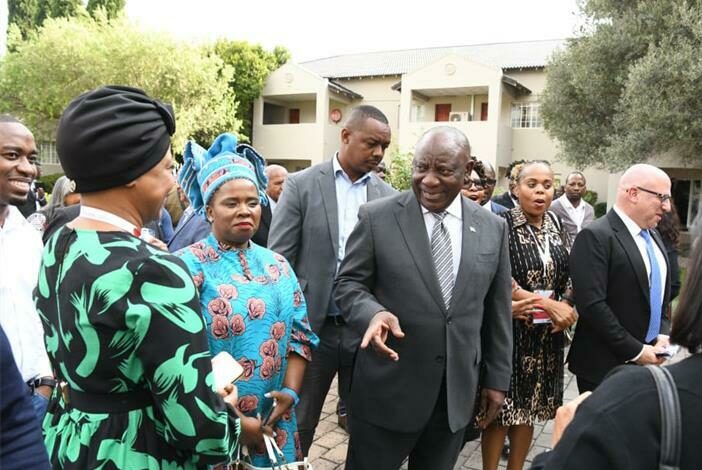
President Cyril Ramaphosa revealed during the Presidential Health Summit held last week (May 5 and 6) at Birchwood Hotel that although South Africa had come a long way in creating one health system for all, the disparities between public and private healthcare continued to increase.
The Second Presidential Summit served as a platform for government to assess the readiness of the National Health Insurance (NHI) and the performance of the health system concerning the Presidential Health Compact.
The Presidential Health Compact is an agreement consented to by the government and key stakeholders whose work impacts the health system.
The first Presidential Health Summit was in 2018.
Addressing the members from various constituencies within the health sector, Ramaphosa said despite efforts to integrate health departments, the quality of healthcare was still largely influenced by where you lived.
“The objective of the NHI is to provide access to quality healthcare services to all South Africans, regardless of their socio-economic status or geographical location.
“It aims to reduce health disparities between different population groups and regions of the country and to protect individuals and families from the financial burden of healthcare expenses.”
Ramaphosa said the journey toward NHI required working with key stakeholders to prepare the health system to accommodate the entire population in one system and ensure all could access quality healthcare.
“Our vision is to create a world-class health system accessible to all citizens regardless of socio-economic status. It is to ensure every citizen can access quality health services and receive the correct diagnosis and treatment at the right time for free at the point of care.
“Such a healthcare system should be adequately staffed with well-trained and motivated healthcare professionals supported by effective management and leadership.”
He added that to achieve this vision, the government must prioritise several key areas, including funding, strong governance, investment in healthcare, upgrading existing healthcare facilities, ensuring medical devices are available and advancing local production.
“We need a well-funded health system. Resources need to be pooled to provide access to quality healthcare for all, starting with government funding health services that have experienced a massive budget reduction in the past few years.
“We also need to mobilise resources to address perennial problems such as HIV, TB and other non-communicable diseases.”
He said this would ensure that the entire health system, public and private, was well-managed, transparent, and accountable to the public.
“We have to upgrade existing healthcare facilities, build new ones where necessary, and ensure they are equipped with the latest medical equipment and technologies.
“Government must invest more in training programmes for healthcare professionals and increase staffing levels to meet the population’s needs.”
Ramaphosa said the government needs to ensure that essential medicines and medical devices are available in all healthcare facilities, including rural areas and points of access closest to the people, like community pharmacies.
He said advancing the local production of therapeutics, diagnostics, vaccines, and other medical countermeasures in South Africa was important.
“We have to ensure that a reasonable balance is struck between considerations of pricing, which are naturally important, with supporting localisation, an economic growth imperative.
“We also aim to step up engagement with communities across the country to make them aware of what NHI is, how it will benefit them, what their rights are, and how to access services,” said Ramaphosa.
Meanwhile, Health Minister Dr Joe Phaahla admitted that the public health system faces many challenges, including the high burden of disease leading to huge service demand.
“Resources are continuously reducing as a result of poor economic performance. Undeniably, even with the limited resources, many of our public health facilities could perform better if not for inefficiency, poor management, neglect of duty due to poor supervision and outright corruption,” said Phaahla.
Also Read: Department of Health to improve the quality of mental health services
Also Read: Ekurhuleni vaccination sites ready for 12- to 17 year-old cohort