That’s what many will have you believe.
I feel (yes, this is an opinion piece after all, you don’t have to take it to heart) our beautiful country is too often viewed in a negative light, mostly by the very people living in it.
Labour, freedom of speech, crime, electricity and other service delivery issues have all been under the spotlight (now a minor movie near you) in the past two years, with racism also creeping in lately.
But the most recent event (entertainment or political, take your pick) to make the news, was the State of the Nation (Sona) 2016, given by President Jacob Zuma.
With a stunning turnout of a few people (they won 25 seats in the last election), the Economic Freedom Front (EFF) interrupted the proceedings, singing and demanding the fall of “Zupta”, as they left parliament.
Congress of the People (Cope) leader Mosiuoa Lekota also made things interesting when his party was asked to leave, after stating: “We can’t listen to this man [Zuma], he disrespected his oath of office”.
When all was said and done, only 11 of the 13 parties with seats in the house were left standing (or seated, rather).
While it is definitely entertaining to see such debates and points of order unfold in our house of governance, I believe (there it is again) it is also very healthy.
A friend of mine recently said the same, noting that a country where political parties can make noise and sing and dance and be led out of parliament gracefully (note how I conveniently forget about the police intervention outside parliament several minutes later), is one with a balanced democracy, or republic, rather (I’ll get to that in a moment).
One moment later… many modern countries are described as democracies, though if you want to be specific, it’s actually a misnomer.
Strictly speaking (which I obviously am with this article), a democracy is a country where the masses decide, in other words, a majority can impose restrictions and control upon a minority.
A republic is a democracy where the majority cannot impose restrictions on a minority, as citizens’ rights are invariably protected, usually by a constitution.
It can then be argued that the USA was a democracy until the Voting Rights Act of 1965, which finally gave full protection to rights of citizens nationwide.
In South Africa we had the exact opposite, an oligarchy, where a minority imposed its rule on the majority.
But today, things are different.
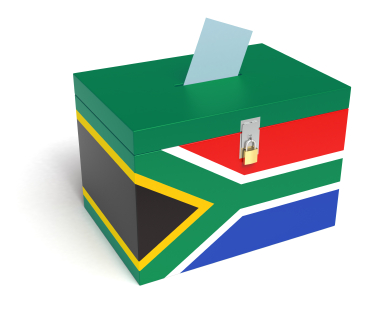
Every adult South African citizen, regardless of race, creed or gender, can vote and we have a finely tuned constitution to protect those voters and their rights.
Despite all our problems, compare South Africa’s republican freedom with the rest of the world (I don’t have time to go through all of them, so I’ll just conveniently pick a few).
Vladimir Putin has been the Russian president for 12 non-consecutive years, while Robert Mugabe has been in charge of Zimbabwe for the past three decades.
Compare that to Nelson Mandela voluntarily stepping down as President after only one term (five years) in 1999.
Although the US, generally regarded as the leader of the “free” world and the world’s foremost constitutional democracy, has several “other” political parties, the Democrats and the Republicans have dominated the White House and Congress for the past 150 years or so.
Of the 16 parties to contend in the 2012 US elections, the Democrats achieved 51.01 per cent, the Republicans 47.15 per cent and the rest shared the remaining 1.84 per cent.
In South Africa, 13 of the 29 political parties that competed currently share seating in the National Assembly.
The ANC does hold a strong majority, but each of the other groups has a reasonable share in the government and the right to speak their mind(s) during debates and sittings.
Even though being a driving military force in the world and having immaculate toilets everywhere might not be our country’s defining attributes, I personally prefer the fact that we have communism, capitalism, socialism, Christianity, Islam, Pan-Africanism, Afrikanerism and the courage to sing and dance in our political sphere.