
Editor’s note – Play sport at your own risk
Logan Green, sports journalist writes:
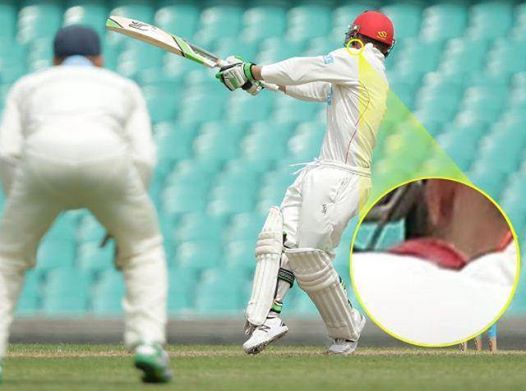
We so often enjoy the sheer moments of brilliance in sport that we tend to forget and downplay how risky it can be to play a sport.
From the underdog’s unlikely victory to the veteran player’s courageous comeback there are numerous factors in sport that keep us watching and coming back for more.
But then there are those moments that shock the sporting fraternity to the point where it no longer becomes about the game but the fragilities of humans.
This week left-handed Australian batsman Phillip Hughes died aged 25, two days after being struck on the top of the neck by a 140km/h bouncer from Sean Abbott during a domestic match in Sydney.
The player, on 63 not out at the time, was fighting his way back into the Australian test team’s set-up when tragedy suddenly struck.
I read a report that likened the injury that killed Hughes to the impact sustained by car accident victims.
That alone shows you how fragile an athlete can be.
A cricketing buddy of mine at Benoni Northerns told me how he had lost a friend to a similar freak accident in a club cricket match in East London some years ago, while I have personally seen a teammate on the rugby field almost lose his life after sustaining a severe concussion.
In 2003, at the Confederations Cup in France, Cameroonian midfielder Marc-Vivien Foé collapsed and died on the field from a heart attack.
In March, the Benoni City Times reported on the death of a 26-year-old goalkeeper after taking a blow to the head, during a Benoni South Local Football Association football game, in Actonville.

From amateur to professional sport the risks of playing are real.
If you put on a pair of boots or place a helmet on your head then you should already be aware of the risks when you first signed up.
When people hurl abuse at a particular sport for not being as “manly” as another sport like the great “football versus rugby” debate then they are clearly showing complete ignorance to the dangers that the respective sports pose to its players.
Safety should always be priority number one, but there are still sports events that I have covered where medical support is completely missing in action.
At school rugby matches it is stipulated law that a game will not take place if there is no medical support on stand-by.
This should apply to any sport regardless if it is played on a bumpy football field in Actonville, Benoni or a grassy, bouncy cricket wicket in Sydney, Australia.
Clearly the authorities should go back to the drawing board and take a look at the laws around safety in sport.
LG