Heritage authority threatens expropriation of derelict buildings
AMAFA said owners of derelict properties needed to consult the relevant authorities, Amafa and the municipality, over the future of their properties as soon as possible.
OWNERS who have purchased properties and allowed them to become derelict could well have the properties expropriated by local authorities.
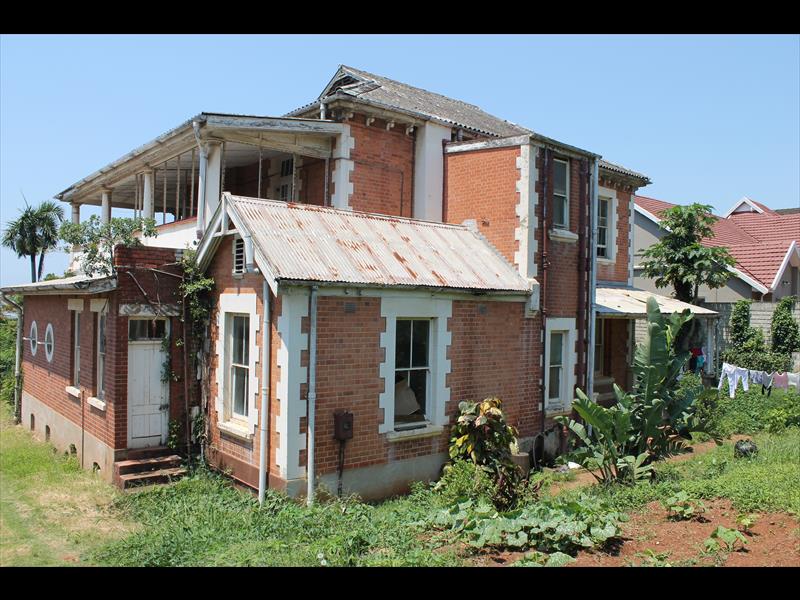
This was revealed this week following hundreds of complaints from residents in Berea and surrounding suburbs of derelict and decaying properties which were attracting criminal elements and had a negative impact on neighbouring properties and the suburb in general.
According to Ros Devereux, head of the Built Environment Section of AMAFA, there was an increase in the number of houses being left empty with subsequent vandalism by squatters and metal thieves.
She said problem houses were at numbers 217, 221 and 225 Problem Mkhize (Cowey) Road, which formed part of a group of buildings in that part of the street. The buildings on 217 and 221 were permanently protected heritage sites of local importance. She said Amafa had already issued a demolition permit for 325 Problem Mkhize Road.
“We are seeing a number of derelict buildings in the area around the Steve Biko Campus of DUT and in the lower Glenwood area. The law allows for the expropriation of properties of heritage significance that have been left to decay to a point that the heritage value would be lost if such action were not taken. This requires court action against the property owner, but would follow a process of engagement with the owner. Deliberate neglect cannot be condoned and the owners are required to reinstate the property to a reasonable standard or face legal action,” said Devereux.
Devereux said owners of such properties needed to consult with the relevant authorities, Amafa and the municipality, over the future of their properties as soon as possible. She said Amafa would not take legal action against the owners of buildings that had not already been permanently protected or did not deserve permanent protection, but would consult and support the municipality in any action it may take especially when the building contributed to the context and sense of place around the permanently protected buildings.
“An excuse given for the neglect has been that the owners purchase properties only to find there are planning and other restrictions that prevent the development of those properties,” said Devereux.
Potential purchasers of old buildings or estate agents involved with such sales can email a photograph of the building together with its street address to built.enviro@amafapmb.co.za and Amafa would determine possible heritage issues surrounding that property.
“If so, the buyer can choose to make an offer conditional on obtaining an Amafa permit for any proposed work. All work on the site is covered by the legislation, not just demolition. This process can take up to 90 days and sellers may not be prepared to enter into such agreements. The buyer can then proceed at risk or choose to abandon the offer to purchase. Buyers should also ascertain any other rights or limitations on the properties before making offers as the heritage legislation is not the only stumbling block to developing or altering a property. By making enquiries beforehand, problems could be avoided down the line,” said Devereux.
Kevin Dunkley and Cheryl Johnson from Save Our Berea said the practice of deliberately allowing houses to deteriorate was not only found on the Berea but throughout eThekwini, and it was a growing menace. They said not only did these properties devalue surrounding properties, but they were an eyesore, unhygienic and they attracted a criminal element.
“The fact AMAFA and eThekwini Municipality are already taking steps against owners who are not maintaining protected buildings is news to us. We do not know of one example of this happening be it on the Berea or in Parlock. Save Our Berea has been agitating in the wider press and on our Facebook page for months about what we refer to as Trojan Horses. These are properties, and often they are heritage properties, that are protected by our heritage body AMAFA, which are deliberately left to rot so that the owners can claim they are beyond repair, making it easier for them to get a demolition order from AMAFA. They can then develop the site, usually into a high density development that often includes questionable rezoning, to the detriment of the surrounding properties,” said Johnson.