DESPITE its immense contribution to the country’s Gross Domestic Product (GDP), the creative economy remains the most underappreciated economic drivers in South Africa. According to the South African Cultural Observatory (SACO), the creative economy contributes over R90 billion to the country’s GDP and employs thousands of people, mainly the youth, who make up 77.6% of the population in the country. SACO says unlocking this potential is key to South Africa’s growth.
Michelle Constant, CEO of Business and Arts South Africa (BASA) says their mission is to ensure the relevance and sustainability of the arts in South Africa by providing expertise in developing partnerships between business and the arts.
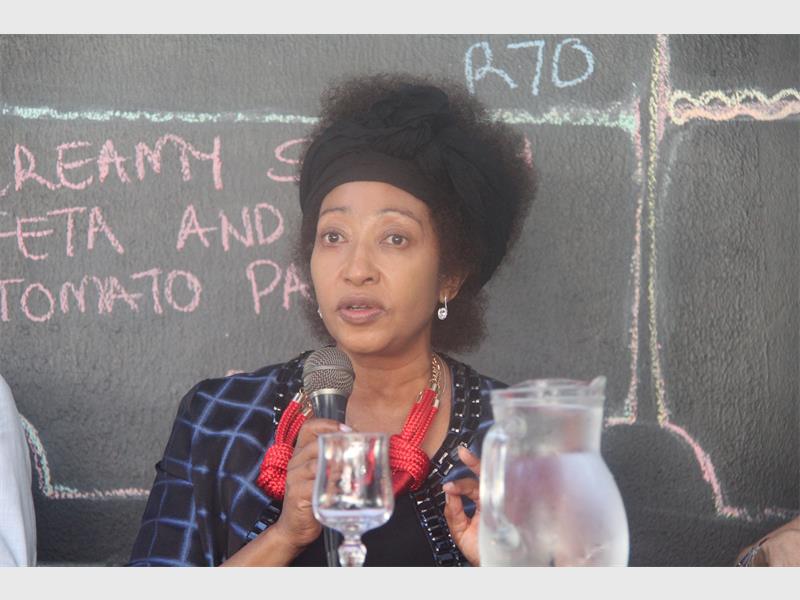
Constant was speaking at the recent Business Arts Breakfast hosted by the Alliance Francaise in collaboration with Intellectual Property Exhibition in Morningside. “To unlock the true potential of the creative economy, we need more art based initiatives in the country, to help create opportunities for the youth. We need longevity and sustainability from our creatives,” she said.
She also urged young black professionals to get involved the in the art scene and said BASA currently offered various Skills Development programs aimed at attracting young people to the arts.
“The people funding the arts are white, middle aged women. We need to see young black professionals involved in the art,” said Constant.
Rosemary Mangope, CEO of the National Arts Council of South Africa (NAC), who was also present at the event, said collaborative partnership was essential to help unlock the potential of the creative industry. “The NAC is a national agency mandated by the Department of Arts and Culture, with the responsibility of developing South Africa’s creative industry by awarding grants to individuals and organisations in the arts. Art is a commitment to the environment. To ensure that our artists fulfill their purposes, we need to provide an enabling environment,” she said.
The Department of Arts and Culture supports more than 20 national and regional flagship events such as the National Arts Festival and the Cape Town international Jazz Festival. A range of regional festivals such as the Kalahari Desert Festival in the Northern Cape, Mpumalanga Comes Alive, MACUFE in the Free State and the Marula Festival in Limpopo are also supported by the department.
Arts and Culture Minister Nathi Mthethwa described these events as catalysts for economic development given that artists are reliant on events for income and economic sustainability.
“According to an ongoing monitoring and evaluation programme, the National Arts Festival contributed R138.4 million to the local economy, while the Cape Town International Jazz Festival contributed R129.2 million. “MACUFE contributed R64.3 million to the economy of Bloemfontein, the Marula Festival contributed R20.8 million to the local economy of Phalaborwa and Mpumalanga Comes Alive contributed R11 million to Mbombela,” Minister Mthethwa said