Encounters with a familiar stranger
"My current situation is just a piece of the bigger picture."
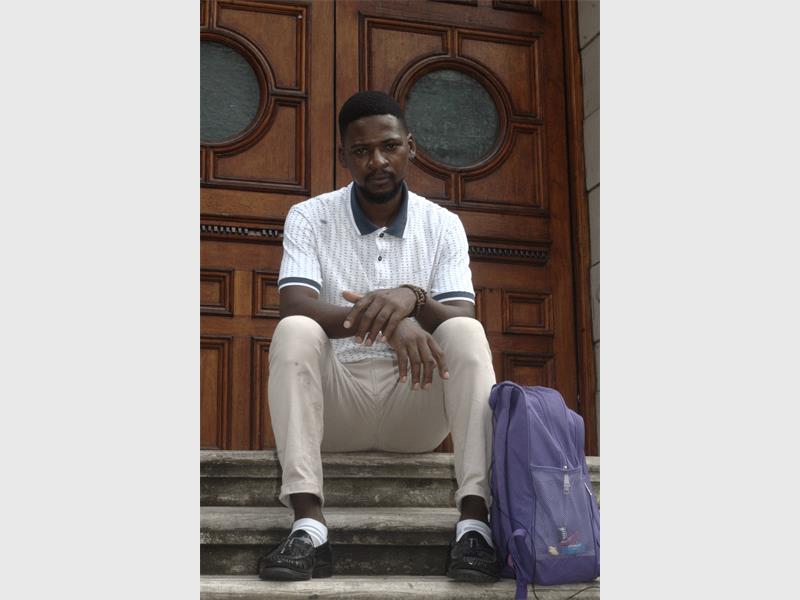
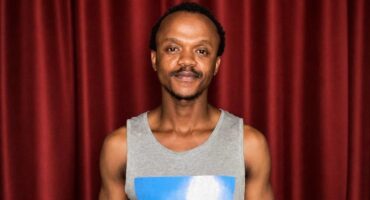
MY first encounter with Lundi Gqwaru was at the Denis Hurley Centre, when the Independent Electoral Commission (IEC) set up a satellite office to help homeless people register to vote.
He was part of a group of guys volunteering at the centre. They were busy hanging posters with messages on the importance to vote.
“Are you going to vote?” I asked. “Eish…my brother, I was looking forward to vote but I don’t have my ID. I hope the IEC officials will give me advice on how to move forward, as I am someone who doesn’t have an address,” he responded.
A month later we bumped into each other at the Bat Centre and at first we barely recognized each other.
However, moments later I asked to see the newspaper he was carrying and he said, “I know you, you’re that journalist guy I met at the Denis Hurley”, we laughed as we both remembered the day.
Today he is wearing a clean white stripped golf tee-shirt, chinos, black loafers and he’s sporting a nice haircut.
“I am waiting for a friend, he is bringing me a phone and a USB, where I will keep my work as an artist. Can you please lend me your phone, I need to call him to find out where exactly he is,” he says.
I reluctantly give him the phone because he fits the description of a homeless person, and I think he might be playing a trick on me. If he were to try something funny, he would not get away with it, I think to myself.
For the most part, homeless people need help and are harmless. It’s a weird subject to be on the fence about since the city has one of the highest homeless populations. Block after block homeless people line the streets.
“So who are you man, because you don’t look like someone who is homeless. You’re clean, eloquent, where do you stay and what kind of art do you?” I bombard him with all these questions at once.
ALSO READ: Mum and daughter bring goodness to Durban’s homeless
“Ey man, people listen with their eyes and if I am going to tell people what I do, they will not take me seriously. There are those who would prefer to look dirty, because they know people will feel pity for them, I am not like that. I used my last R15 to move from Underberg to Pietermaritzburg and then to Durban. The first few days back in Durban was difficult, especially trying to find accommodation. I had to move from one spot to the other and sometimes the security guards would chase us away. I remember this one time, I was woken up by a stinging sensation in my eyes, they used a pepper spray on me and it was raining that day. I eventually found a cosy spot, on Steve Biko Road it was quite and safe,” said Gqwaru.
“I would wake super early in the morning, go to the Denis Hurley Centre and take a shower there, then go to the Library to check my emails and go check what was happening on social media and also communicate with my friends and family. I would then head back to the centre to fill my stomach, spend moments with friends and then head back to the library. At night, I’d go back to my spot and plot the next day. I did that for months and things really started to change for me. I believe that was how I carried myself despite the circumstances. I was provided with space at the Denis Hurley Centre, where I could do my work but I moved again to my current spot (Silethokuhle Organization) which is more spacious and allows me to work with different mediums,” he added.
Although Gqwaru’s journey is one that is filled with pain, his eyes sparkle and he is at peace as he narrates his story to me. “So how did you get into the arts?” I press on.
ALSO READ: Durban homeless man earns living selling books
“I was born in Bizana, a small village in the Eastern Cape. I was raised by my grandparents until we moved to Umlazi in 1992. Back in the village one could explore the natural beauty, I was surrounded by and that inspired me to be creative. My uncle, whom I idolized, was a soccer player and he loved his soccer boots, so one day he drew the one boot. I was so proud of him and tried imitating what he did. I found out that Ias was quite a natural and that’s how the art bug bit me,” he said.
Unlike many who find themselves on the streets, and who cannot learn from their repeated mistakes and are constantly in conflict, Gqwaru says he realized that he had to make peace with his family, so that he could heal and move forward as an individual.
“I want to realize my full potential as an artist, businessman and overall human being. I am grateful for the people at Umgeni Community Empowerment Centre (UCEC), they took me in, provided me with counselling and a roof over my head. I am also doing a business course at Grace Church in Lakeside. My biggest goal is to share my art with the rest of the world, I want to exhibit at these big galleries. My current situation is just a piece of the bigger picture,” Gqwaru says as we part ways.
Do you want to receive news alerts via WhatsApp? Send us a WhatsApp message (not an sms) with your name and surname to 060 532 5535.
You can also join the conversation on Facebook, Twitter and Instagram.
PLEASE NOTE: If you have signed up for our news alerts you need to save the Berea Mail WhatsApp number as a contact to your phone, otherwise you will not receive our alerts