
Botanic Gardens’ 125-year-old staircase gets a revamp
Linsay Napier, the heritage architect says the condition of the stairs began to deteriorate over a long period of time.
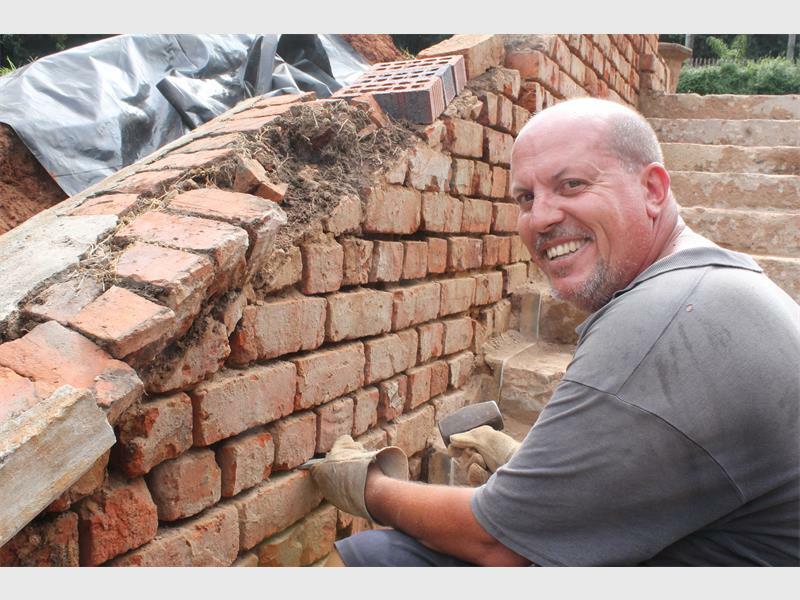
THE Durban Botanic Gardens has started working to restore the 125-year-old heritage/conservatory staircase located in the Gardens, which had begun to deteriorate over time. According to local gardens historian Professor Donal McCracken, the double flight of steps was once the focus of a scientific complex.
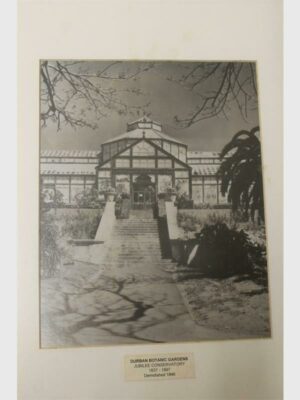
“The stairs led up to the great Boyd of Glasgow Jubilee Conservatory; to the Great Fernery adjacent to the conservatory, and to the Victoria Amazonica lily pond with its hidden, large water tank below. The steps were created in early 1898, the same year construction began on the conservatory. While the main wooden structure of the conservatory was shipped to Durban from Scotland, arriving in May 1898, the steps leading up to the conservatory front entrance, and the foundation of the conservatory, were locally sourced and constructed by a Durban builder called Lansdell. The steps, though elegant, were of a simple design, being built of bricks with moulded plastering added, which mirrored the foundations at the base of the conservatory,” said McCracken.
ALSO READ: Girl Guides- a legacy through the ages
eThekwini Municipality spokesperson Msawakhe Mayisela says the conservatory staircase is an important part of the Durban Botanic Gardens heritage, especially given that the Gardens is the oldest surviving botanic garden on the African content (established in 1849 and later relocated to the present site in 1851). “It is important that investment is made in the preservation and restoration of key heritage artefacts like the staircase. The method of construction, particularly the cement finish, is also notable – the mouldings having been handcrafted,” said Mayisela.
Linsay Napier, the heritage architect says the condition of the stairs began to deteriorate over a long period of time. “Once cracking to the cement finish was noticed, soon after, the investigation into the specialist restoration process began. With the removal of plaster, the bad state of the masonry has been revealed. The jointing consisted mostly of soil which has attracted plants and roots. As the plaster has deteriorated with time, moisture has got into the wall, and some bricks have disintegrated completely. The bricks were probably ‘home-fired’, therefore the bricks are inconsistent in their ability to withstand water ingress. This has resulted in parts of the wall being reconstructed and most of the joints re-pointed. Assessments of the structure and the working out solutions with the contractor are underway. In collaboration with MJL Projects we intend to restore the staircase with methods with which it was constructed – the plaster moldings will be recreated by a skilled plasterer using profiles taken from the original,” said Napier.
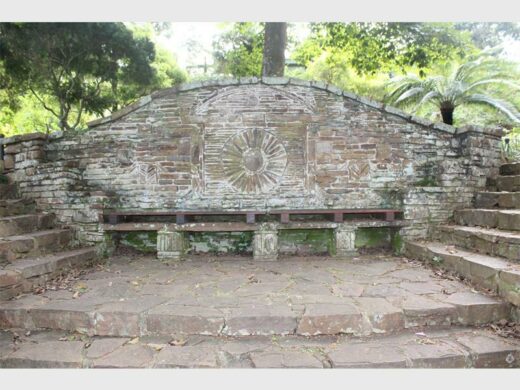
Work on the staircase started on Monday, February 6, and the project is expected to take 14 weeks to complete. “This is a joint initiative by the Durban Botanic Gardens and Durban Botanic Gardens Trust. The DBG Trust is kindly funding this project from proceeds raised at the recent Durban Botanic Gardens Trail of Lights event. The Trust provides a supportive role in the Gardens and raises funds to facilitate this support through holding events within the Gardens,” said Mayisela.
ALSO READ: Iqraa Trust hosts Science in action programme
Durban Botanic Gardens Volunteer Programme
The Durban Botanic Gardens is also seeking volunteers for their volunteer programme. Durban Botanic Gardens curator Martin Clement says: “Anyone with a hands-on practical interest in gardening and who is eager to learn more and support our beautiful Durban Botanic Gardens, a key part of our City’s and Country’s botanical and horticultural heritage, can apply.”
“Applicants can expect various hands-on gardening tasks and projects depending on the season. Volunteers are free to choose an area of the Gardens to work in and the day of the week and times according to availability. There are various thematic gardens and horticultural programmes, eg, a permaculture garden, a butterfly garden, a garden of the senses, a fern garden, an annual flower display, orchids, etc, to choose from. A further discussion with the Gardens senior horticulturist will help determine the best fit, according to a volunteer’s interests and abilities,” said Clement.
Clement says the volunteer programme is ongoing, and people interested in volunteering can apply throughout the year.
Aspiring volunteers can apply via email at martin.clement@durban.gov.za or Jennifer.Rampersad@durban.gov.za. If visiting the Gardens, enquire at the Visitors’ Complex Information Office.
For more from Berea Mail, follow us on Facebook, Twitter and Instagram. You can also check out our videos on our YouTube channel or follow us on TikTok.