Students enjoy ‘floating laboratory’ experience at Durban Harbour
Students and early-career professionals gained a firsthand insight into cutting-edge marine research and its critical role in global food sustainability, aboard the vessel (R/V) Dr. Fridtjof Nansen. The vessel opted for Durban as its Port of Call.
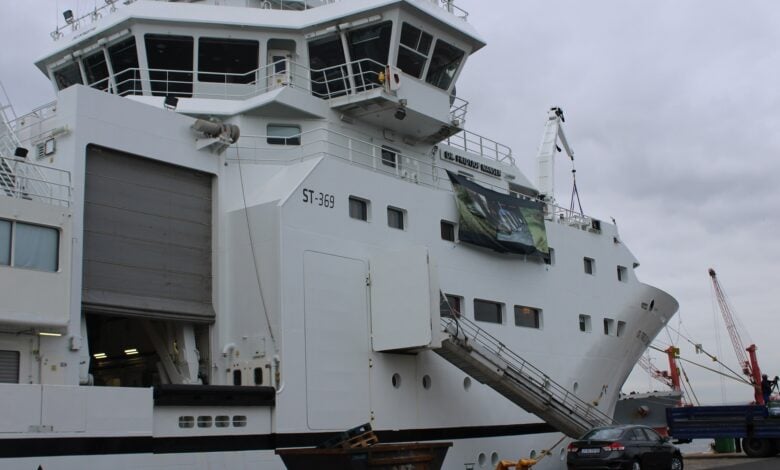
IN commemoration of a 50-year milestone of a research programme, a marine research vessel hosted an exclusive educational boat visit in Durban Harbour last week.
This unique port call offered students a rare, hands-on experience of the state-of-the-art research vessel, featuring guided tours and insightful discussions with leading scientists.
The EAF-Nansen Programme, a longstanding partnership between the Food and Agriculture Organization of the United Nations (FAO) and Norway, was at the helm of the commemoration. The event was specifically designed to engage university students and early-career professionals, providing them with an in-depth understanding of the vessel’s scientific contributions.
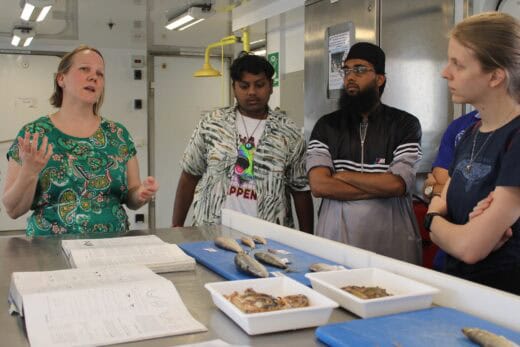
Through expert-led presentations, discussions, and a guided tour, students acquired valuable knowledge into the vessel’s research capabilities, the technologies used on board, and the broader role of ocean science in sustainable fisheries.
Also read: Marine programme gives hope to the youth
Cassandra Upton, a Ph.D. student wrapping up her project on Marine Metabolomics, was enthused by the programme. She shared, “Attending the 50th Anniversary of the EAF-Nansen Programme was an incredible experience. Seeing research in action and witnessing the impactful work being done in sustainable fisheries management and marine ecosystem monitoring was truly inspiring. The event highlighted the importance of continued international collaboration in advancing ocean research, and engaging with experts aboard the Dr. Fridtjof Nansen was especially motivating. It was an honour to be part of such a milestone celebration.”
Another student who found the programme beneficial was Sanele Caluza, a BSc Honours student in Marine Biology. “It was an eye-opening experience, seeing the vessel. We mostly learn about such vessels in theory, and seeing scientists in action, explaining to us how things work; they showed us that anything is possible, given the opportunities such as scholarships and resources that assist with research and collection of specimens,” he said.
Since its inception in 1975, the EAF-Nansen Programme has been at the forefront of promoting sustainable fisheries, strengthening capacities of fisheries institutions and advancing scientific knowledge on marine resources and ecosystems.
The R/V Dr. Fridtjof Nansen is an integral part of the EAF-Nansen Programme, one of the longest-running fisheries development initiatives of Norway, FAO, and possibly in the world. Executed in close collaboration with the Norwegian Institute of Marine Research, the programme works with regional organisations and 32 countries across Africa and the Bay of Bengal to improve food security through responsible fisheries management.
For more from Berea Mail, follow us on Facebook, X and Instagram. You can also check out our videos on our YouTube channel or follow us on TikTok.
Click to subscribe to our newsletter – here