Reiger Park raises breast cancer awareness
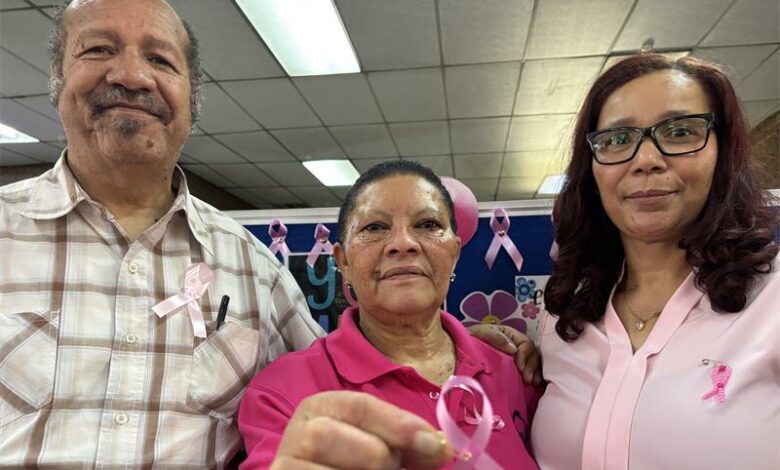
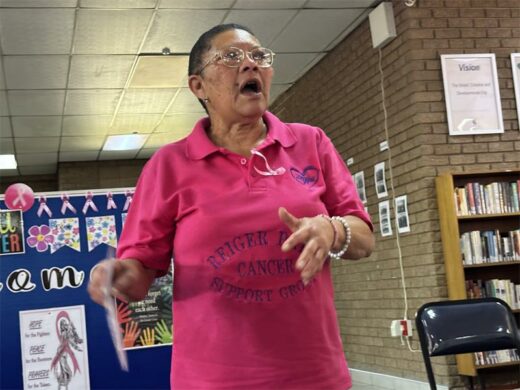
Victims shared their stories at the Reiger Park breast cancer awareness talk.
Take care of your body.
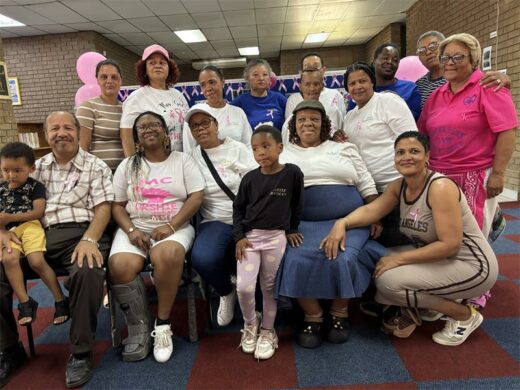
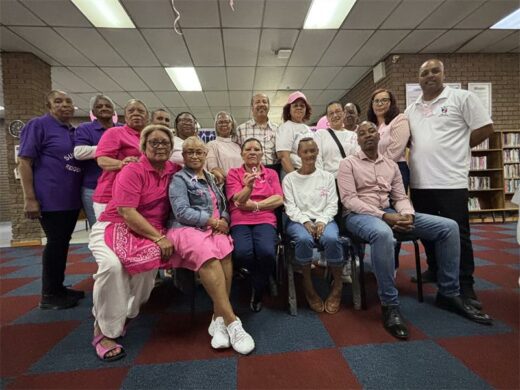
This was the key message shared during an informative breast cancer awareness talk hosted by the Reiger Park Cancer Support Group at the Reiger Park Library on October 7.
The event brought together community members, cancer survivors and medical professionals, all united in pink, to raise awareness about the impact of breast cancer and the importance of early detection.
A highlight was a presentation by medical experts Drs Hank Edwards and Agatha Wilhase, who shared vital information on breast cancer prevention, diagnosis, and treatment.
Edwards explained that cancer is essentially an abnormal growth in the body.
While the focus was on breast cancer, he reminded attendees not to ignore other cancers. He stressed that although breast cancer is the most common cancer-related cause of death among women globally and in SA, the good news is that it is often preventable and treatable when detected early.
He urged women to pay attention to changes in their bodies, adding not to wait for a doctor to refer them before going for a mammogram. He explained that the diagnostic process typically includes a biopsy to confirm the presence and stage of cancer.
Edwards described the progression of breast cancer, noting that in stage one, it is in one breast, in stage two, it affects both breasts, in stage three, it has spread to the lungs, and by stage four, it has reached organs like the liver and the brain. While all stages are treatable, treatment becomes more complex as the cancer advances.
He also spoke about a significant shift in the approach to breast cancer treatment over the past two decades. In the past, treatment often involved removing the tumour through mastectomy, and patients were assumed to be cancer-free. However, many women experienced a recurrence years later in other organs. This led to a new approach where oncologists also treat microscopic cancer cells that imaging cannot detect. Chemotherapy is now used even after a tumour is removed to target cancer that might have spread beyond what is visible.
Understanding risks and recognising symptoms
Several risk factors contribute to breast cancer. These include age, genetics, menstruation, menopause history, lack of physical activity, obesity, alcohol use and smoking.
Meanwhile, Wilhase emphasised the importance of women knowing their bodies so they can recognise when something is wrong. Early detection, she said, often comes down to self-awareness and acting quickly when changes are noticed. She also demonstrated a breast self-examination.
Cancer survivor Charmaine Herman shared her story with the audience. She was diagnosed with ovarian cancer, which later spread to her womb, requiring a full hysterectomy.
“I had a lot of pain and didn’t think I would survive. I had to drink morphine. It also changed my looks; I looked 80. At least I got my weight back,” she recalled.
She also highlighted her challenges with the public healthcare system, including a three-month wait for a CT scan. She noted that the same test would have cost over R10 000 privately.
“You need patience dealing with government hospitals. I just told myself I needed to persist and remember that I’m not the only patient.”
Her message to others was simple but powerful: “Don’t be afraid to go for tests. The earlier the diagnosis, the better the chances of survival.”
Ulita Billings, the founder of the support group, thanked those who contributed.
The Reiger Park Cancer Support Group continues its commitment to education, support and advocacy for those affected by cancer in the community.
Also Read: Reiger Park Cancer Support Group celebrates 10th anniversary
Also Read: Help Reiger Park Cancer Support Group