It’s ‘snakebite season’…but don’t panic
While encounters with snakes in suburban areas like Brakpan are a fairly common occurrence, not many people know how to deal with these slithering reptiles.
s.With this in mind and with “snakebite season” currently at its peak, Brakpan resident and snake enthusiast Shawn Hefer recently shared some useful advice on how to handle an experience with a serpent.
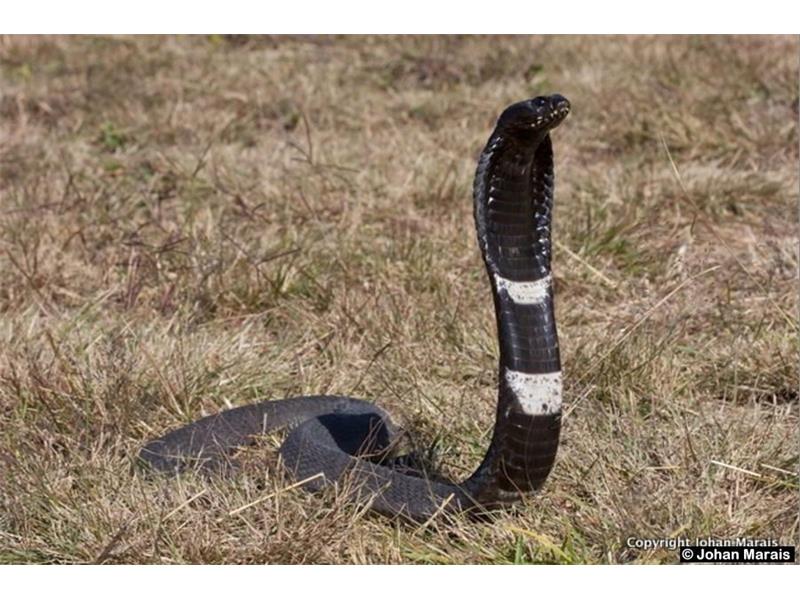
According to Hefer, the rinkhals (Hemachatus haemachatus) is probably the only venomous snake residents are likely to encounter in and around Brakpan.
Rinkhals bites rarely occur, as this snake gives more than fair warning before resolving to administer a bite.
It will first spread its hood, mimicking cobras, while often hissing loudly. If this does not work, the Rinkhals is likely to move on to its next means of self-defence, which would be to spray or spit venom at its “attacker”.
“Unlike common belief, snakes do not go around looking for someone into whom to sink their fangs; do not believe everything you see on TV,” said Hefer.
“Snakes avoid people, because interacting with them puts snakes at risk of being injured or killed.
“When you confront a snake or attempt to kill it, you are assuming the role of the attacker/predator.
“If all the pre-mentioned methods to deter you fail, the snake will revert to its last line of defence and will possibly only then bite.”
Hefer explained that venom is a very valuable commodity for a snake, and wasting it is just not worth the risk.
“There is no venomous snake on the entire planet capable of eating a human being, so venom would be used only for self-defence,” he said.
First Aid:
* If a rinkhals does spit venom in your or your pet’s eyes, do not panic — you will not die from receiving snake venom in the eyes.
* Get to the nearest tap and flush the eyes with running water for approximately 15 minutes.
* See a doctor/veterinarian for further treatment.
“If you managed to receive a bite from a rinkhals, do not panic,” said Hefer.
“The majority of bites we see are either “dry-bites” (bites where no venom was administered) or bites where a non-lethal dosage of venom was administered.
“Try to remain calm and get to a hospital with a trauma unit as soon and safely as possible.”
Hefer further stated that human deaths from a rinkhals bite are very uncommon today.
He warned residents not to capture the snake, unless they are trained to do so.
“Attempting to do so will possibly only result in more bites,” said Hefer.
“Call someone qualified to assist in removing the snake.”
Residents can contact Conrad Prinsloo on 083 876 7619 for snake removals.