


It cannot pick provisions in the Tax Administration Act that are ‘self-serving’.
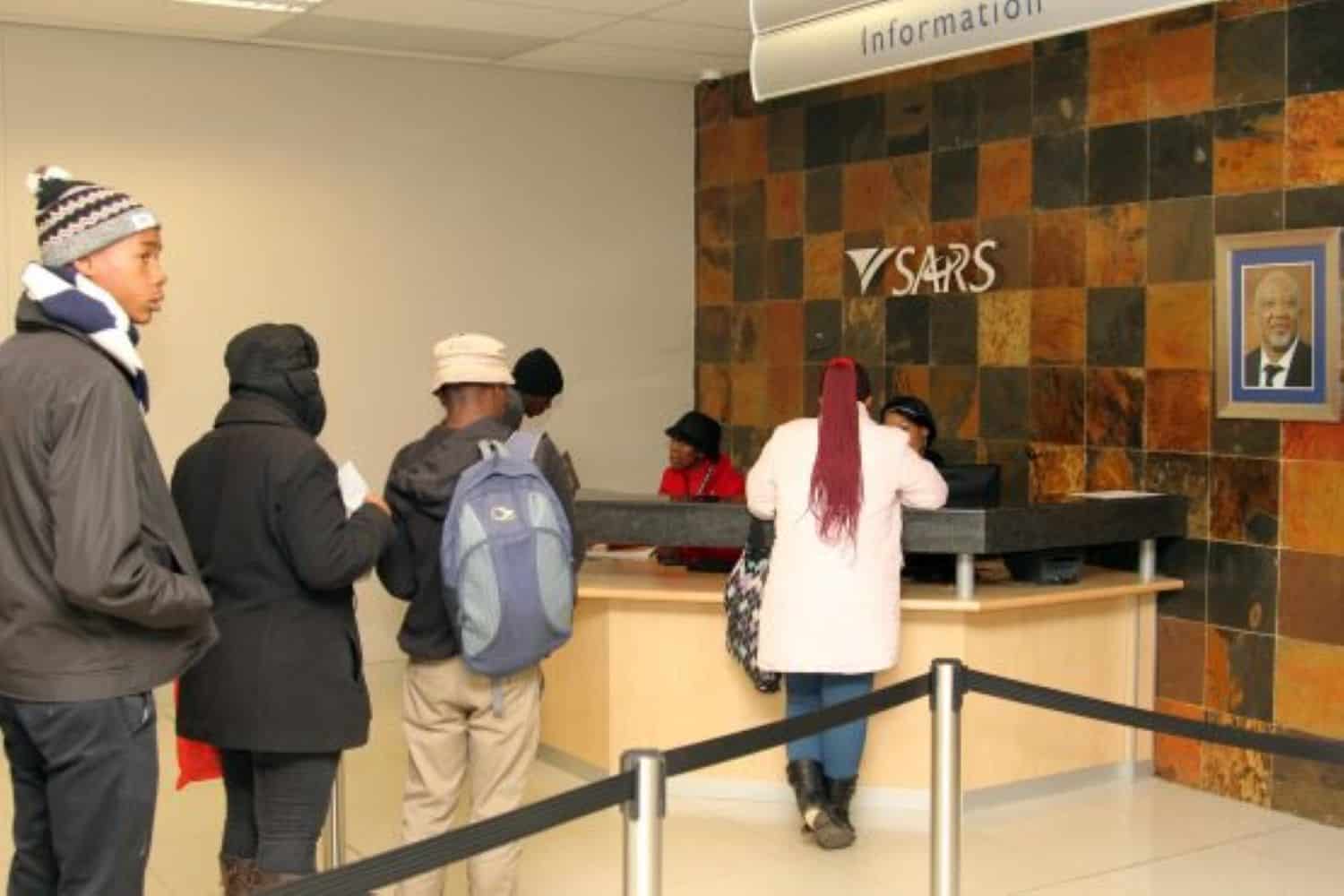
The high court held that had it reached any other decision, parties ‘would know that no reliance could be placed upon any agreement’ reached with Sars. Picture: Moneyweb


The South African Revenue Service (Sars) received a bit of a dressing down in the Pretoria High Court about the manner in which it dealt with a settlement agreement it reached with a taxpayer.
Despite the “clear and unequivocal” terms of the agreement it reached with Inhlakanipho Consultants, Sars “inexplicably” decided not to upheld its side of the agreement.
The taxpayer approached the courts for clarity. After the Tax Court accepted Sars’s argument, the matter went to the high court on appeal.
The high court found that the agreement between the two parties was lawful and binding. It found that Sars’s reliance on a specific section of the Tax Administration Act was “contrived and self-serving”.
The court not only upheld Inhlakapanipho’s appeal, it ordered Sars to pay the costs and authorised the taxpayer to enrol the application again if needed.
ALSO READ: Sars accused of blaming tax practitioners for eFiling hijackings
The agreement
Both parties signed the agreement in September 2018, agreeing that the taxpayer would pay an amount of R5.9 million as the total liability for the revised and reduced amounts for its value-added tax (Vat) assessments over two tax periods.
The agreement provided that once the agreed amount had been paid all that would be left was to calculate the interest.
The court held that interest can be calculated by taking the date on which payments of the respective assessments were due as the starting date and the date on which payment was made as the ending date. “The agreement, in its terms, is clear in this regard,” the court noted.
ALSO READ: They collect your tax and earn R33 million while doing it – Meet Sars’ top earners
Sars does an about-turn
However, Sars did a complete turnaround on what was agreed.
It argued that the payment only reduced the combined amount of the original assessment and did not discharge the principal debt. The consequence of this approach was that it only discharged interest and penalties and left the principal debt with further interest outstanding.
Given this sudden and complete reversal of position (from the agreement) the firm approached a lower court for a declarator that it was not indebted to Sars.
It asked for an order to compel Sars to render an account for the interest due, together with a mechanism, in the event of a dispute, how it could be resolved.
It also asked the lower court to award punitive costs. The lower court found in favour of Sars, and the matter was taken on appeal.
ALSO READ: E-filing fails the elderly and illiterate
Payment allocation
Sars relied on a particular section of the Tax Administration Act (TAA) that gives it discretion on the payment allocation.
Sars basically argued that its accounting system did not permit it to allocate payments to capital rather than interest and that it would require an “overhaul” of its systems to do so.
The court of first instance uncritically accepted this version from Sars that it was impossible to implement the agreement in the terms it had agreed.
However, the high court found that although Sars did have allocation discretion, it was “nothing more than a convenient peg” on which it hung its failure to comply with what had been expressly agreed with Inhlakanipho.
“This bare allegation is hearsay, unsubstantiated and clearly in conflict with the agreement and yet this was surprisingly accepted uncritically and elevated to the status of established fact, grounding the finding of impossibility,” the high court found.
Sars could not adopt a “contrived and self-serving reliance” on a particular section of the TAA when on the facts of the matter it is clearly not entitled to do so.
“By entering into the agreement in the terms that it did, it eschewed its entitlement to rely upon Section 166 of the TAA for the specific periods concerned,” the high court found.
ALSO READ: South Africans pay more while Sars execs celebrate big payouts
Disincentivise settlements
The adoption of any other interpretation would render the concept of an agreement entered into with Sars in terms of the relevant rules of the Tax Court entirely pointless.
“It would in fact disincentivise settlement because parties would know that no reliance could be placed upon any agreement that had been reached,” the high court held.
Although Inhlakanipho did ask for a punitive cost order in the matter before the lower court, it did not do so before the high court.
The high court ordered Sars to pay costs on the scale applicable between attorney and client, and to include the costs consequent upon the employment of two counsel, including the reserved costs of February 2022.
Charles de Wet, Vat specialist and tax executive at ENSafrica, says it is important that Sars allocate the amount agreed upon in accordance with the agreement it reaches with a taxpayer and not what is convenient for Sars.
This will also strengthen the confidence taxpayers have in the alternative dispute resolution process and subsequent settlement agreements with Sars.
This article was republished from Moneyweb. Read the original here.
Support Local Journalism
Add The Citizen as a Preferred Source on Google and follow us on Google News to see more of our trusted reporting in Google News and Top Stories.

