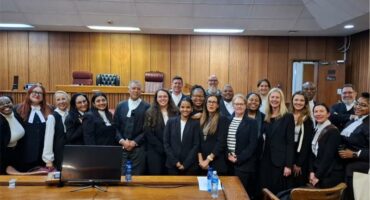
Winners of 2024 National Essay Writing Competition honoured
The Ahmed Kathrada Foundation has honoured the bold voices in its 2024 National Essay Writing Competition. The 2025 edition is now open for entries.
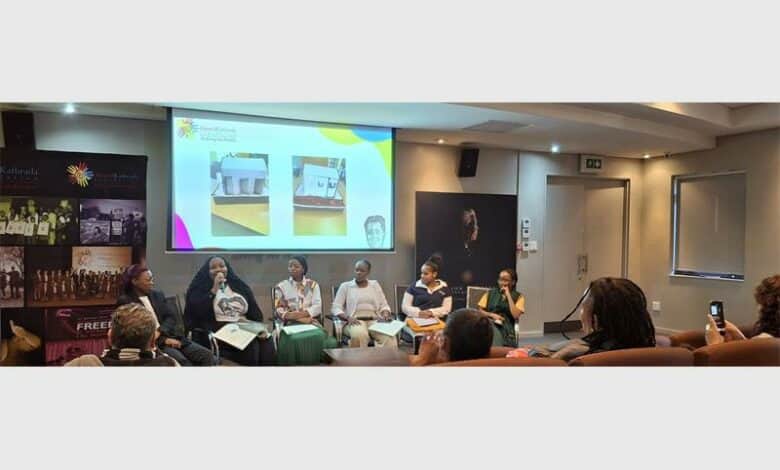
The Ahmed Kathrada Foundation hosted the 2024 National Essay Writing Competition Against Racism Awards ceremony at the Nelson Mandela Foundation Auditorium.
They celebrated the extraordinary voices of young South Africans who rose to the challenge of confronting racism, inequality, and the unfinished work of freedom through art, poetry, and essay writing.
This year’s competition saw entries from across the country, with the top six winners – two from each of the three categories: essay, poetry, and visual Aat – hailing from Gauteng, Limpopo, KwaZulu-Natal and Mpumalanga.
The essay writing winner, Grade 11 learner Katleho Seele, was recognised for her compelling essay titled ‘The Impact of Apartheid on a Born-Free Generation.’
In her work, Katleho explores how the legacy of apartheid continues to shape the lives of her generation, particularly in education and opportunity. She wrote: “Even though apartheid officially ended in 1994, its educational legacy remains deeply entrenched. My friend Lerato’s school doesn’t even have a functioning science lab. This is a harsh reminder that the educational disparities created by apartheid are still very much alive.”
Katleho’s reflections echo the broader themes explored by many entrants, including spatial injustice, intergenerational trauma, economic inequality, and democratic decay.
Like many others, her essay serves as a mirror to the thoughts and concerns of today’s youth.
In the poetry category, top entrant Sejal Mohabir from KwaZulu-Natal was honoured in absentia for her deeply evocative poem ‘In the shadow of olive trees.’
The piece interrogates the question: ‘Is Zionism racism?’ It explores the emotional and moral complexities of the Israel-Palestine conflict. Through lyrical imagery, Sejal draws attention to the dual narratives of displacement, pain, and identity, asking: “Can a dream built on ancient pain / Grow without inflicting the same?”
In the visual art category, Lukhanyo Mlangeni from Mpumalanga, also honoured in absentia, presented a powerful mixed-media artwork titled ‘Echoes of yesterday threaded into our foresight.’
The piece features a fading charcoal figure, restrained by red wool, symbolising how the born-free generation continues to carry the burden of apartheid’s emotional and societal scars.
In his artist’s statement, Lukhanyo wrote: “This indoctrination hinders individuals from discovering their true identities, as they are conditioned to view others through a particular lens.”
Second place in the essay category went to Theto Rampele, whose work also offered powerful insights into the enduring impact of racial injustice. Siphesihle Nxumalo earned second place in the visual arts category with a bold submission on generational trauma. In the poetry category, Zohar Zanamwe was awarded second place for a poem rich in lyrical insight and socio-political depth.
The work of the top 10 entrants in each category will be published on the foundation’s website. These are not just entries, they are powerful statements from the next generation of thinkers, artists, and activists.
Speaking at the ceremony, Ahmed Kathrada Foundation executive director Neeshan Balton praised the courage and honesty of the young participants: “This competition is not just about writing or creating. It’s about cultivating a generation of unafraid thinkers and leaders to interrogate the myths we tell ourselves about freedom. These entries show that young people are not just future leaders; they are leaders now.”
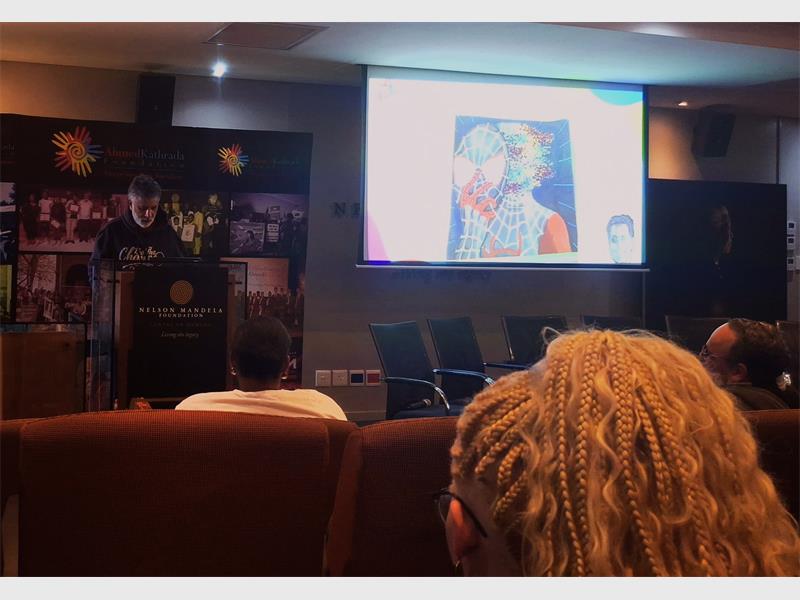
The winners were awarded laptops and cash prizes.
How to enter
At the same ceremony, the foundation announced the official launch of the 2025 competition.
This year, they call on young South Africans to reflect on:
• Do we need quotas in sport today?
• How does religion affect racial unity and division in society today?
• Does social media spread racism, and how can young people use it to fight back?
• What does racism look like in 2025?
Entrants may submit work in one of three formats:
• Essay (1 000–1 500 words)
• Poetry (with a 500-word explanation)
• Original Artwork (no larger than A3, with a 500-word explanation)
The competition closes on July 31. All South African youth aged 13–21 are encouraged to enter. Previous winners from 2023 and 2024 are not eligible.
For more information, youth that is interested in participating should contact Rethabile Ratsomo on 011 854 0082 or email rethabile@kathradafoundation.org