
WATCH: Seven-month-old bully puppy makes history with triple win
The young American Bully, handled by Sheldon Morgan and bred at Supreme Bully Estate, delivered a performance that turned heads at a local dog show.
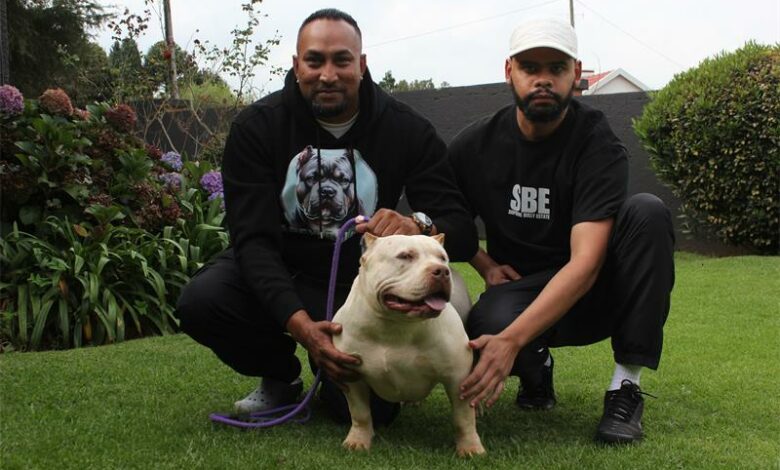
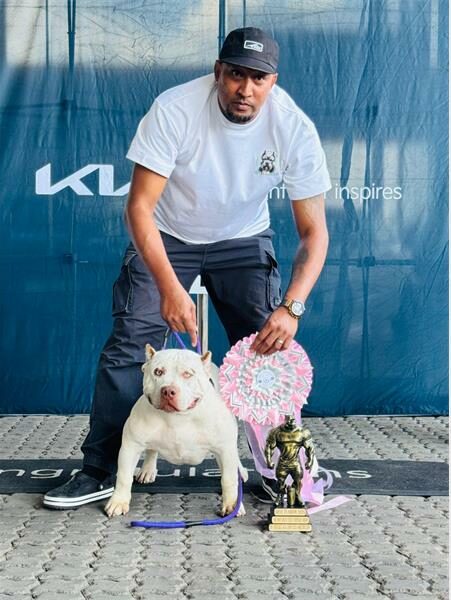
A young American Bully named Fendi from Kibler Park has made history after winning Best in Show, Best Puppy, and Best Handler at a competition held at Kia and Tata Northcliff.
The event, hosted by Meraki Whelping and Pet Services and Janene Moodley, brought together breeders and handlers from across the country.
Fendi, just seven months old and weighing around 33kg, impressed judges with her movement, structure, and calm presence in the ring. Her win has been described within the community as a breakthrough moment for both her kennel and the wider bully scene in South Africa.
Her handler, Sheldon Morgan of Apex Bullies, said the result marked a defining point in his journey. “It’s amazing. This is a first-of-its-kind, worldwide. A puppy of this age has never taken a show like this before,” Morgan said.
He added that Fendi had already shown early promise before the big win. “At six months she was already runner-up for Best in Show against a three-year-old dog, then a month later she came back and won it all.” Fendi’s breeder, Donté Edwards of Supreme Bully Estate, said the achievement reflects years of dedication and belief in the programme.
@southern.courierA young American Bully named Fendi from Kibler Park has made history after winning Best in Show, Best Puppy, and Best Handler at a competition held at Kia and Tata Northcliff. Full story on southerncourier.co.za
“We started Supreme Bully Estate about five years ago, but this whole industry only works if you have passion. If you are doing it for money, you will fall short. Passion is what keeps you in it.”
Fendi has stood out not only for her size and structure but also for her unusual temperament. Morgan described her personality as calm and reserved. “Fendi is different. She is very quiet and keeps to herself. She is almost an introvert. But when she enters the ring, she changes completely. Her movement is something special.”
He added that her development has exceeded expectations. “She is a blessing. She is here to push the level of the industry forward.”
Building on her growing list of achievements, Fendi continued her winning streak over the recent long weekend in Durban, where she secured the title of Best Overall Puppy. The latest victory adds to her success and further cements her reputation as one of the most promising young American Bullies in the country, with her consistent performances signalling even greater potential ahead.
A growing and competitive scene
The win has also drawn attention to the rapidly evolving American Bully scene in South Africa, which both Morgan and Edwards describe as highly competitive and constantly developing.
Edwards explained that standards have changed significantly in recent years. “The level of bullies in South Africa now is completely different compared to five years ago. It’s competitive, it’s healthy, but it’s also oversaturated. You need to find your own identity in your kennel.”
Edwards added that although many breeders work with similar bloodlines, each kennel produces different results.
“Everyone is working with similar blood, but the way you develop it makes the difference. That is where your kennel identity comes in.” He also pointed out the risks involved in breeding.
“You can spend R50 000 or R100 000 on a dog and sometimes it does not work out. If you are not in it for passion, you will stop. But if you love it, you keep going.”
The story behind the kennels
Morgan explained that his love for dogs began in early childhood. “I’ve had dogs all my life. Since I was about three years old, I have always wanted dogs. I didn’t even know dog shows existed until I met American Bullies.
That’s where everything started for me.” He has now been actively involved in the bully scene for around four years.
Edwards said Supreme Bully Estate was built on the same foundation of passion and commitment. “We started about five years ago, and from the beginning, it was never just about breeding dogs. It was about building something with passion. Without that, you cannot survive in this industry.”
Morgan focuses on presenting dogs in the show ring, while Edwards works closely with family members, including his brother, focusing on breeding and whelping.
More than just looks: health and misconceptions
Both bully enthusiasts addressed common misconceptions about American Bullies, particularly stereotypes about aggression and health.
Morgan said the dogs are often misunderstood. “They are not bad dogs at all. They look intimidating, but they are actually big babies.” However, they acknowledged that extreme breeding practices have raised health concerns within the breed.

Edwards explained: “These dogs are man-made. They do face certain health issues, as do many other dogs who are at risk at some point in their lives. These are common challenges because of how extreme the breeding can be.”
They said the goal is to balance structure and appearance with better overall health.
Training, discipline and preparation
Preparing a show dog, they explained, requires patience, repetition and careful training from a young age.
Morgan said: “Each dog is different, so you adjust your training. You work on movement, structure, and presentation, but the biggest thing is patience, because puppies are all over the place at first.”
He also highlighted the importance of handling. “They must get used to judges touching them, checking their teeth, and examining their bite. That takes time and consistent training.”
Looking ahead for the breed
The breeders also discussed the future of the American Bully in South Africa, including the recognition within larger kennel organisations such as Kennel Union of South Africa (KUSA), the official, internationally recognised registry for purebred dogs in South Africa, affiliated with the Fédération Cynologique Internationale (FCI), it serves as a regulatory body for breeding, maintains breed standards, and licenses dog sports and shows.
It also promotes responsible ownership, not just a physical, commercial kennel, but a governing body, which would introduce regulated breeding and health testing requirements.
Morgan and Edwards highlighted that this recognition is a major step forward. “If bullies are accepted into all-breed shows, it shows the breed is moving forward globally.”
Edwards added that regulation would bring both benefits and challenges. “It will improve standards, but it will also change how people breed.”
Both breeders agreed that success in the industry comes down to passion and persistence rather than financial gain.
Edwards advised: “Push passion. Do your own research. Don’t follow everything you see online. Learn the breed properly.” “There is a lot of noise in this game, but if you stay focused on your dog and your work, you will grow. That is what matters,” added Morgan.
Fendi’s historic triple win has placed Apex Bullies and Supreme Bully Estate firmly in the spotlight, marking a significant moment for both kennels and the South African bully community.