
Avoid deadly winter fires: Ekurhuleni DEMS issues stern warning
Residents and businesses must act now to prevent tragedies caused by heaters, gas stoves, and faulty appliances.
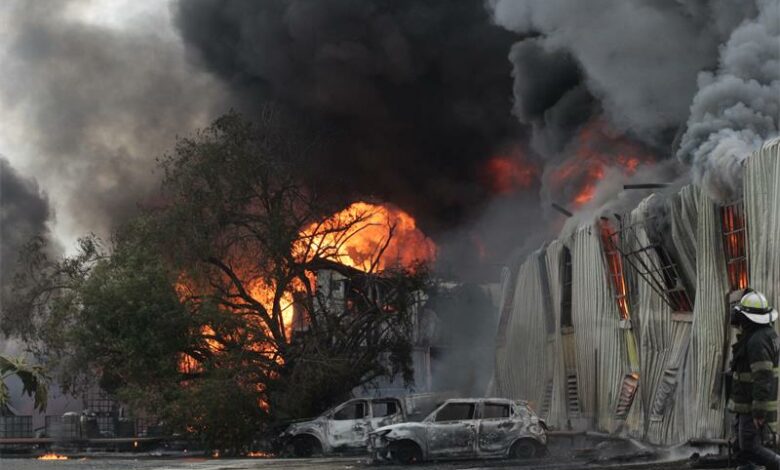
Disaster and Emergency Management Services (DEMS) spokesperson William Ntladi has urged residents and business owners to remain cautious of fire risks as winter approaches.
The warning comes as colder conditions set in, increasing the likelihood of house and business fires.
Recently, Germiston witnessed two major factory fires that shocked the public, further raising concerns about the potential dangers this winter.
The City of Ekurhuleni’s DEMS division offers basic first aid and firefighting training sessions for residents, aimed at equipping them to serve as community safety marshals.
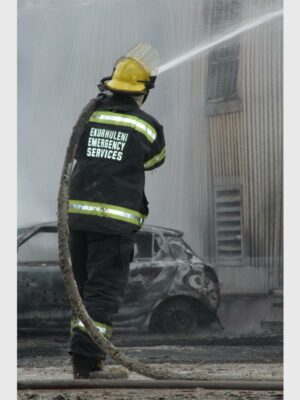
The programme is run by the Public Information, Education and Relations (PIER) unit and provides community members with essential skills to respond effectively in life-threatening situations. Trained marshals are taught how to administer basic first aid by applying the three principles of emergency care.
“The principles are preserving life by conducting a quick assessment of the patient and using the correct emergency numbers to access ambulance services.
ALSO READ: Massive fire at Rolfes Chemicals in Germiston South hospitalises one
“Promoting recovery by calming and reassuring the patient, while controlling any life-threatening bleeding.
“Preventing further injury by using the correct equipment,” said Ntladi.
He added that, in the event of fire-related incidents, trained marshals would be able to identify potential dangers, alert the fire department promptly and evacuate people to safety while awaiting the arrival of firefighters.
Ntladi said that at this time of year, shack fires caused by space heaters or brazier accidents are rather common.
He warned that to stop more shacks from catching fire, he said that shacks needed to be spaced three meters apart when being built.
“This is not adhered to, hence we have many shacks burning down whenever there is a fire.”
Ntladi also highlighted that one of the major causes of shack and household fires is the use of gas stoves. He advised that gas stoves should be purchased from licensed vendors, as overfilled gas cylinders can pose a serious explosion risk.
“The use of a gas stove requires a flat surface. When using a gas stove, you must also be cautious of any gas leaks,” said Ntladi.
He further warned residents to keep flammable materials at least a metre away from heating equipment such as furnaces, fireplaces, wood stoves and portable heaters.
ALSO READ: WATCH: Fire crews battle wind-driven blaze at Makause informal settlement
“Especially heaters; many people go to sleep leaving them on, and blankets can easily catch fire.
“Overnight, rooms can overheat, making it easier for items to ignite. The appliance itself can also malfunction, cause a spark and start a fire,” he said.
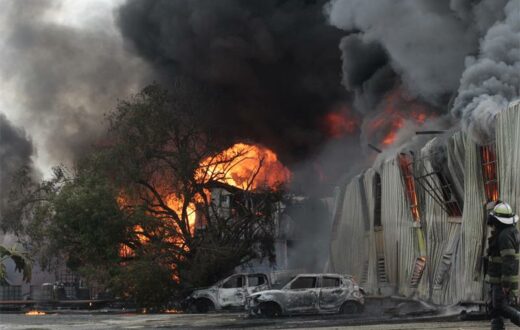
Ntladi added that security guards stationed at entrances or in guard shelters often leave heaters unattended while patrolling.
“By the time they leave the heater to patrol the premises, combustible materials may catch fire because the heater is left unmonitored,” he explained.
He also stressed the importance of maintaining a one-metre “child-free zone” around heaters and open flames.
“A child is naturally curious and unaware of danger. They may push or interfere with a heat source, which could start a fire,” he said.
Ntladi cautioned against misusing appliances.
“Never use appliances for purposes they were not designed for, such as using a stove to heat your home.
“Have a qualified professional install stationary space heating equipment, water heaters or central heating systems according to local codes and manufacturer instructions.
“Heating equipment and chimneys should be cleaned and inspected annually before use, by a qualified professional.
“Remember to switch off portable heaters when leaving a room or going to bed.
“Always use the correct fuel specified by the manufacturer for fuel-burning heaters. Ensure that fireplaces have a sturdy screen to prevent embers from escaping into the room.
“Ashes should be completely cool before being placed in a metal container, and the container should be kept at a safe distance from the home,” he said.
He added that during winter, when temperatures drop significantly, it is everyone’s responsibility to remain vigilant in preventing destructive fires while keeping warm.
Following concerns from businesses, Ntladi urged workers to ensure that all appliances are switched off and unplugged when they knock off.
“The most common mistake workers make is leaving the air-conditioning on, hoping the room will be warmer the next day.
“If the system has a fault and the current is still active, it can cause a spark and eventually lead to a fire,” he said.
He added that during winter, some employees bring their own appliances to work, such as coffee machines and toasters, which may be faulty.
“There is a high risk of fire, especially if the electrical system becomes overloaded,” he warned.
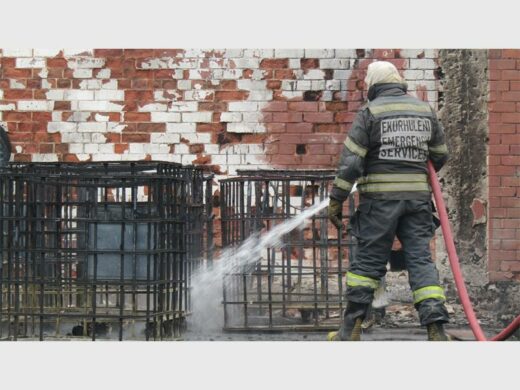
Ntladi also emphasised the importance of compliance with safety regulations.
“Companies must be compliant. This becomes a serious issue when there is a fire, and they need to claim from insurance. All businesses must adhere to city by-laws, zoning regulations and safety compliance standards. The city issues certificates to confirm this, and we often see them displayed, particularly in food businesses,” he said.
He further advised that during power outages or load-shedding, all appliances should be unplugged to prevent risk when electricity is restored.
“Businesses can install smoke alarms and link them to their alarm systems. It is also important to check electrical cables for faults and pay attention to warning signs on appliances.
“Businesses should be familiar with their emergency fire drills, and these can also be practised at home so that families become familiar with alarm sounds,” he said.
ALSO READ: No injuries after learner transport vehicle catches fire in Ekurhuleni
For households, Ntladi recommended having fire extinguishers readily available.
“Every home and vehicle should have a fire extinguisher, and people must understand the different types and how to use them,” he said.
He stressed that both businesses and households should keep emergency contact numbers clearly visible and easily accessible.
“Businesses with open land or vacant spaces next to them must create barriers as a precaution in case of veld fires,” said Ntladi.
Emergency contact numbers:
• Fire and rescue services / life-threatening emergencies: 011 458 0911.
• National toll-free number: 10177.
• From a cellphone: 112.