EMS Week highlights sacrifices and struggles of frontline paramedics
Despite the emotional toll, patient care remains their top priority.
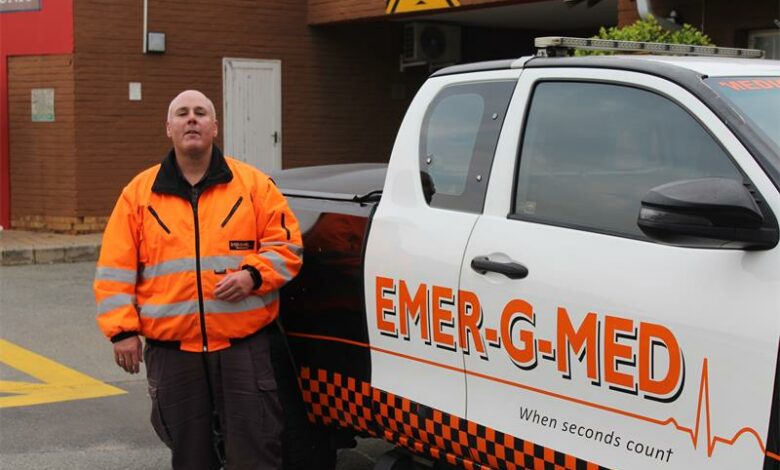
May 17 to 23 marks EMS Week, a time that shines a spotlight on the men and women behind the sirens, the paramedics who respond when crisis strikes.
This year, it was observed under the theme ‘Improving Outcomes, Together’.
The theme highlights collaboration, pre-hospital innovations, and the collective responsibility to invest in the mental and physical well-being of emergency personnel.
ALSO READ: DEMS intensifies summer safety awareness campaign across Ekurhuleni
But behind the flashing lights and life-saving interventions lies a reality far more complex, and far more dangerous, than most people realise.
“Every time we go out to a call, we’re putting our lives on the line because we never know what we’re going to find.
“We can be robbed or even have medical supplies stolen from the ambulance. We just never know,” said Mark van der Westhuizen, East Operations Manager from Emer-G-Med.
This is the daily reality of emergency medical services across the country.
From violent crime scenes to unpredictable environments, paramedics walk into situations with little information and no guarantees of safety.
Yet, despite the risks, van der Westhuizen said he would not choose any other profession.
“It’s because of my love for people and the work that I do. The challenge is the unknown. You can have a quiet day, but it can change in a second, and suddenly you’re in a position where you have to make very difficult decisions on the spot,” he said.
ALSO READ: Ekurhuleni DEMS rolls out safety campaign
He explained that while the public often measures response times in minutes, paramedics experience those same minutes very differently.
“We’re thinking about the life we’re going to assist, the route to get there, the traffic, and everything that could delay us. It can be the difference between life and death,” he said.
Sadly, the outcome is not always what they hope for.
In cases where patients are already deceased, paramedics must make the difficult decision to declare death on scene — a moment often met with grief, anger, and disbelief from families.
“You’ll always do your utmost to save a life. But sometimes, you just know … there’s no electrical activity, the pupils are fixed, and there’s nothing more you can do for the patient. Those moments are difficult for us as paramedics because we always aim to save lives,” he shared.
Despite the emotional toll, patient care remains their top priority.
“Our priority is always the patient — stabilise first, then transfer if needed,” he said.
In high-risk situations, paramedics must make life-or-death decisions before even stepping out of the ambulance.
“If there’s been a shooting, we won’t go in until SAPS clears the scene,” he explained. “This isn’t Hollywood. The only hero is a dead hero,” he added with a slight smile.
It’s a sobering reminder that saving lives should not come at the cost of their own.
ALSO READ: Prevent child drownings: Ekurhuleni DEMS shares essential water safety tips
Despite these realities, the work of paramedics remains largely underappreciated.
EMS in South Africa is very underrated. We’re underpaid, overworked, and underappreciated. That’s as simple as it gets,” said van der Westhuizen.
Long hours, emotional strain, and the pressure of life-and-death decisions are part of the job, yet recognition often falls short.
“But we don’t do this for fame. It’s a calling,” he said.
However, that calling comes at a cost. Paramedics must absorb pain and grief while remaining calm, focused, and professional.
“It’s important for us to debrief after difficult scenes. We are each other’s support system because people are affected differently.
“The EMS industry is a brotherhood — we understand what we go through and the impact it has on our lives, so we check on each other,” he said.
Behind the scenes, EMS is also a highly competitive and complex system.
“There are many ambulance services; it’s almost a rat race,” he explained.
“Five services can respond to the same call, and whoever gets there first transports the patient.”
Despite the competition, there is also strong camaraderie.
“We are a brotherhood. Even if another service takes the patient, we all assist in stabilising on scene,” he added.
One of the biggest challenges in emergency response, however, is not always distance but access.
“People call us and then sit inside their house. There’s no house number, the gate is closed, and we’re driving up and down trying to find them,” he said.
Paramedics are urging the public to assist by sending a pin-drop location, ensuring someone is outside to guide the ambulance, and providing clear and accurate information.
“Those minutes matter, and accurate information makes a difference,” he said.
At its core, EMS is about people; those in need and those who respond.
“When we arrive, please let us do our job. We understand you’re stressed, but working together helps us save lives,” he said.
Because while paramedics are trained to handle chaos, they are not immune to it.
He also encouraged the public to be prepared in case of emergencies.
“Save this number in your phone: 0860 007 911. In an emergency, your mind goes blank,” he advised.
Paramedics are not just responders. They are protectors, decision-makers, and often the last line between life and death.
But above all, they are human.
And sometimes, all they ask is simple – “Help us help you.”